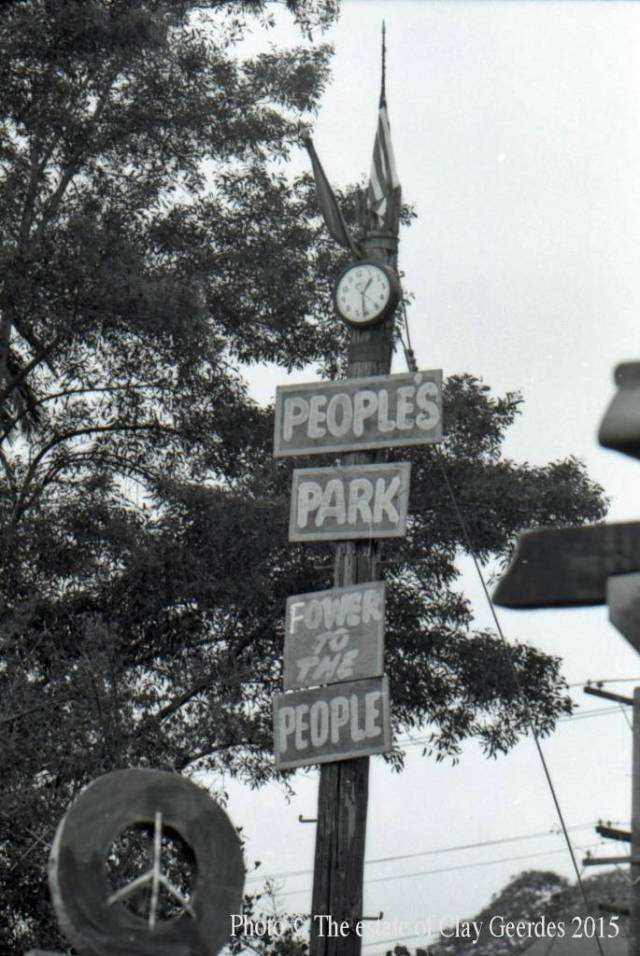
The People’s Park: Power To The People At Berkeley 1969 

Clay Geerdes was on the streets of Berkeley when People’s Park happened, observing the actions on both sides and, as usual, taking photographs. Looking back, years later, he offered this description of the general situation.

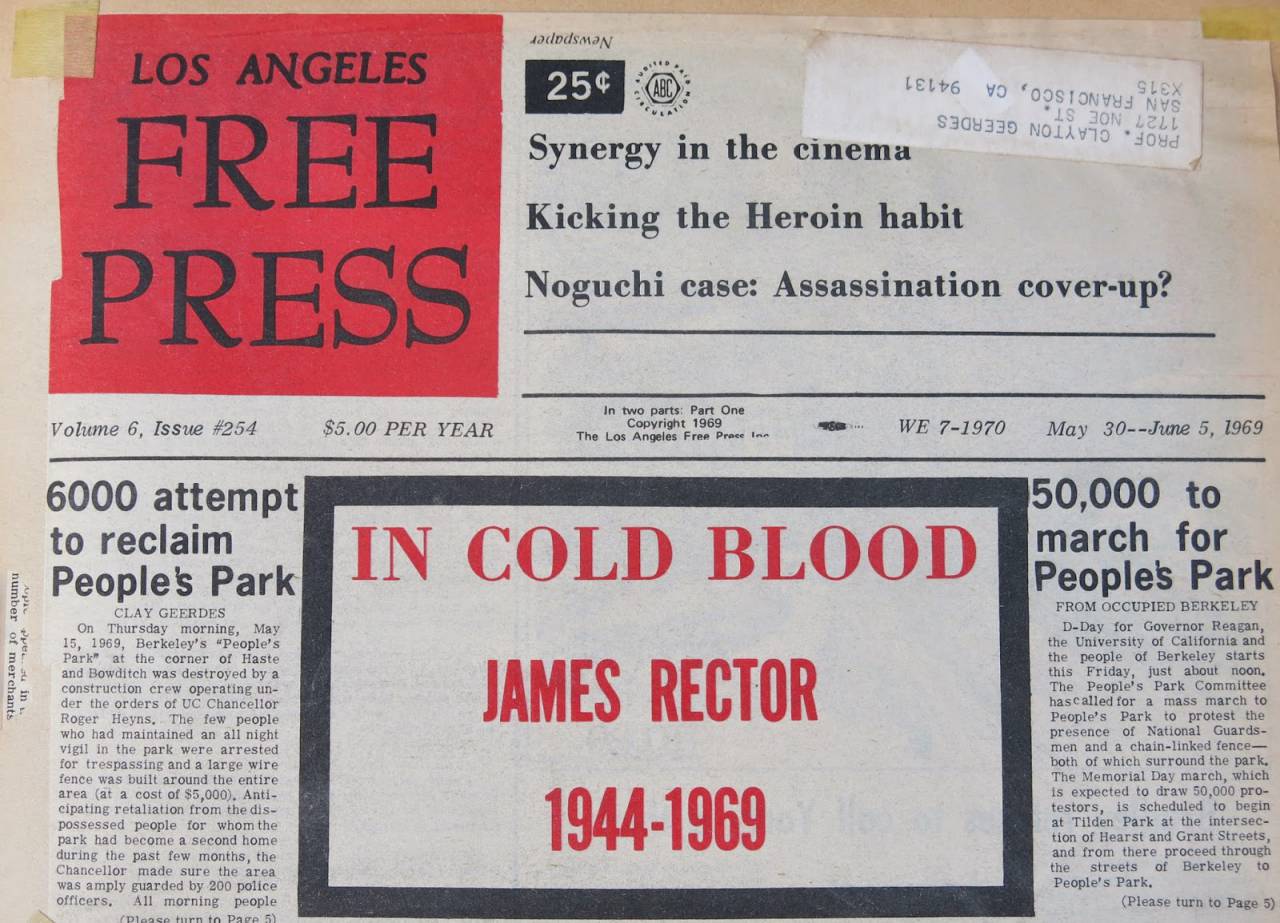
Clay Geerdes: When People’s Park took place in Berkeley, in April of 1969, it wasn’t the beginning of anything. It was the climax of many things that had been happening for the past couple of years. A lot of local people participated in landscaping that empty lot Between Haste Street and Dwight Way. UC had left it a trash-filled mudhole and had not kept it up at all. In a few days, it was cleaned up by hundreds of people, many of them neighbors who lived along the street, then UC sneaked in during the early hours of the morning on May 15, put up a cyclone fence, and had the place guarded by Alameda County Tac Squad cops who laughed at the people who lived around the park, as they pulled up the trees and stomped on the flower beds. This type of insensitive, anti-community, asshole behavior triggered one of Berkeley’s largest riots as thousands of students and local people attacked and tore down the fence to reclaim the park and get some satisfaction.

Clay-Geedes-1280x964 Clay-Geedes-1-1280x923

“Well, it was short-lived, because you can’t fight fire with gasoline. Sheriff Frank Madigan armed his cops with shotguns and they started shooting people. Over a hundred people were treated at Highland and other local hospitals for shotgun pellet wounds and one student, James Rector, was killed when he was shot by a passing deputy. It was the Vietnam War come home. Governor Ronald Reagan was willing to destroy Berkeley in order to save it. He had a couple of divisions of paratroopers on standby down at Fort Ord, and he declared a state of emergency in Berkeley, sending in the National Guard. The army drove up and down Durant and Dana and Haste and Bowditch and other Berkeley streets, spraying pepper fog at us.”

Source: The People’s Park: Power To The People At Berkeley 1969 – 

Posted in Uncategorized | Leave a comment

‘Aggressive’ spiders cause panic on Canada-bound plane 

I officially claim “dibs” on “Legs on a Plane” as a movie idea.

The tarantulas were likely Phormictopus cancerides, a species common to the Dominican Republic, Montreal-based entomologist Étienne Normandin told Radio-Canada. Ranging in length between 10cm and 20cm (4″-8″), the spider has fangs that can grow to 2cm (1″) or more. Normandin described it as an aggressive species, but one whose venom is not very powerful.

Pointing to a lucrative market for live tarantulas, Normandin speculated the spiders may have been hidden in a passenger’s carry-on. “It’s a species that is often sold,” he said. Adult males of the species are coveted for the blue sheen on their carapace, which fades to a brass colour over time.

Air Transat described it as an “extraordinary and isolated event”. A spokesperson for the airline added in an email, “Passengers who have seen the spiders (we have no confirmation of the species) were certainly surprised, but according to our flight report, they reacted calmly.”

Who wouldn’t want to hear an 8-legged version of this?

Source: Aggressive spiders cause panic on Canada-bound plane | World news | The Guardian

Just remember they’re more afraid of you…

:

zone-2.php

Posted in Uncategorized | Leave a comment

Prison guards donate to keep pot illegal in California 

profit-1-1These groups and others like them stand to lose billions of dollars in funding obtained through ‘collars-for-dollars’ programs, federal anti-drug grants, and lost opportunities to seize cash and cars through asset forfeitures.

In 2014, U.S. police seized more citizens’ property without a conviction, than all the country’s burglars stole.

Marijuana is the number one drug arrest in America, and drug arrests are the number one type of arrest in the country. About 700,000 Americans will be arrested for pot each year, including about 20,000 Californians, down from recent highs of about 60,000.

Marijuana arrests disproportionately impact young people of color, the ACLU reports. Around sixty percent of Americans support ending cannabis’ prohibition.

Source: Prison guards donate to keep pot illegal in California – Smell the Truth

Here are the industries working hard to keep marijuana illegal

Screen Shot 2016-05-19 at 7.29.31 PM

Posted in Uncategorized | Leave a comment

Sad Sack at the VA Hospital at Ft Miley, San Francisco

Though I’ve been treated there for years, it was only yesterday that I discovered that WW2 veteran Sad Sack is there too. I must have crossed this 100 times without noticing it.

Sad Sack is an American fictional comic strip and comic book character created by Sgt. George Baker during World War II.

Set in the United States Army, Sad Sack depicted an otherwise unnamed, lowly private experiencing some of the absurdities and humiliations of military life. The title was a euphemistic shortening of the military slang ‘sad sack of shit,’ a common expression during World War II.

Read more: https://en.wikipedia.org/wiki/Sad_Sack

Originally drawn in pantomime by Baker, The Sad Sack debuted June 1942 as a comic strip in the first issue of Yank, the Army Weekly. It proved popular, and a hardcover collection of Baker’s wartime Sad Sack strips was published by Simon & Schuster, Inc. in 1944, with a follow-up, The New Sad Sack (1946). The original book was concurrently published as an Armed Services edition mass market paperback, in that edition’s standard squarebound, horizontal, 5 5/8″ × 4″ format, by Editions for the Armed Services, Inc., a non-profit organization of The Council on Books in Wartime; it was #719 in the series of Armed Service editions.

After the war ended, The Sad Sack ran in newspaper syndication in the United States until 1957. Baker then sold the rights to Harvey Comics, which produced a large number of commercial spin-offs.

I was actually enjoying this view of the magnificent art deco buildings there when I happened to look down:20160518_125446


Posted in Uncategorized | 1 Comment

How magic mushrooms might be used to treat depression – Business Insider

In October 2014, an international team of researchers (including two of the authors who led the present study) looked at psilocybin’s effect on the brain by comparing fMRI scans of people injected with 2 milligrams of the drug with people injected with 2 milligrams of a placebo.

Typically, brain activity follows specific neural networks, like traffic on congested highway routes. But in the people given the psilocybin injections, cross-brain activity appeared more erratic, as if someone gave all the cars on the highway 4-wheel-drive and let them steer wherever they wanted.

But looking closer, the researchers found the new activity wasn’t chaotic either — it formed distinct patterns, or cycles — new information highways, essentially.

“The brain does not simply become a random system after psilocybin injection,” the researchers wrote, “but instead retains some organizational features, albeit different from the normal state.”

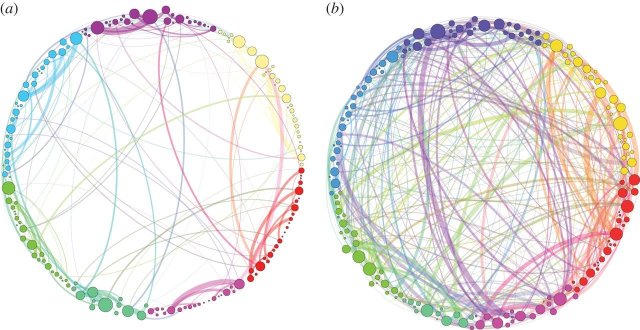
Here’s a visualization of the brain connections in the brain of a normal person (a) next to someone dosed with psilocybin (b):

In essence, the researchers found that the psilocybin appeared to effectively sprout new links across previously disconnected brain regions, temporarily altering the brain’s entire organizational framework.

These new connections are likely what allow users to experience things like seeing sounds or hearing colors. And they could also be responsible for giving magic mushrooms some of their antidepressant qualities, the researchers suggested in 2014.

Another study done two years earlier by one of the same neuroscientists who worked on these two papers — Imperial College London neuroscientist David Nutt — helped him draw similar conclusions.

In 2012, Nutt found that in people drugged with psilocybin, brain chatter across traditional areas of the brain was muted, including in a region thought to play a role in maintaining our sense of self.

In depressed people, Nutt believes, the connections between brain circuits in this sense-of-self region may be too strong. “People who get into depressive thinking, their brains are overconnected,” Nutt told Psychology Today. This is what allows negative thoughts and feelings of self-criticism to perhaps become obsessive and overwhelming. So loosening those connections and creating new ones, Nutt thinks, could provide intense relief.

For their small pilot study of just 12 people with severe depression whose illness didn’t respond to any other treatments, researchers gave everyone in the group 10 milligrams of psilocybin in capsule form to swallow (during week one) and 25 milligrams (during week two), alongside several other forms of supportive therapy — including being brought into a treatment room and consulting with a psychiatrist. All of the patients reported some decrease in depressive symptoms for at least three weeks following their treatment. And three months later, seven people continued to see fewer symptoms of depression. Of those seven, five remained in remission — meaning their severe depressive symptoms did not return — after the three months.

Exciting news for psilocybin.

Source: How magic mushrooms might be used to treat depression – Business Insider

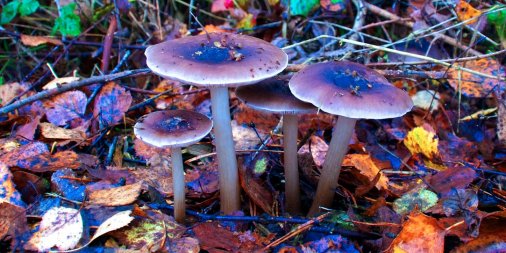
And to go with this story, here’s some intoxicating imagery:

Posted in Uncategorized | Leave a comment

How magic mushrooms might be used to treat depression 

In October 2014, an international team of researchers (including two of the authors who led the present study) looked at psilocybin’s effect on the brain by comparing fMRI scans of people injected with 2 milligrams of the drug with people injected with 2 milligrams of a placebo.

Typically, brain activity follows specific neural networks, like traffic on congested highway routes. But in the people given the psilocybin injections, cross-brain activity appeared more erratic, as if someone gave all the cars on the highway 4-wheel-drive and let them steer wherever they wanted.

But looking closer, the researchers found the new activity wasn’t chaotic either — it formed distinct patterns, or cycles — new information highways, essentially.

“The brain does not simply become a random system after psilocybin injection,” the researchers wrote, “but instead retains some organizational features, albeit different from the normal state.”

Here’s a visualization of the brain connections in the brain of a normal person (a) next to someone dosed with psilocybin (b):

In essence, the researchers found that the psilocybin appeared to effectively sprout new links across previously disconnected brain regions, temporarily altering the brain’s entire organizational framework.

These new connections are likely what allow users to experience things like seeing sounds or hearing colors. And they could also be responsible for giving magic mushrooms some of their antidepressant qualities, the researchers suggested in 2014.

Another study done two years earlier by one of the same neuroscientists who worked on these two papers — Imperial College London neuroscientist David Nutt — helped him draw similar conclusions.

In 2012, Nutt found that in people drugged with psilocybin, brain chatter across traditional areas of the brain was muted, including in a region thought to play a role in maintaining our sense of self.

In depressed people, Nutt believes, the connections between brain circuits in this sense-of-self region may be too strong. “People who get into depressive thinking, their brains are overconnected,” Nutt told Psychology Today. This is what allows negative thoughts and feelings of self-criticism to perhaps become obsessive and overwhelming. So loosening those connections and creating new ones, Nutt thinks, could provide intense relief.

For their small pilot study of just 12 people with severe depression whose illness didn’t respond to any other treatments, researchers gave everyone in the group 10 milligrams of psilocybin in capsule form to swallow (during week one) and 25 milligrams (during week two), alongside several other forms of supportive therapy — including being brought into a treatment room and consulting with a psychiatrist. All of the patients reported some decrease in depressive symptoms for at least three weeks following their treatment. And three months later, seven people continued to see fewer symptoms of depression. Of those seven, five remained in remission — meaning their severe depressive symptoms did not return — after the three months.

Exciting news for psilocybin.

Source: How magic mushrooms might be used to treat depression – Business Insider

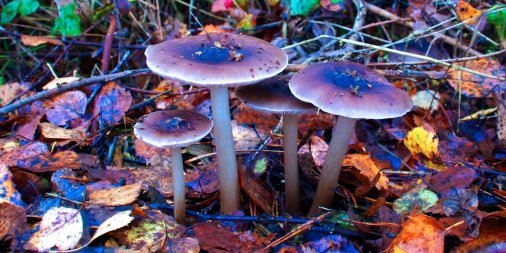
And to go with this story, here’s some intoxicating imagery:

1970s-Tshirt-2 208570_0 208571_0 474406_v1 492930_v1 493954_v1 508610_v1 508618_v1 518814_v1 533994_v1 a_little_belowthebelt_humor_that_dirty_minds_will_find_amusing_640_34 acid_picdump_16-1 acid_picdump_28 acid_picdump_37 acid_picdump_47 acid_picdump_51 acid_picdump_80 acid_picdump_92 acid_picdump_114 acid_picdump_117 awesome_things_36 coma-fragrance content-1.php copy content-1.php content.php copy content.php dad_texts_08 daily_picdump_1940_640_09 daily_picdump_1948_640_high_20 daily_picdump_1950_640_high_67 daily_picdump_1951_640_06 daily_picdump_1951_640_26 daily_picdump_1962_640_45 daily_picdump_1973_640_72 daily_picdump_1975_640_37 daily_picdump_1975_640_high_12 daily_picdump_1979_640_70 daily_picdump_1986_640_94 daily_picdump_1988_640_39 daily_picdump_1990_640_39 daily_picdump_1990_640_44 daily_picdump_1991_640_high_29 daily_picdump_1995_640_76 daily_picdump_2023_640_49 daily_picdump_2044_640_14 daily_picdump_2044_640_32 daily_picdump_2045_640_17 daily_picdump_2049_640_13 daily_picdump_2050_640_67 daily_picdump_2051_640_56 daily_picdump_2052_640_92 daily_picdump_2053_640_38 daily_picdump_2055_640_high_81 daily_picdump_2059_640_56 daily_picdump_2060_640_14 daily_picdump_2064_640_36 daily_picdump_2065_640_high_05 daily_picdump_2066_640_35 daily_picdump_2066_640_77 daily_picdump_2066_640_high_73 daily_picdump_2069_640_59 daily_picdump_2069_640_66 daily_picdump_2082_640_43 daily_picdump_2085_640_30 daily_picdump_2085_640_59 daily_picdump_2086_640_33 daily_picdump_2086_640_high_32 daily_picdump_2094_640_86 daily_picdump_2094_640_high_94 daily_picdump_2096_640_20 daily_picdump_2098_640_48 daily_picdump_2098_640_54 daily_picdump_2109_640_44 daily_picdump_2110_640_05 copy daily_picdump_2110_640_42 daily_picdump_2110_640_61 daily_picdump_2111_640_10 daily_picdump_2115_640_80 daily_picdump_2115_640_high_97 daily_picdump_weekend_edition_640_55 drugs_bunny_01 drugs_bunny_02 funny_picdump_1112_640_08 funny_picdump_1122_640_46 funny_picdump_1126_640_51 funny_picdump_1126_640_high_27 funny_picdump_1163_640_high_23 funny_picdump_1165_640_51 funny_picdump_1166_640_42 funny_picdump_1168_640_12 funny_picdump_1169_640_high_11 funny_picdump_1169_640_high_39 funny_picdump_1170_640_44 funny_picdump_1176_640_14 funny_picdump_1179_640_40 funny_picdump_1187_640_22 funny_picdump_1189_640_42 funny_picdump_1201_640_40 funny_picdump_1206_640_45 funny_picdump_1208_640_02 grownup_corner_219_640_04 human_ingenuity_at_its_finest_640_high_07 interesting_titbits_about_uk_03 its_so_true_you_cant_even_argue_with_that_640_33 its_so_true_you_cant_even_argue_with_that_640_40 LSDPair memes_to_amuse_your_tired_mind_640_29 morning_picdump_842_640_35 morning_picdump_842_640_44 morning_picdump_843_640_41 morning_picdump_845_640_30 morning_picdump_853_640_32 morning_picdump_855_640_07 copy morning_picdump_856_640_16 morning_picdump_859_640_51 morning_picdump_863_640_48 morning_picdump_865_640_high_03 morning_picdump_866_640_22 morning_picdump_886_640_19 morning_picdump_886_640_48 morning_picdump_888_640_52 morning_picdump_889_640_54 morning_picdump_890_640_38 morning_picdump_895_640_35 morning_picdump_899_640_04 morning_picdump_900_640_46 morning_picdump_901_640_13 morning_picdump_909_640_high_06 morning_picdump_913_640_37 morning_picdump_913_640_high_45 morning_picdump_915_640_22 morning_picdump_916_640_high_49 morning_picdump_924_640_26 morning_picdump_929_640_50 morning_picdump_929_640_high_20 morning_picdump_939_640_50 morning_picdump_947_640_29 morning_picdump_947_640_44 periwinkle sometimes_life_throws_02 thanks_but_no_thanks_640_39 the_real_reason_why_the_war_on_drugs_has_been_so_futile_02 these_people_awesome_40 thrift_shop_discoveries_that_are_totally_arbitrary_but_really_awesome_at_the_same_time_640_high_29 toxzone-5.php tumblr_nf5js9680M1r855nqo1_500 who_cares_what_i_need_i_want_this_right_now_640_23 who_cares_what_i_need_i_want_this_right_now_640_38 who_cares_what_i_need_i_want_this_right_now_640_40 wow_the_sht_got_real_awfully_fast_640_10 you_cant_argue_with_this_even_if_you_wanted_to_640_43 zone-1.php copy zone-1.php zone.php

Posted in Uncategorized | Leave a comment

Baby pigeons DO exist!

Next to the planter in front of my building, a pair of young pigeons.

Posted in Uncategorized | Leave a comment

Bay to (I’m too lazy to run all the way to the) Breakers (so I’ll go get shit-faced on Haight St.) Day

For the first time EVER the SFPD has assigned foot and bicycle patrols to Haight St.@

In the past they were all down at the Panhandle or in GGPark and the street was a mess.

Posted in Uncategorized | Leave a comment

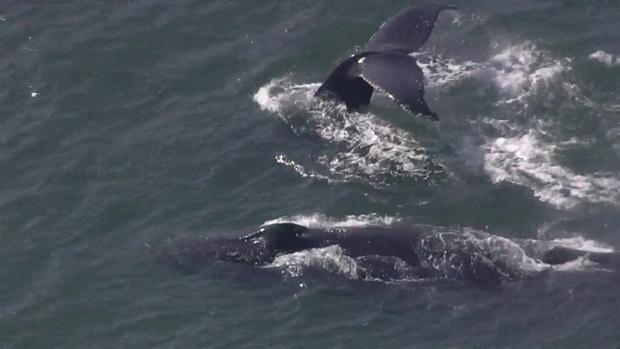
Unusual Number of Whales Seen in San Francisco Bay 

I love that whales are now entering the Bay fairly regularly.

In this case it appears that they came in looking for anchovies, probably headed here:

Molinari

As many as four humpbacks at a time have been spotted flapping their tails and breaching in bay waters, apparently feeding on the anchovies and other schooling fish during incoming tides.

It’s normal for gray whales to wander into the bay, but humpbacks generally feed farther offshore and are not accustomed to navigating shallow water and narrow straits such as those in San Francisco Bay.

The NBC affiliate has several clips of the whales, (including one that was broadcast live during their evening newscast):

Source: Unusual Number of Whales Seen in San Francisco Bay | NBC Bay Area

Though we have a long way to go to catch up with Knudson Cove in Ketchikan, AK:

And here’s some more wet mammals:

nq160423

morning_picdump_935_640_34 daily_picdump_2097_640_27 daily_picdump_2097_640_41 daily_picdump_2097_640_66 daily_picdump_2097_640_82 daily_picdump_2096_640_86 daily_picdump_2095_640_58 daily_picdump_2095_640_74 daily_picdump_2095_640_86 daily_picdump_2094_640_34 daily_picdump_2094_640_66 daily_picdump_2094_640_89 daily_picdump_2093_640_05 daily_picdump_2093_640_57 daily_picdump_2093_640_69 daily_picdump_2093_640_98 daily_picdump_2093_640_99 daily_picdump_2098_640_39-1 morning_picdump_932_640_22 daily_picdump_2103_640_13 daily_picdump_2103_640_17 daily_picdump_2103_640_90 funny_bathroom_wins_and_fails_640_28 daily_picdump_2102_640_28 daily_picdump_2102_640_68 daily_picdump_2102_640_84 daily_picdump_2102_640_106 people_who_probably_didnt_survive_after_this_or_got_seriously_injured_640_21

Posted in Uncategorized | Leave a comment

Report: America’s chicken industry workers wear diapers – Business Insider

I joke that the reason I became a vegetarian is not because I love animals, it’s because I hate plants. In fact, it is the horrendous environmental cost of factory farming that made me adopt this dietary lifestyle.
And now, in addition to razing the world’s rain forests to raise cattle (that produce tons of methane), hectares-wide ponds of polluted slurry from pig farms, and runoff from poultry farms into rivers and aquifers, we have this atrocious treatment of the people who process those beasts.

Deborah Berkowitz, a former OSHA official wrote in an op-ed published in Quartz that what workers described to Oxfam was consistent with what she witnessed during her time at OSHA. “I witnessed the dangers. Poultry workers stand shoulder to shoulder on both sides of long conveyor belts, most using scissors or knives, in cold, damp, loud conditions, making the same forceful movements thousands upon thousands of times a day, as they skin, pull, cut, debone and pack the chickens. The typical plant processes 180,000 birds a day. A typical worker handles 40 birds a minute.”


Source:

Posted in Uncategorized | Leave a comment