Robert Rauschenberg’s Goat to travel to United Kingdom for first time in over 50 years

LONDON.- Robert Rauschenberg’s iconic work Monogram 1955-59 is to travel to the UK for the first time in over half a century as part of Tate Modern’s upcoming retrospective of the artist, opening 1 December 2016. 0b4a55d2d72b19a6cd4d25f0e797bc0c
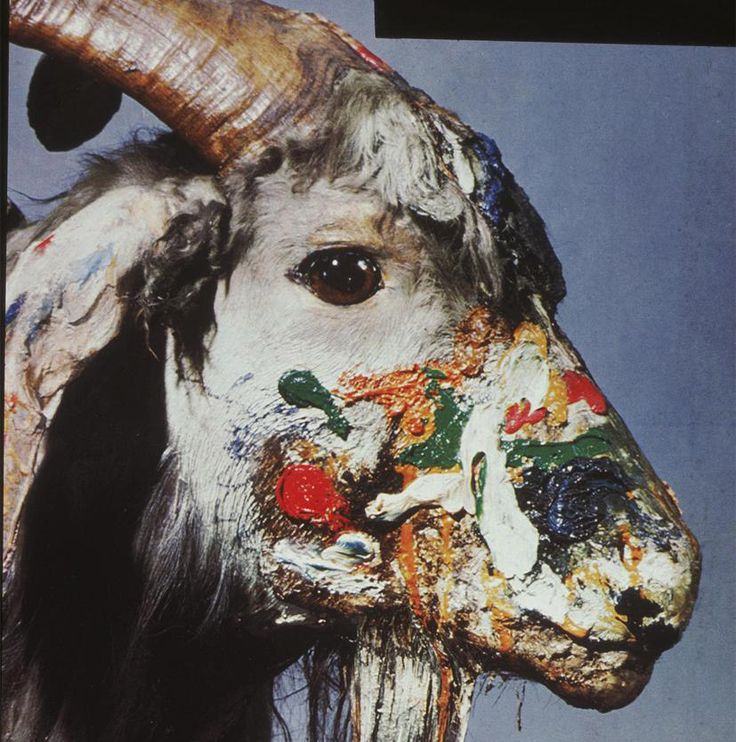
Monogram is a classic example of one of the artist’s famous Combines. These works were hybrids between a painting and a sculpture which Rauschenberg developed in the 1950s and which were arguably his greatest achievement. Made when the artist was barely in his 30s, they marked a clear break with an older generation of abstract expressionist painters such as Barnett Newman and Mark Rothko, who hitherto had critically dominated US art.37 IMG_0671

Assembled from materials including a stuffed angora goat, a rubber tyre, a tennis ball and a shoe heel, the work demonstrates Rauschenberg’s bold challenge to the hierarchical distinction between traditional art materials and everyday objects.


The stuffed goat that forms part of the work was bought by Rauschenberg for fifteen dollars from a used furniture store. Like many of the Combines the work evolved over a number years, and was originally fixed to a vertical canvas before being placed on a horizontal one. The rubber tyre was then added so that, in Rauschenberg’s words, the two ‘lived happily ever after’ on the canvas. The title of the work is taken from the union of the goat and tyre, which reminded the artist of the interweaving letters in a monogram.

Rauschenbergs-Monogram

Rauschenberg’s Monogram is very fragile and rarely travels. It will be generously lent by the Moderna Museet, Stockholm, where the goat has recently undergone conservation treatment including an x-ray examination in preparation for its journey. It has not been shown in London since 1964. Following its presentation at Tate Modern, the exhibition will travel to The Museum of Modern Art in New York and the San Francisco Museum of Modern Art in 2017.

Monogram will take centre-stage in a room dedicated to Rauschenberg’s Combines all of which are significant international loans. Bed 1955, will travel from The Museum of Modern Art, New York. This seminal work was assembled from what was allegedly Rauschenberg’s own pillow and a quilt given as a gift by fellow artist, Dorothea Rockburne, stretched like a canvas and covered with abstract pencil drawings and paint.

Achim Borchardt-Hume, Director of Exhibitions, Tate Modern said: “Rauschenberg saw the experience of art as inseparable from the experience of life and so made work from all sorts of materials – textiles, cardboard boxes, car parts, radios and even stuffed animals. Rauschenberg exploded the myth of the artist working isolated in the studio and revelled in making connections between the stuff of the world and the materials and strategies traditionally associated with ‘high art.’ He blazed a new trail for art in the second half of the 20th century and became a beacon for other artists for generations to come.”

Robert Rauschenberg is organised by Tate Modern and The Museum of Modern Art, New York. The exhibition will travel to The Museum of Modern Art in New York and the San Francisco Museum of Modern Art in 2017.

Read more about Rauschenberg’s Monogram and other Combines at the Rauschenberg Foundation website here.

And here’s some entertaining images and .gifs from the genus Capra:


Posted in Art, Uncategorized | Tagged , | Leave a comment

US Navy to Name Ship After Harvey Milk

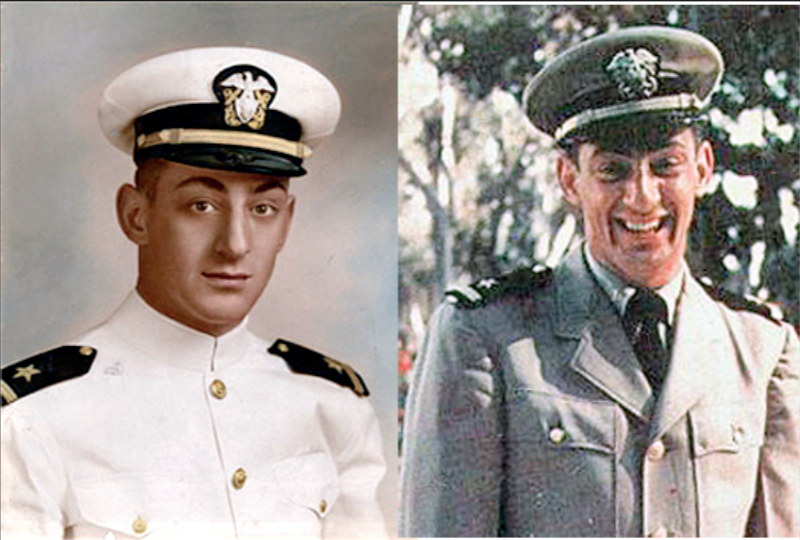
The United States Navy will name a ship after gay rights icon Harvey Milk, the first openly gay elected official in California, according to a report by US Naval Institute (USNI) News.

LGBT activists in San Diego and San Francisco had campaigned for the navy to honor Milk and other LGBT individuals who have served in the armed forces despite being officially banned until 2011.

Milk served as a diving officer from 1951 to 1955. He was honorably discharged with the rank of lieutenant junior grade.

Screen Shot 2016-07-28 at 11.38.52 PM

“When Harvey Milk served in the military, he couldn’t tell anyone who he truly was,” said San Francisco supervisor Scott Wiener, who authored a resolution asking the navy to name a ship after Milk in 2012.

“Now our country is telling the men and women who serve, and the entire world, that we honor and support people for who they are.”

Other ships in the John Lewis-class of fleet oilers will be named after former supreme court chief justice Earl Warren, Robert F Kennedy, women’s rights activist Lucy Stone, and Sojourner Truth. The John Lewis class is named for civil rights legend and congressman John Lewis of Georgia.Screen Shot 2016-07-28 at 11.47.06 PM


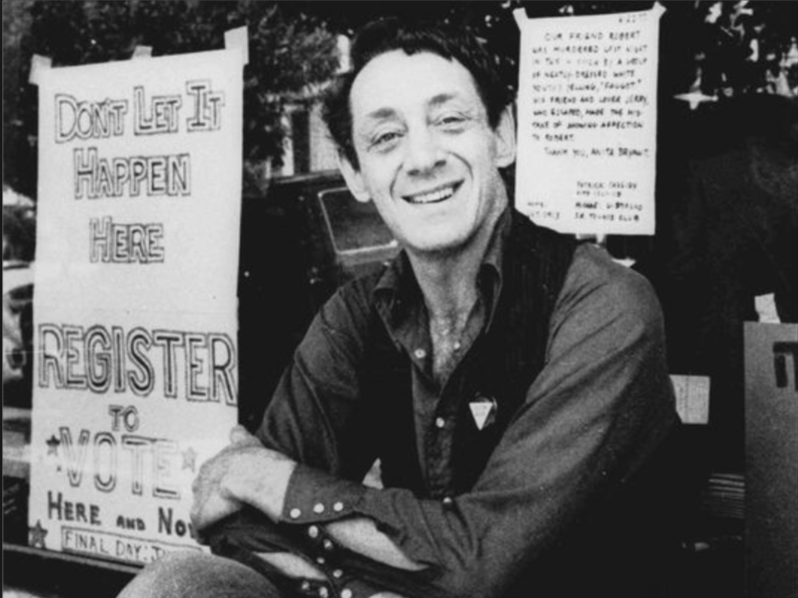
Milk moved to San Francisco in 1972, where he lived in the Castro district, owned a camera shop, and advocated for the rights of LGBT people in the growing gay neighborhood. Screen Shot 2016-07-28 at 11.40.43 PM

In 1977, he won his election to the San Francisco board of supervisors, becoming the first openly gay elected official in California.

One year later, Milk was murdered in San Francisco City Hall by a former cop who also killed the mayor, George Moscone.

“Hope is never silent and will be represented in a world port soon via the USNS Harvey Milk,” read a post on the Facebook page of the Harvey Milk Foundation, reacting to the announcement.

The push to have Milk honored with a naval ship sparked controversy in San Francisco’s LGBT community in 2012, with some critics citing his opposition to the Vietnam war to argue that he would be better memorialized in other ways.

“When I saw the news, what went through my mind is a line from a Leonard Cohen song: ‘I finally broke into the prison, I took my place in the chain’,” said Cleve Jones, an LGBT and labor rights activist who was mentored by Milk.

Milk was part of a movement that was “strongly rooted in anti-militarism”, Jones said, so the honor comes with “a bit of irony”.

“I came of age when straight men pretended to be gay to get out of the army,” he said.

Still, he joked, “I think if Harvey were alive he would be making jokes about providing oil for sailors.”

I still own my original Harvey Milk for Supervisor button:milk-supervisor button

Source: USNI News

Posted in Uncategorized | Tagged | Leave a comment

Women of NASA Get LEGO-sized Tribute | Popular Science

You can probably name a handful of astronauts and astrophysicists, most of them male. Throughout grade school, their names are repeated in history books: Buzz, Neil, Gus… what about the women who set many of these missions into motion?

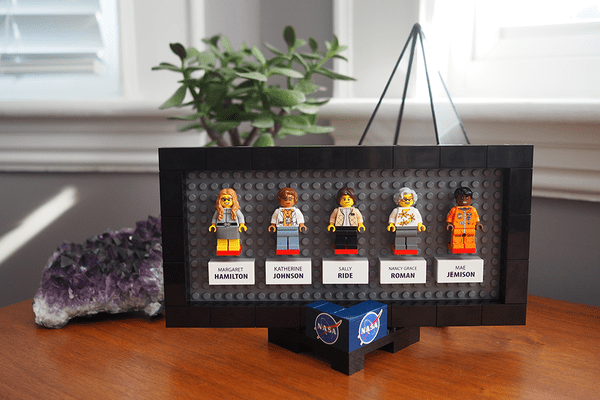
The five Women of NASA that were submitted to LEGO Ideas are:

Margaret Hamilton, computer scientist: While working at MIT under contract with NASA in the 1960s, Hamilton developed the on-board flight software for the Apollo missions to the moon. She is known for popularizing the modern concept of software.

Katherine Johnson, mathematician and space scientist: A longtime NASA researcher, Johnson is best known for calculating and verifying trajectories for the Mercury and Apollo programs — including the Apollo 11 mission that first landed humans on the moon.

Sally Ride, astronaut, physicist, and educator: A physicist by training, Ride became the first American woman in space in 1983. After retiring as a NASA astronaut, she founded an educational company focusing on encouraging children — especially girls — to pursue the sciences.

Nancy Grace Roman, astronomer: One of the first female executives at NASA, Roman is known to many as the “Mother of Hubble” for her role in planning the Hubble Space Telescope. She also developed NASA’s astronomy research program.

Mae Jemison, astronaut, physician, and entrepreneur: Trained as a medical doctor, Jemison became the first African-American woman in space in 1992. After retiring from NASA, Jemison established a company that develops new technologies and encourages students in the sciences.

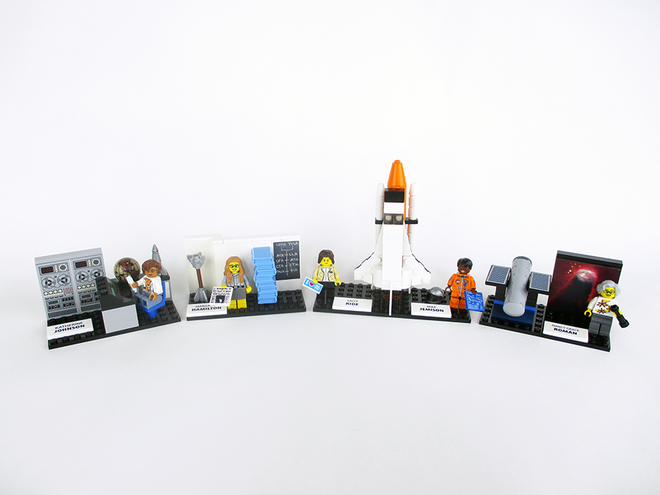
In addition to a desktop frame that displays these five minifigures and their names, the set includes vignettes depicting: a famous photo of the reams of code that landed astronauts on the moon in 1969; instruments used to calculate and verify trajectories for the Mercury and Apollo missions; a microscale Hubble Space Telescope and display; and a mini space shuttle, complete with external tank and solid rocket boosters.

2562123-o_1anrik6uaj9fae1cbb1g1u1qo81k-full

2562108-o_1anrihkdl9urlgr105alda11kjr-full

Sally Ride, astronaut and first American woman in space & Mae Jemison, medical doctor and the first African-American woman in space

2562111-o_1anrii1dc1oc8gdfg3isgmofm10-full

Sally Ride, astronaut and first American woman in space & Mae Jemison, medical doctor and the first African-American woman in space


2562114-o_1anriilob13cg1vntslm6elv7215-full

Margaret Hamilton, the computer scientist who developed on-board flight software for the Apollo missions

2562117-o_1anrij31r1hp318vr194f19uu1mgo1a-full

Margaret Hamilton, the computer scientist who developed on-board flight software for the Apollo missions


2562102-o_1anrigqmo6nvvc447e1iv91fr0h-full

Katherine Johnson, mathematician who calculated trajectories for the Mercury and Apollo programs (ON PAPER WITH A SLIDE RULE!)

2562105-o_1anrih84d17snhqj1h9it8q3kam-full

Katherine Johnson, mathematician who calculated trajectories for the Mercury and Apollo programs (ON PAPER WITH A SLIDE RULE!)

Nancy Grace Roman, the "Mother of Hubble" and one of the first female executives at NASA

Nancy Grace Roman, the “Mother of Hubble” and one of the first female executives at NASA


The set includes a tiny Hubble Space Telescope and Space Shuttle, as well as information on each of the women and their accomplishments, in hopes of inspiring future scientists to pursue their passions for space and technology. If the project gets 10,000 supporters, it qualifies to move to the official LEGO review round.

I just became the 6,385th supporter:Screen Shot 2016-07-28 at 4.19.54 PM


Source: Women of NASA Get LEGO-sized Tribute | Popular Science

And here’s a LEGO gallery:

Posted in Art, Science, Uncategorized | Tagged , , , | 1 Comment

Native American teen faces a year in prison for possessing one gram of weed 

Just WHAT THE EVER-LOVING FUCK?!?!

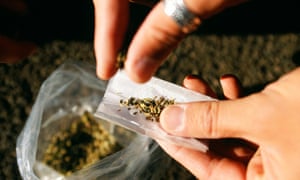
Devontre Thomas, a Native American 19-year-old, is accused of possessing a small amount of weed – enough for about one joint – and will face a federal trial that advocates say is a waste of resources and a stark reminder that US law enforcement agencies continue to target people of color for low-level pot offenses.

The one-count charge brought by the US attorney’s office – which could also result in a $1,000 fine – is the latest illustration of growing tensions in US laws on marijuana. The drug is sold recreationally in four states but remains outlawed at the federal level.

The government’s decision to file charges against Thomas, which criminal justice experts say is a perplexing move that directly contradicts federal guidelines, has also raised questions about how the US Department of Justice enforces laws on Native American territories.

Thomas, a member of the Warm Springs tribe, did not actually have weed on him at the school – which is located in Salem, Oregon’s capital – but he may have been involved in a $20 sale of marijuana, Iñiguez told local news station KGW-TV.

It’s unclear how or why US law enforcement officials got involved, but more than a year after the alleged incident, prosecutors pushed forward with a charge that carries a maximum sentence of one year behind bars.

“There are major crimes that occur in Indian country where the federal government has jurisdiction, and they fail to investigate, and they fail to prosecute,” said David Beck, professor of Native American studies at the University of Montana.

In recent years, there has been growing outrage about how the government responds to sexual assaults and rapes that occur on Native American reservations.

Source: Native American teen faces a year in prison for possessing one gram of weed | US news | The Guardian

Posted in Uncategorized | 1 Comment

Your Chance to Buy the “Flintstones House”!


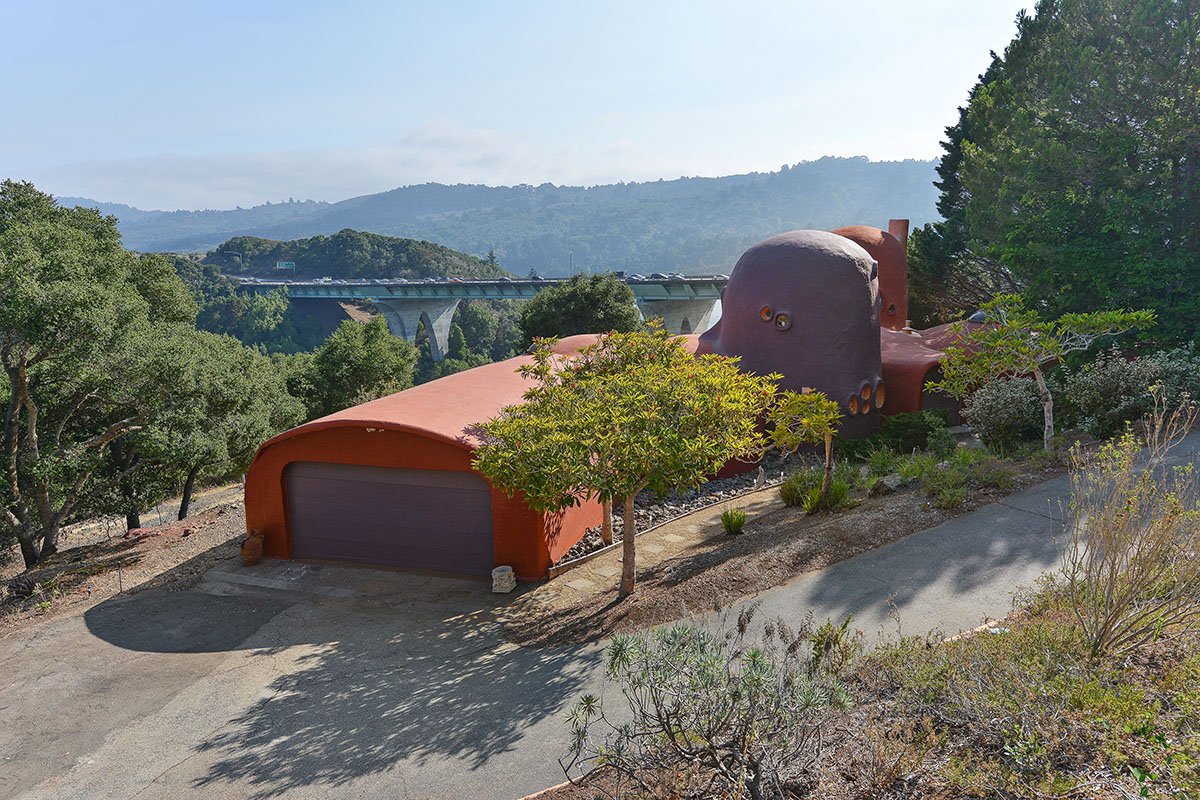
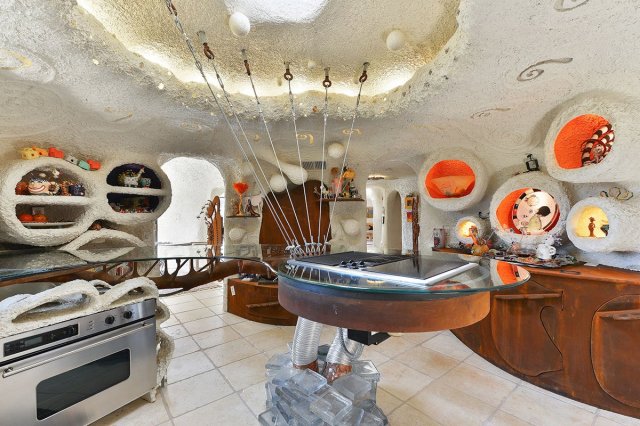
This fun-looking boulder shaped house that you’ve probably seen from I-280 is up for sale and they’ve knocked a cool $1 million off the asking price!

Even from I-280, it’s easy to see this isn’t a normal house.

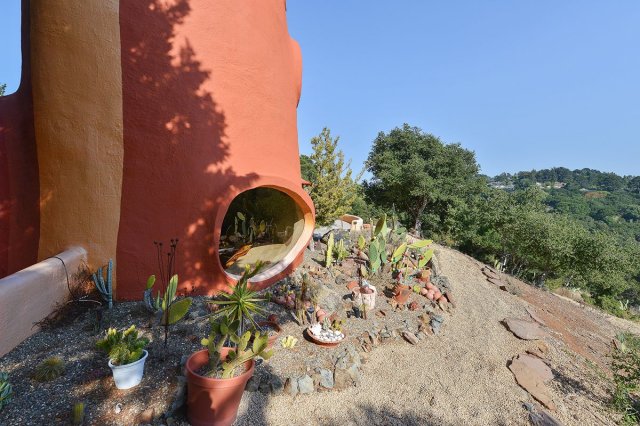
It’s made from ferro-cement that was an off-white color when I first saw it in 1976. Today it’s a festive purple and orange.

Tile and site specific art cover the entire home and match the exterior.

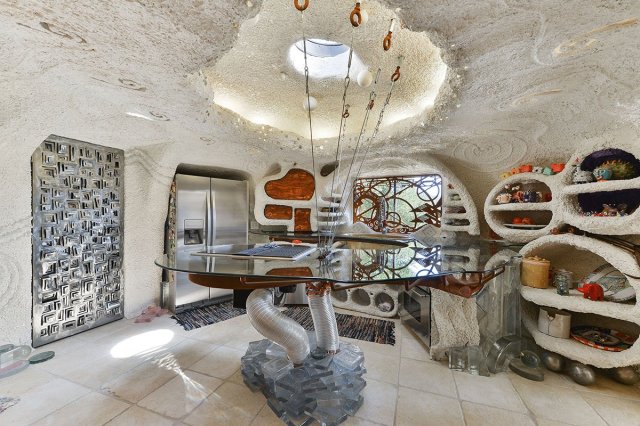
Curved ceilings and recessed lighting throughout.

The kitchen features a center island attached to the roof of the house, which also features a skylight.

The current owners bought the property in 1996 for $800,000.

The realtor’s website for the house has an interactive 3D feature, check it out. And if you have an extra $3.2 million laying around please invite me to the house warming!

Alain Pinel Realty: http://www.flintstonehouse280.com

Of course the best part is that your rich Woodside neighbors who live in boring, mundane suburban tract homes hate it and consider it an eyesore.

Posted in Art, Uncategorized | Tagged , , , | Leave a comment

Vintage 20s & 30s Bondage and Fetish Gear By Yva Richard and Diana Slip (NSFW) 

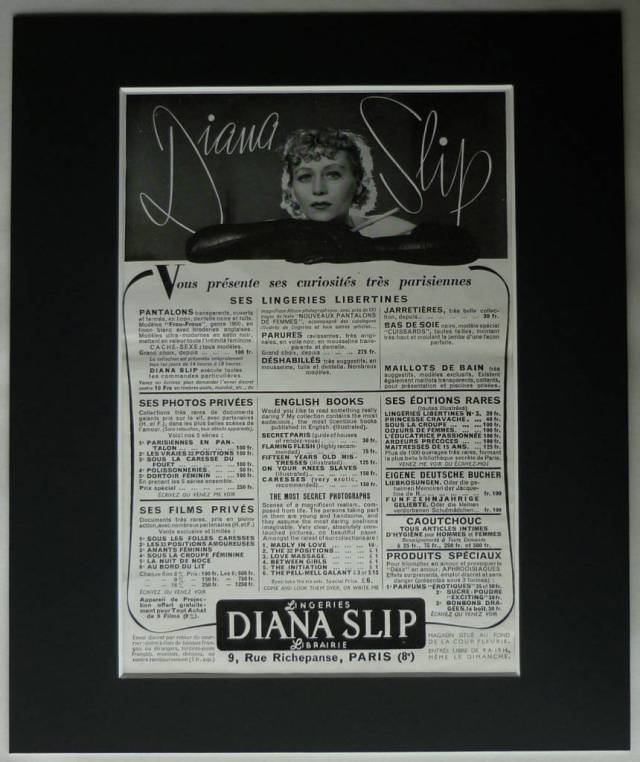
469_001As Michel Foucault famously attested, we often presume that contemporary society is singularly sexually liberated, that those who came before us were far more conservative, even their innermost fantasies more bourgeois than ours. That is, of course, completely untrue – a fact proven by the prevalence of fetishwear lingerie in the 1920s and 30s, an arena that was dominated by two rival companies: Yva Richard and Diana Slip.

Founded by a husband and wife duo who documented their ball gags and leather corsetry in a style later employed by the likes of 80s magazines like AtomAge (and now, the fashion industry at large), Diana Slip was created by Léon Vidal and commissioned renowned photographers Roger Schall and Brassaï to communicate their seductive vision.

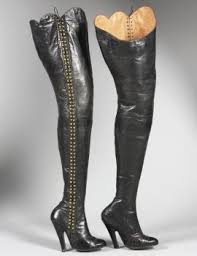
UnknownOffering chiffon ouverts, thigh-high boots and plenty of whips, theirs was a brand that celebrated S&M subversion in its most elegantly refined form.


Source: Vintage Bondage and Fetish Gear By Yva Richard and Diana Slip (NSFW) |

Posted in NSFW, Uncategorized | Tagged , , , | Leave a comment

Are We Close to Having a Blood Test That Detects Cancer? 

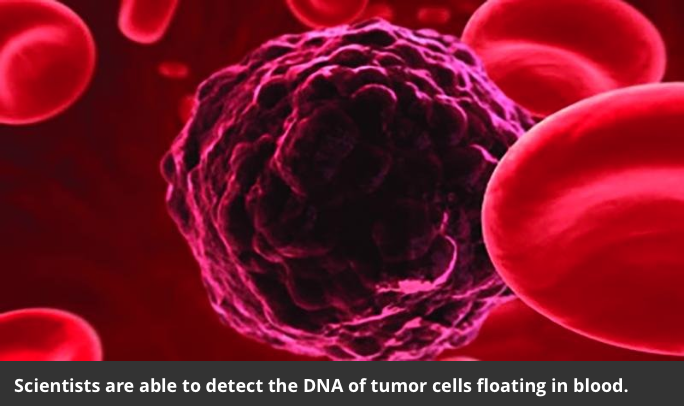
Researchers designed a liquid biopsy test to determine a patient’s risk of colon cancer recurrence and monitor the effects of chemotherapy after surgery.

Screen Shot 2016-07-23 at 8.00.50 PM

Earlier this month, a team of researchers from Johns Hopkins University and the Walter and Eliza Hall Institute of Medical Research in Australia published a study suggesting that they could pretty accurately predict if a colon cancer patient would have a recurrence of the disease. After doing a series of liquid biopsies on 230 patients over two years, they found that 79 percent of the patients whose blood still had traces of tumor DNA after surgery suffered a relapse. These were all patients with stage 2 colon cancer that had not yet metastasized.

The test wasn’t perfect. Almost 10 percent of the patients who didn’t appear to have tumor DNA in their blood had their cancers come back. Still, the scientists said the liquid biopsies could provide a strong indication as to whether a patient was cured through surgery or if he or she also needed to be treated with chemotherapy to take care of cancer traces that remained.

Last month, at the American Society of Clinical Oncology conference in Chicago, researchers presented the largest study yet of liquid biopsies, reporting that blood tests to detect cancer mutations largely agreed with what was found through conventional biopsies. In that case, the scientists analyzed more than 15,000 liquid biopsies that had been performed by Guardant Health, a Silicon Valley startup.

 Those blood samples came from patients with several different types of cancer, including lung, breast and colorectal. For about 400 of those patients, there were also tumor tissue samples. When the blood samples and tissue samples were compared, the researchers found the same cancer mutations in both more than 90 percent of the time.

Those impressive results were for a gene mutation associated with tumor growth. There was less agreement between the two types of biopsies, however, when the scientists analyzed mutations that indicate potential resistance to certain drugs. Also, for about 15 percent of the patients overall, the liquid biopsies didn’t show any evidence of the tumor.

But there is a Reality Check:

This recent research does boost the prospects for liquid biopsies, but the tests still have a long way to go before they’re considered reliable enough to replace more invasive biopsies. So far, studies have involved samples from patients who were already known to have cancer. That suggests liquid biopsies could be useful in monitoring tumors to determine if a treatment has been effective.

But the evidence is less convincing that they can be trusted to find cancer on their own. Medical professionals worry about false negatives, in cases where some cancers may not secrete the DNA fragments early in the development of the disease, and false positives, where a test may pick up evidence of cancer in a very early stage that could be eliminated by the body’s immune system. Those patients might end up going through an unnecessary round of invasive tests. The overall concern is that patients may begin viewing liquid biopsies as a relatively painless screening test for all cancers, and will start requesting them to avoid unpleasant procedures, such as colonoscopies.

“I would argue that implementing an unproven screening program could violate the medical affirmation to ‘first, do no harm,'” wrote Richard Hoffman in the Health News Review. Hoffman, director of the Division of General Internal Medicine at the University of Iowa Carver College of Medicine, argues that more evidence is also needed to show that early detection will actually increase a patient’s lifespan, so that they’re not submitted to the physical and financial demands of treatment years before it’s necessary.

Source: Liquid Biopsy Predicts Colon Cancer Recurrence | GEN News Highlights | GEN

Posted in Science, Uncategorized | Tagged , , | Leave a comment

Study reveals Leonardo da Vinci’s ‘irrelevant’ scribbles mark the spot where he first recorded the laws of friction

A new detailed study of notes and sketches by Leonardo da Vinci has identified a page of scribbles in a tiny notebook as the place where Leonardo first recorded the laws of friction.

The research also shows that he went on to apply this knowledge repeatedly to mechanical problems for more than 20 years.

Scribbled notes and sketches on a page in a notebook by Leonardo da Vinci, previously dismissed as irrelevant by an art historian, have been identified as the place where he first recorded his understanding of the laws of friction.

The research by Professor Ian Hutchings, Professor of Manufacturing Engineering at the University of Cambridge and a Fellow of St John’s College, is the first detailed chronological study of Leonardo’s work on friction, and has also shown how he continued to apply his knowledge of the subject to wider work on machines over the next two decades.

It is widely known that Leonardo conducted the first systematic study of friction, which underpins the modern science of “tribology”, but exactly when and how he developed these ideas has been uncertain until now.

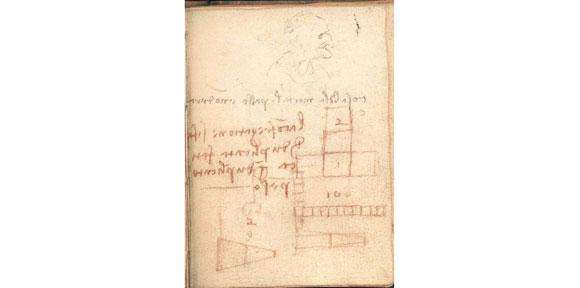
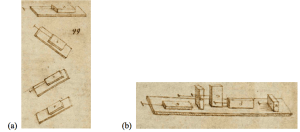
The rough geometrical figures underneath Leonardo’s red notes show rows of blocks being pulled by a weight hanging over a pulley – in exactly the same kind of experiment students might do today to demonstrate the laws of friction:Screen Shot 2016-07-22 at 8.54.29 PMScreen Shot 2016-07-22 at 8.54.38 PM

Professor Hutchings has discovered that Leonardo’s first statement of the laws of friction is in a tiny notebook measuring just 92 mm x 63 mm. The book, which dates from 1493 and is now held in the Victoria and Albert Museum in London, contains a statement scribbled quickly in Leonardo’s characteristic “mirror writing” from right to left.

Ironically the page had already attracted interest because it also carries a sketch of an old woman in black pencil with a line below reading “cosa bella mortal passa e non dura”, which can be translated as “mortal beauty passes and does not last”. Amid debate surrounding the significance of the quote and speculation that the sketch could represent an aged Helen of Troy, the Director of the V & A in the 1920s referred to the jottings below as “irrelevant notes and diagrams in red chalk”.Screen Shot 2016-07-22 at 8.57.01 PM

Professor Hutchings’s study has, however, revealed that the script and diagrams in red are of great interest to the history of tribology, marking a pivotal moment in Leonardo’s work on the subject.

Professor Hutchings said: “The sketches and text show Leonardo understood the fundamentals of friction in 1493. He knew that the force of friction acting between two sliding surfaces is proportional to the load pressing the surfaces together and that friction is independent of the apparent area of contact between the two surfaces. These are the ‘laws of friction’ that we nowadays usually credit to a French scientist, Guillaume Amontons, working two hundred years later.”

“Leonardo’s 20-year study of friction, which incorporated his empirical understanding into models for several mechanical systems, confirms his position as a remarkable and inspirational pioneer of tribology.”

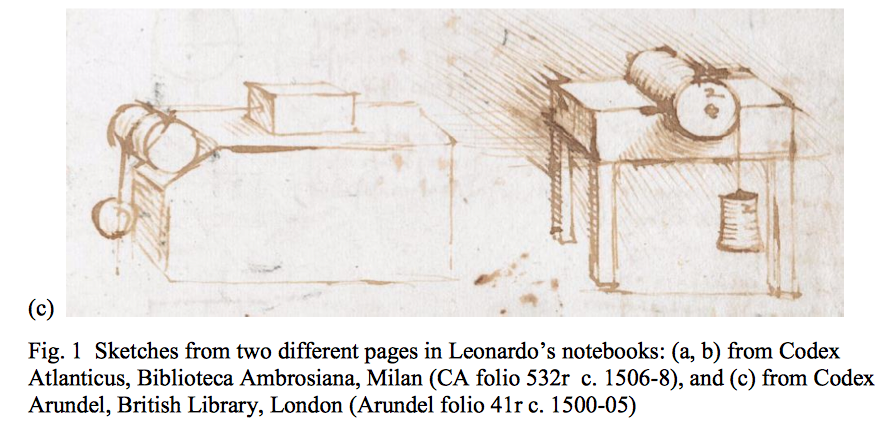
Professor Hutchings’s research traces a clear path of development in Leonardo’s studies of friction and demonstrates that he realised that friction, while sometimes useful and even essential, also played a key role in limiting the efficiency of machines.Sketches of machine elements and mechanisms are pervasive in Leonardo’s notebooks and he used his remarkably sophisticated understanding of friction to analyse the behaviour of wheels and axles, screw threads and pulleys, all important components of the complicated machines he sketched.Screen Shot 2016-07-22 at 8.59.20 PM

He wanted to understand the rules that governed the operation of these machines and knew that friction was important in limiting their efficiency and precision, grasping, for example, that resistance to the rotation of a wheel arose from friction at the axle bearing and calculating its effect.Screen Shot 2016-07-22 at 9.01.20 PM

“Leonardo’s sketches and notes were undoubtedly based on experiments, probably with lubricated contacts,” added Hutchings. “He appreciated that friction depends on the nature of surfaces and the state of lubrication and his use and understanding of the ratios between frictional force and weight was much more nuanced than many have suggested.”Screen Shot 2016-07-22 at 9.02.33 PM

Although he undoubtedly discovered the laws of friction, Leonardo’s work had no influence on the development of the subject over the following centuries and it was certainly unknown to Amontons.

Source: Study reveals Leonardo da Vinci’s ‘irrelevant’ scribbles mark the spot where he first recorded the laws of friction

The original paper, whence most of these illustrations came, is here.

Posted in Science | Tagged , | Leave a comment

Meet Graham, a Human Evolved to Survive a Car Crash 

As much as we like to think we’re invincible, we’re not. Since the car was first invented, advancements in technology and updated standards have made them increasingly safer. But even with greater precautions, the frail human body often can’t survive a crash.

But what if our bodies were to change to cope with the impact of a car accident?

Recently, the Transport Accident Commission of Victoria, Australia commissioned a sculpture based on what a human who has naturally evolved to survive a car crash might look like.

Screen Shot 2016-07-22 at 6.23.56 PM


Nicknamed “Graham,” the sculpture was designed by Melbourne-based artist Patricia Piccinini. With help from Christian Kenfield, a trauma surgeon at Royal Melbourne hospital, and David Logan, a crash investigator at Monash University’s accident research center, the group set out to design a human who had evolved the defenses necessary to survive a high-speed collision, Elle Hunt reports for The Guardian.

“The truth is that cars have evolved a lot faster than we have,” Logan says in a video documenting Graham’s design. “Our bodies are just not equipped to handle the forces in common crashes.”

Seatbelts and airbags might lower the risk of serious injury in a car crash, but that doesn’t mean much for fragile, fleshy people when they are struck by a speeding car. So to design a human who may have evolved to survive a car crash, the collaborators had to take physics and biology into account. And it all starts with the head.

Screen Shot 2016-07-22 at 6.23.21 PM


Check out the cool details of his anatomy in interactive 3D: Meet Graham

Posted in Science | Tagged , , , | Leave a comment

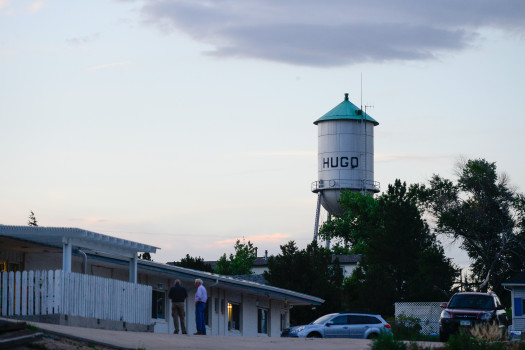
Colorado town finds THC in its water, warns residents not to drink or bathe in it – The Denver Post

Still better water than you’d get in Flint, Michigan. But I suspect this is much ado about nothing. That the water test detected trace elements that are also found in THC, not necessarily a cannabinoid.
Much the same way that eating poppy seed bagels can make you test positive for heroin without actually getting you high.

Mark Salley, a spokesman for the Colorado Department of Public Health and Environment, said a state toxicologist is assessing what kind of health effects the potential contamination could have. Salley said — as with marijuana edibles or other products — the impacts would likely vary based on the amount of water consumed and the concentration.

But others cast doubt on the dangers of THC-contaminated water or whether it’s even possible to spike tap water with marijuana.“It would take more product than any of us could afford to contaminate a city water supply to the extent that people would suffer any effects,” Dr. John Fox, Lincoln County’s health officer, said in a statement.

Peter Perrone, who owns Wheat Ridge cannabis testing facility Gobi Analytical, said cannabinoids such as THC or CBD “are in no way soluble in water.”“There is zero possibility that there’s anything like THC in the Hugo water,” Perrone said.“You know how oil and water separate? It’s the same with cannabinoids. They’re lipophilic, which means they’re fat-loving. They would never be soluble in water. In order for people to solubilize these cannabinoids in their drinks, for marijuana products like the Dixie Elixirs sold in dispensaries, it takes a lot of work. It takes so many steps to get a fat-soluble thing like a cannabinoid into something like a drink.”

Joseph Evans, a former EPA scientist who now serves as lab director at Denver-based marijuana testing lab Nordic Analytical, agreed. “The one thing that bothers me about this story from a scientific perspective is that THC is so insoluble in water,” Evans said. “I can’t imagine, I can’t even fathom the idea that THC would be in water at any type of solubility to create any kind of health hazard.”

Source: Colorado town finds THC in its water, warns residents not to drink or bathe in it – The Denver Post

Posted in Drugs | Tagged | Leave a comment