Most Wanted: San Francisco flyers name and shame Airbnb hosts 

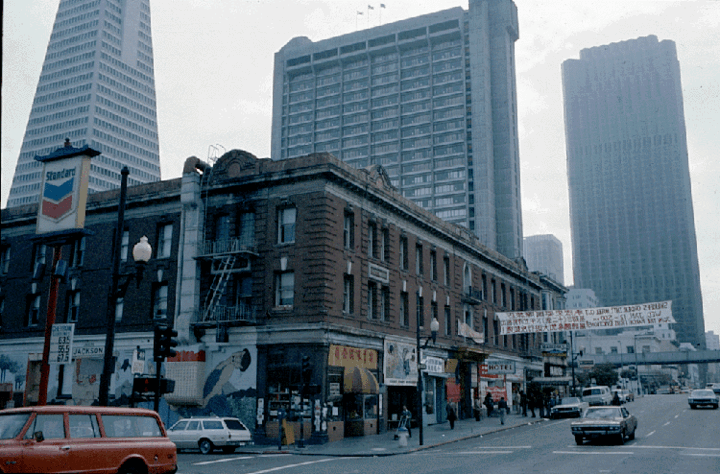
Photograph by Patrick Connors (several of the people pictured on the poster are no longer hosts or even residents of SF)

“Chinatown has generally been preserved and defended against gentrification,” said Joyce Lam of the Chinese Progressive Association, a group that organizes workers and tenants in the neighborhood.

Strict zoning laws enacted during the 1980s (after the disastrous battle over the International Hotel) have protected the stock of single-room occupancy (SRO) hotels, which serve as low cost housing for newly arrived immigrants, as well as many elderly Chinese Americans.

With their shared kitchens and bathrooms, Lam said the SROs can feel “like a village” to the multi-generation families crowded into single rooms.

But units that once changed hands solely through word of mouth or Chinese language flyers posted on the street are now popping up on Craigslist, Airbnb, and other short-term rental sites, as landlords have realized that they can earn more money renting to college graduates, single adults and white people, Lam said.

“It’s changed the fabric of the SROs,” Lam said, especially since the new residents often cannot communicate with Cantonese-speaking tenants. “It’s a different kind of feeling.”The average rent of SRO rooms has increased as well, from $610 in 2013, to $970 in 2015, according to a survey conducted by the Chinatown Community Development Center.

“It expresses a growing sentiment and a reality that the community is being exploited by speculators and unscrupulous players in the housing market,” said city supervisor Aaron Peskin, who represents the district that includes Chinatown.

“There’s no question that there are an increasing amount of illegal short-term rentals throughout the city and in Chinatown.”

Indeed, Peskin said that just two weeks ago, he observed three French people leaving a Chinatown apartment building at 10am, rolling suitcases in tow.

Source: Most Wanted: San Francisco flyers name and shame Airbnb hosts | US news | The Guardian

Posted in Uncategorized | Leave a comment

Cosmetic therapy: The link between makeup and a down economy

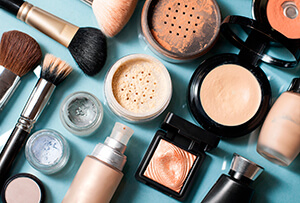
Women are using makeup to get ahead professionally, according to Strategically Stunning: The Professional Motivations Behind the Lipstick Effect,”

forthcoming in Psychological Science from McKenzie Rees, postdoctoral teaching and research associate in Notre Dame’s Mendoza College of Business, and Ekaterina Netchaeva, assistant professor in the Department of Management and Technology at Bocconi University.

Lipstick sales reportedly soared following the 9/11 terrorist attacks, and in 2008 when the rest of the economy suffered record sales declines, cosmetics giant L’Oreal’s figures revealed sales growth of 5.3 percent. Rees says women weren’t simply hoping to lure a financially stable partner, as past research has indicated.

m_rees_088

McKenzie Rees

“We show that women use makeup to ensure that they achieve their professional ambitions as well as their romantic ambitions,” she says. “Previous work on the lipstick effect has argued that women only use beauty products to attract a romantic partner. Our work suggests that women not only use makeup as a tool in professional settings, but that they may even prefer it over relying upon a romantic partner for monetary resources that they need to survive in economically challenging times.”

Source: Cosmetic therapy: The link between makeup and a down economy // News // Notre Dame News // University of Notre Dame

Posted in Uncategorized | Leave a comment

Reading Harry Potter lowers Americans’ opinions of Donald Trump, study finds

A new study to be published in a special 2016 election issue of PS: Political Science and Politics finds that reading Harry Potter books leads Americans to take a lower opinion of Donald Trump. In fact, the more books the participants read, the greater the effect.

Even when controlling for party identification, gender, education level, age, evangelical self-identification, and social dominance orientation — all factors known to predict Americans’ attitudes toward Donald Trump — the Harry Potter effect remained.

The study, “Harry Potter and the Deathly Donald?,” was written by Professor Diana Mutz, of the Department of Political Science at the University of Pennsylvania.

In the nineteenth century, Uncle Tom’s Cabin was widely credited with shifting public opinion against slavery, but to date, there has been sparse evidence that fictional stories, even very popular ones, can influence political opinion.  Evidence has largely come from laboratory experiments — for example, forcing people to read one of two stories — rather than observing  real-world  consumption of fictional stories.

Harry Potter’s popularity, with more than 450 million copies sold worldwide, made such a study possible in the public as a whole.

“Because Trump’s political views are widely viewed as opposed to the values espoused in the Harry Potter series,” Mutz writes in the study, “exposure to the Potter series may play an influential role in influencing how Americans respond to Donald Trump.”

To test that explanation for the Harry Potter effect, Mutz focused on three core themes from Harry Potter: The value of tolerance and respect for difference; opposition to violence and punitiveness; and opposition to authoritarianism.

In each case, Mutz points out, Donald Trump’s messages are opposed to the lessons conveyed in Harry Potter and closer to that of his enemy, Lord Voldemort. Examples abound throughout the series:

  • Harry and his friends advocate for oppressed house-elves and oppose Lord Voldemort’s quest for blood purity among wizards. Harry himself is of mixed wizard/muggle (non-wizard) ancestry. Trump, by contrast, has called for a temporary moratorium on Muslim immigration and made offensive comments about outgroups of all kinds, including women, Mexicans, Asians, and those with disabilities.
  • The Harry Potter series promotes non-violent means of conflict resolution; while Voldemort is willing to kill many times, the books’ protagonists consistently avoid unnecessary curses for killing, torture, or controlling others. Harry even saves the life of his Voldemort-aligned nemesis, Draco Malfoy. Trump, by contrast, has spoken widely about his fondness for waterboarding, and advocates the killing of terrorists’ families as a means of deterrence. He has praised his followers’ acts of violence against protesters at his rallies.
  • The Harry Potter protagonists work against authoritarian characters in the books.  “As does Voldemort,” Mutz writes, “Trump portrays himself as a strongman who can bend others to his will, be they the Chinese government or terrorists.”

Mutz polled a nationally representative sample of 1,142 Americans in 2014, and again in 2016, asking about their Harry Potter consumption, their attitudes on issues such as waterboarding, the death penalty, the treatment of Muslims and gays, and (in 2016 only) their feelings about Donald Trump on a 0-100 scale.

Party affiliation did not affect the likelihood that a person had read the Harry Potter books, the study found; Democrats, Republicans, and Independents have all read Rowling’s books in roughly equal numbers.

The study found that each Harry Potter book read lowered respondents’ evaluations of Donald Trump by roughly 2-3 points on a 100 point scale.

“This may seem small,” Mutz acknowledges, “but for someone who has read all seven books, the total impact could lower their estimation of Trump by 18 points out of 100. The size of this effect is on par with the impact of party identification on attitudes toward gays and Muslims.”

Mutz’s data also shows that each Harry Potter book read also raised a person’s evaluations of Muslims and homosexuals, two groups chosen to gauge the respondent’s tolerance and respect for difference. Harry Potter also appeared to encourage opposition to punitive policies — gauged by responses to questions about the use of torture, killing terrorists, and support for the death penalty — though the effect size was small.

But reading Harry Potter also engendered opposition to Trump in ways that surpassed the effect of these two themes.

“It may simply be too difficult for Harry Potter readers to ignore the similarities between Trump and the power-hungry Voldemort,” she writes.

Mutz also collected data on viewership of Harry Potter movies, but found that these did not predict Trump opposition.  This may be because of pre-existing partisan patterns in movie viewing whereby Republicans were less likely to see the movies than Democrats. Moreover, reading inherently requires much higher levels of attention and allows for greater nuance in characters, many of whom are neither wholly good nor wholly bad.  Due to length, movies must leave out material from the full books, and they are more likely to emphasize action over the characters’ internal dilemmas and introspection.

So can Harry Potter defeat Donald Trump?Flickr Jimmy Cardosi 2

“Throughout the series, love and kindness consistently triumph over aggression and prejudice,” says Mutz. “It’s a powerful positive theme, and thus not surprising that readers understand the underlying message of this storyline, and are moved by it.  These pro-unity views come through loud and clear in the storyline and have also been publicly voiced by the author of the series, J.K. Rowling, who has publicly espoused anti-Brexit and anti-Trump political views. Harry Potter’s popularity worldwide stands to make a difference not just in the U.S. election, but in elections across Europe that involve aggressive and domineering candidates worldwide.”

Source: Reading Harry Potter lowers Americans’ opinions of Donald Trump, study finds 

 

Posted in Uncategorized | Leave a comment

“Yes, I Can” 2016 Paralympics Ad

I’ve been binge-watching “The Last Leg,” a wonderful UK panel show that began as a commentary show on the 2012 London Paralympics and blossomed into and amazing and hilarious program. 2 of its 3 host comedians are disabled and it ventures into areas that no one anywhere else dares to tread. Last week they introduced the first ad for the 2016 Rio de Janeiro Paralympics. It’s mind-blowing.

Posted in Uncategorized | Tagged , , | Leave a comment

Why Do Turtles Have Shells? – The Atlantic

Travel back in time to 260 million years ago, just before the dawn of the dinosaur era. Journey to what is now South Africa, and make your way to a river bank.

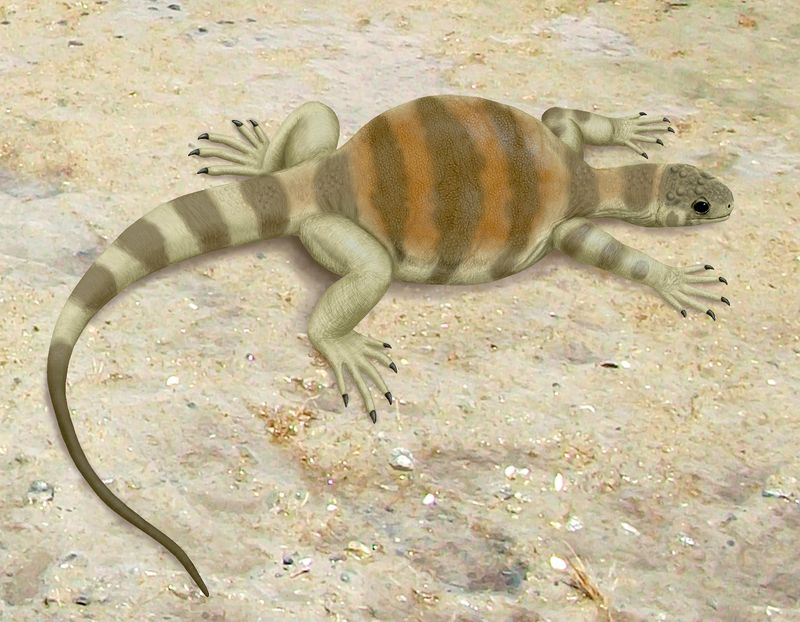
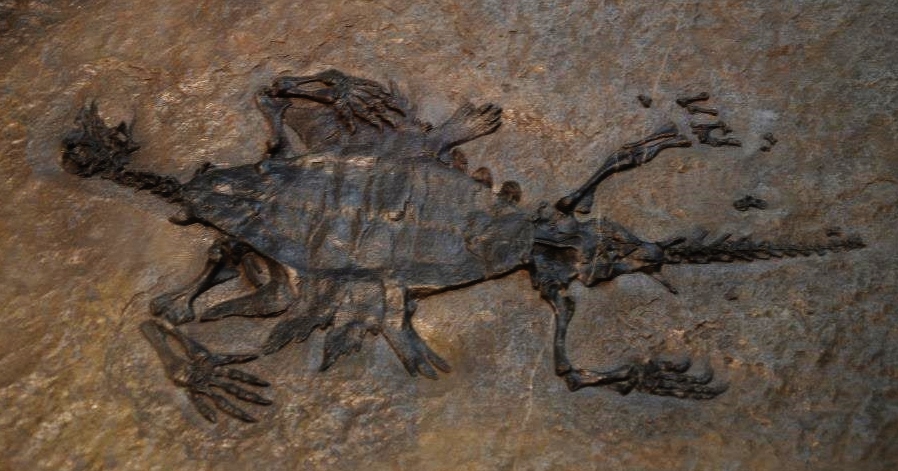
Eunotosaurus burrows while a herd of Bradysaurus marches in the background

Then, wait. If you’re lucky, you might see a small, hand-sized creature poking its head out of the mud. It looks like a fat lizard, with bulging flanks and stocky legs. But if you managed to grab it and flip it over, you’d find that its flanks are bulging because its ribs are exceptionally wide, broad, and flat, reinforcing its undersides. It’s almost like the little creature has half a shell.

This is Eunotosaurus, and despite its lizard-like appearance, it’s actually one of the earliest known turtles.

800px-Eunotosaurus_africanusIt was discovered in 1892 and ignored for almost a century. But by studying the many fossils of this enigmatic reptile, Tyler Lyson from the Denver Museum of Nature and Science has devised a fascinating new idea about turtle origins.

He thinks that their iconic shells evolved not for defense, but for digging. They anchored the powerful arm strokes needed to shift soil and sand. Before turtles became impregnable walking fortresses, they were professional burrowers.

For almost a century, biologists argued about how turtles got their shells—a debate almost as slow and plodding as the creatures themselves. Paleontologists mostly argued that the shells evolved from bony scales called osteoderms, which are also responsible for the armor of crocodiles, armadillos, and many dinosaurs. These scales simply expanded to fuse with the ribs and backbone, creating a solid covering. But developmental biologists disagreed. By studying modern turtle embryos, they deduced that the shell evolved from ribs, which broadened out and eventually united.

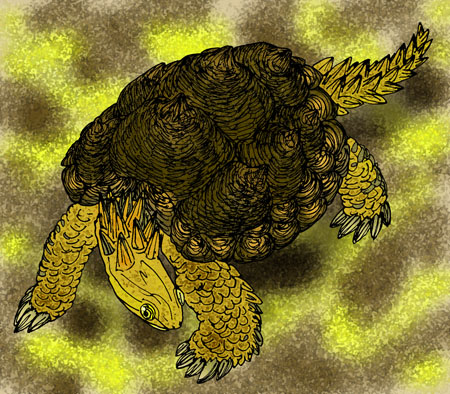
It didn’t help that for the longest time, the oldest known turtle was a creature called Proganochelys, which already had a fully developed (and very spiky) shell,1280px-Proganochelys_Quenstedti Proganochelys_quenstedtii

meaning it couldn’t tell us anything about how that structure first arose.

Everything changed in 2008, when Chinese researchers discovered a 220-million-year-old turtle with a shell that covered just its belly and not its back. They called it Odontochelys semitestacea—literally, the “toothed turtle in a half-shell.”

Odontochelys_semitestacea_433Odontochelys_BW It was as beautiful an intermediate fossil as they could have hoped for. And strikingly, it had no osteoderms at all. It did, however, have very broad ribs. The developmental biologists were right!

Once paleontologists knew what one intermediate turtle might look like, they found new ones like PappochelysThey also added existing fossils like Eunotosaurus to the family; ironically, it had been previously ruled out as an early turtle because it lacked osteoderms. With these fossils, scientists could reconstruct the evolution of the shell:

Read those steps here: Why Do Turtles Have Shells? – The Atlantic

Posted in Uncategorized | Tagged , , | Leave a comment

Missing link found between brain, immune system; major disease implications 

The true significance of the discovery lies in the effects it could have on the study and treatment of neurological diseases ranging from autism to Alzheimer’s disease to multiple sclerosis.

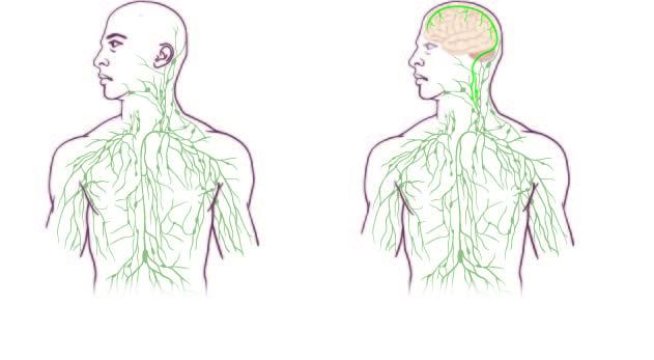
Maps of the lymphatic system: old (left) and updated to reflect UVA’s discovery. Credit: University of Virginia Health System

“Instead of asking, ‘How do we study the immune response of the brain?’ ‘Why do multiple sclerosis patients have the immune attacks?’ now we can approach this mechanistically. Because the brain is like every other tissue connected to the peripheral immune system through meningeal lymphatic vessels,” said Jonathan Kipnis, PhD, professor in the UVA Department of Neuroscience and director of UVA’s Center for Brain Immunology and Glia (BIG). “It changes entirely the way we perceive the neuro-immune interaction. We always perceived it before as something esoteric that can’t be studied. But now we can ask mechanistic questions.”

Alzheimer’s, Autism, MS and Beyond

The unexpected presence of the lymphatic vessels raises a tremendous number of questions that now need answers, both about the workings of the brain and the diseases that plague it. For example, take Alzheimer’s disease. “In Alzheimer’s, there are accumulations of big protein chunks in the brain,” Kipnis said. “We think they may be accumulating in the brain because they’re not being efficiently removed by these vessels.” He noted that the vessels look different with age, so the role they play in aging is another avenue to explore. And there’s an enormous array of other neurological diseases, from autism to multiple sclerosis, that must be reconsidered in light of the presence of something science insisted did not exist.

Source: Missing link found between brain, immune system; major disease implications — ScienceDaily

A connected story from the same original source:
Shocking new role found for the immune system: Controlling social interaction
The immune system affects — and even controls — social behavior, a new study has found. Researchers discovered that blocking a single type of immune molecule made mouse brains go hyperactive and caused abnormal behavior; restoring it fixed both. The discovery could have enormous implications for neurological conditions such as autism and schizophrenia.
https://www.sciencedaily.com/releases/2016/07/160713143156.htm

Posted in Uncategorized | Leave a comment

Bogi Fabian

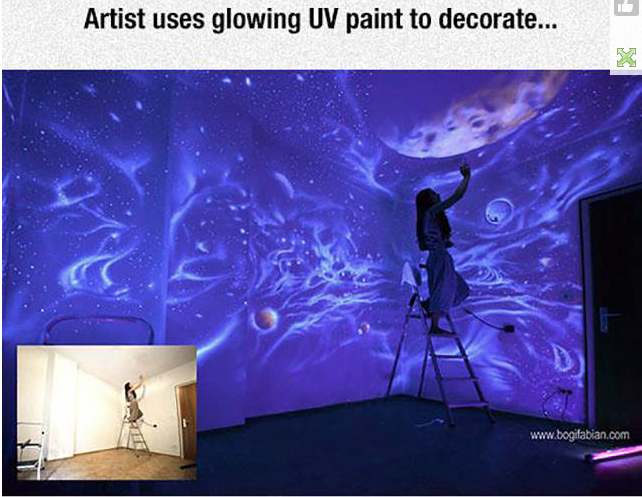
Viennese artist Bogi Fabian has developed techniques for using luminescent and fluorescent paint in interior design that brings an interstellar or extragalactic feel to a room.

bogi1

bogi2 bogi3 bogi4 bogi5


Art – Even when the lights go down… Allow the universe to become a part of your daily life.

Source: Bogi Fabian

Posted in Uncategorized | Leave a comment

Brooks Falls – Katmai National Park, Alaska – Bears – explore

I just watched this mama bear catch a salmon and feed her three cubs on a live bearcam at Katmai National Park in Alaska:Screen Shot 2016-07-18 at 11.29.06 PM Screen Shot 2016-07-18 at 11.31.10 PM


You can watch the live webcam below or go to the link at the bottom for a page with other bearcams to watch too.

This is the place where the bears catch salmon as they jump Brooks Falls.

Source: Brooks Falls – Katmai National Park, Alaska – Bears – explore

These are some of the other nature webcams you can watch at that page.

Posted in Uncategorized | Tagged , , , , | Leave a comment

The Hippie Caves of Matala that Inspired Joni Mitchell’s “Carey”

In an interview given from her home in Los Angeles at the age of 71, Joni recalls the story of how she ended up in Matala following a painful break-up from her then-boyfriend, British singer-songwriter Graham Nash:

In Greece, Penelope and I spent the first few days in Athens. I didn’t think I looked like a hippie, but I definitely didn’t look Greek. My fair hair made me stand out … my hair seemed to offend people, mostly men, who called out with a big grin on their faces, ‘Sheepy, sheepy, Matala, Matala.’ I asked around about the phrase and was told it meant, ‘Hippie, hippie, go to Matala in Crete. That’s where your kind are.’

A few days later, Penelope and I were on a ferry to see what Matala was all about … Most of the hippies who had traveled there slept in small caves carved into the cliff on one side of the beach.

After we arrived, Penelope and I rented a cinder-block hut in a nearby poppy field and walked down to the beach. As we stood staring out, an explosion went off behind us. I turned around just in time to see this guy with a red beard blowing through the door of a cafe. He was wearing a white turban, white Nehru shirt and white cotton pants. I said to Penelope, ‘What an entrance—I have to meet this guy.’ … He was American and a cook at one of the cafes. Apparently, when he had lit the stove, it blew him out the door. That’s how Cary [Raditz] entered my life—ka-boom.

Cary, of course is the man behind the well-known song, “Carey”[sic] that appeared on one of Joni’s most critically acclaimed albums, “Blue” in 1971. Have a listen to it here:


The wind is in from Africa
Last night I couldn’t sleep
Oh, you know it sure is hard to leave here Carey
But it’s really not my home
My fingernails are filthy, I got beach tar on my feet
And I miss my clean white linen and my fancy French cologne

Come on down to the Mermaid Cafe and I will buy you a bottle of wine
And we’ll laugh and toast to nothing and smash our empty glasses down

Let’s have another round for the bright red devil
Who keeps me in this tourist town

The night is a starry dome.
And they’re playin’ that scratchy rock and roll
Beneath the Matala Moon…


Many more images of Matala here: The Hippie Caves of Matala that housed Joni Mitchell

Messy Nessy Chic, the blog from whence the above story was acquired, is a wonderful and fascinating rabbit hole that will make time disappear as you follow Nessy’s explorations of the world. Here is a start you might enjoy.

Posted in Uncategorized | Tagged , , , | 1 Comment

Pokémon Go Strips Users Of Their Legal Rights; Here’s How To Opt Out – Consumerist

I could not be less interested in this fad but people who are should know about this.

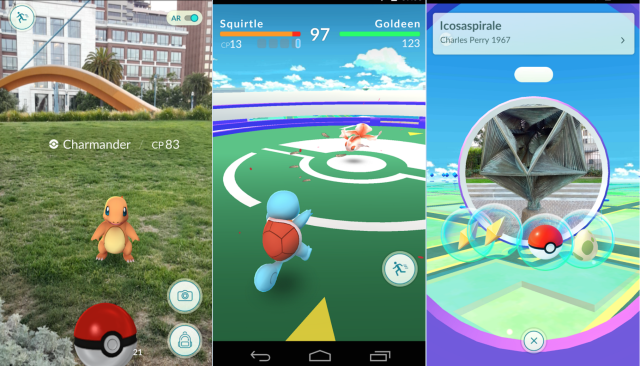
Let’s be honest: just about every single one of us agrees to Terms of Service without ever reading what we’re signing away. It’s no different for craze-of-the-week Pokémon Go, a game with a clause in its terms that strips you of your right to file a lawsuit against the company. However, if you’re one of the many people who just started using the app in the last few days, you still have time to opt out and preserve your constitutional right to a jury trial.

The Pokémon Go Terms of Service, as published by developer Niantic Labs, include a restrictive forced arbitration clause that both takes away the user’s right to file a lawsuit against Niantic, but also bars the user from joining others in any sort of class action against the company.

Instead, all legal disputes must be heard — on an individual basis — through private arbitration outside of a courtroom. Each user must mount their own case, even if all of the plaintiff users were wronged in the same exact way by the company.

So, imagine if there’s a huge data breach that results in the leaking of personal information for millions of Go users. Rather than have to answer for the totality of the error, the company would only have to face those few users who take the time — and have the resources — to bring a case before an arbitrator.

Even though those few users may bring identical cases to arbitration, there is always the chance that the arbitrator could rule differently in each instance. And if that arbitrator makes a mistake that would have changed the outcome, the Supreme Court has previously ruled that you’d have no recourse through the legal system.

SO HOW DO I OPT OUT OF THIS?

The Go terms do include an opt-out provision for people who don’t want to give up their rights. However, you must opt out within 30 days of first agreeing to the Terms of Service.

Luckily, many Pokémon Go users have only downloaded and activated the app in the last week, meaning they are still within that timeframe.

To Opt Out: Send an email ASAP (before the 30 days have passed) to termsofservice@nianticlabs.com with “Arbitration Opt-out Notice” in the subject line and a clear declaration that you are opting out of the arbitration clause in the Pokémon Go terms of service.

Source: Pokémon Go Strips Users Of Their Legal Rights; Here’s How To Opt Out – Consumerist

Posted in Uncategorized | Leave a comment