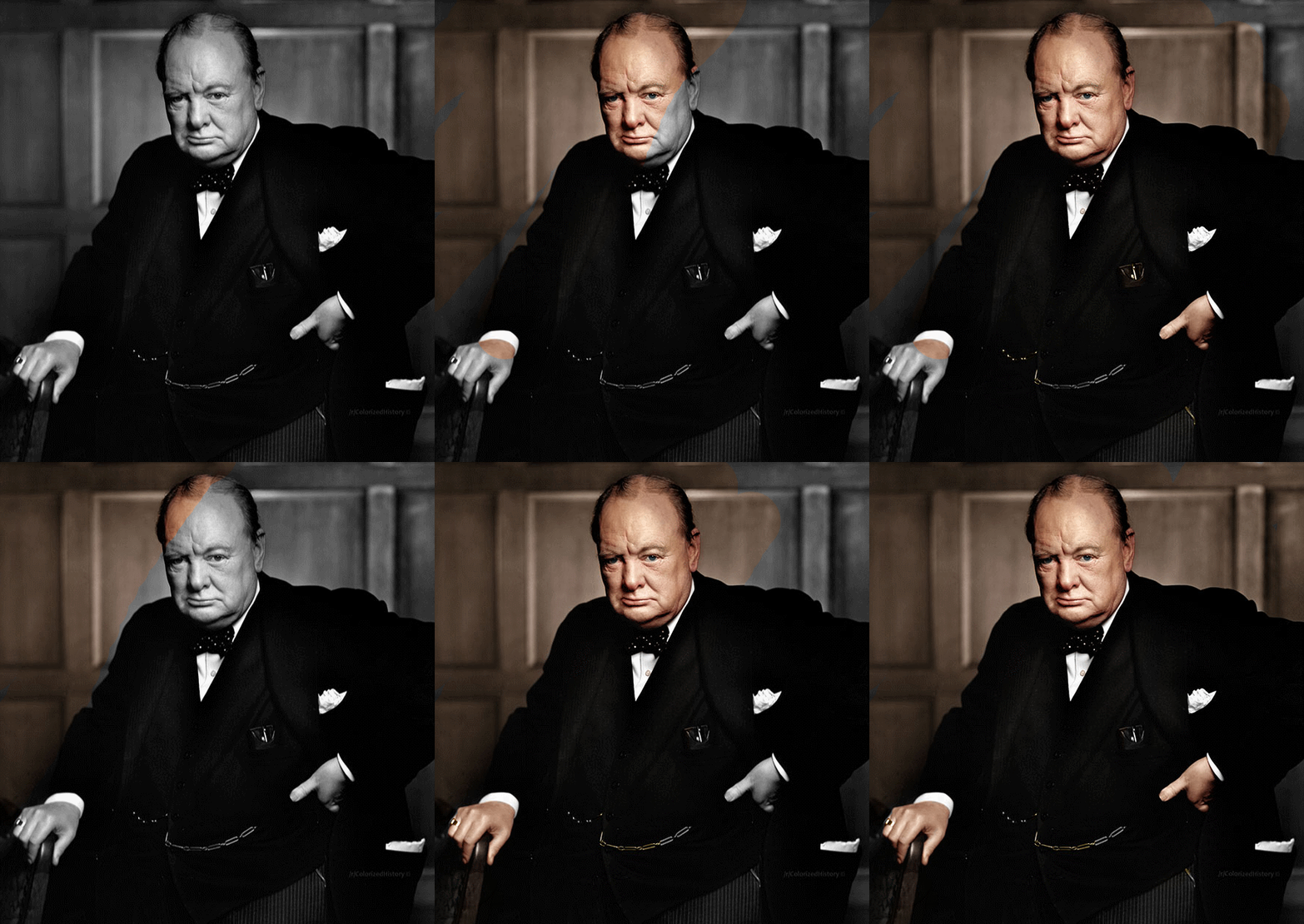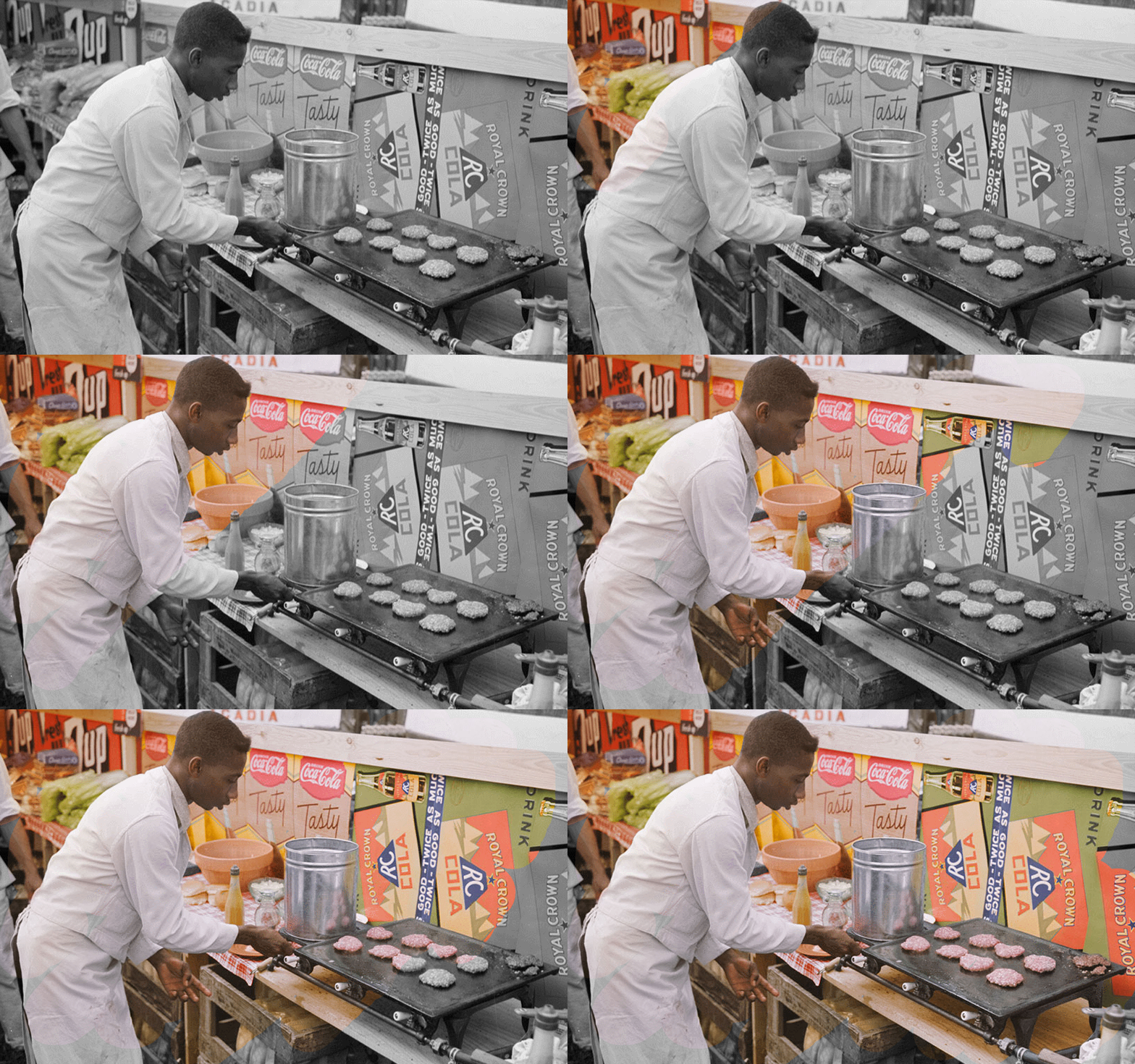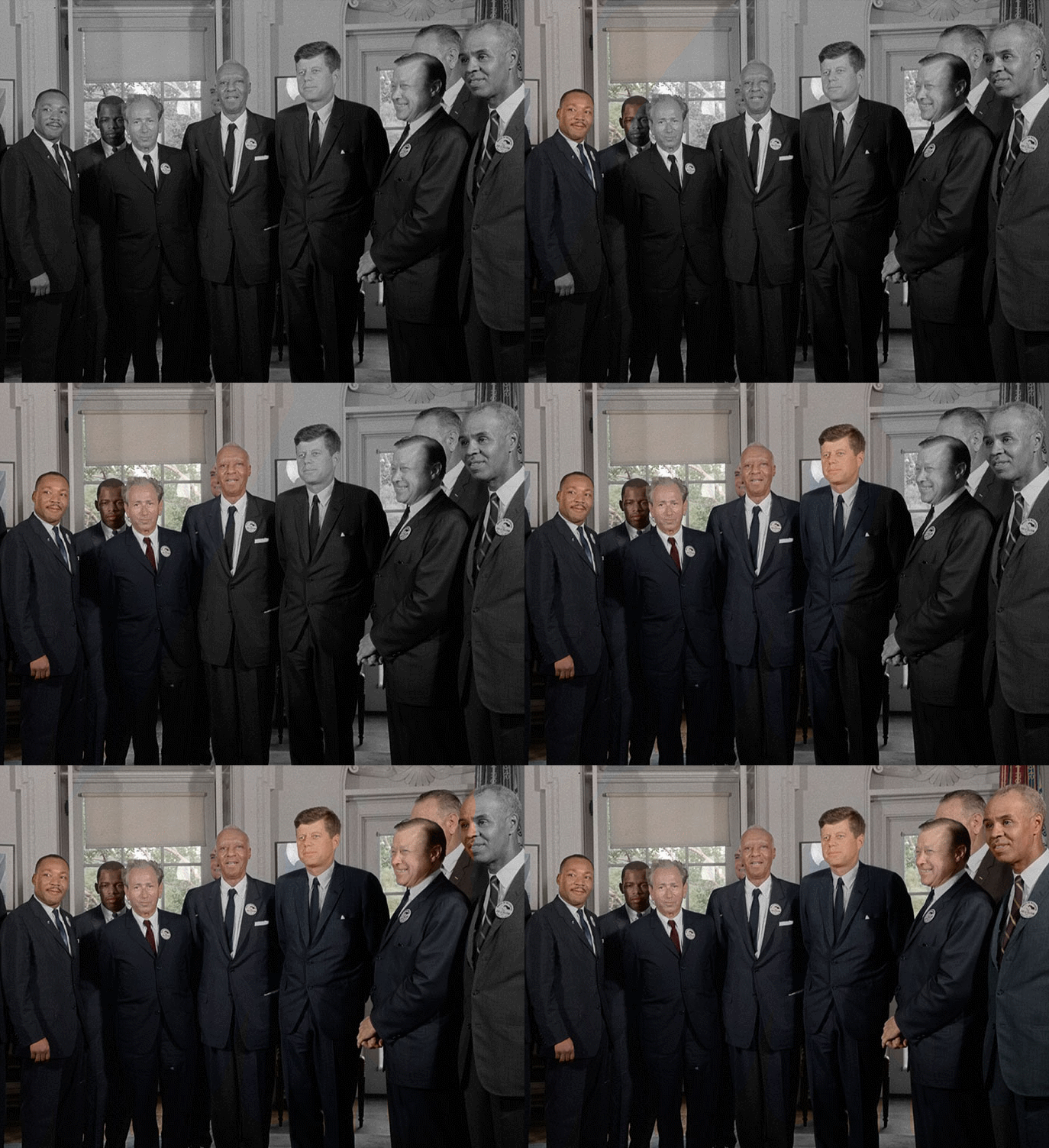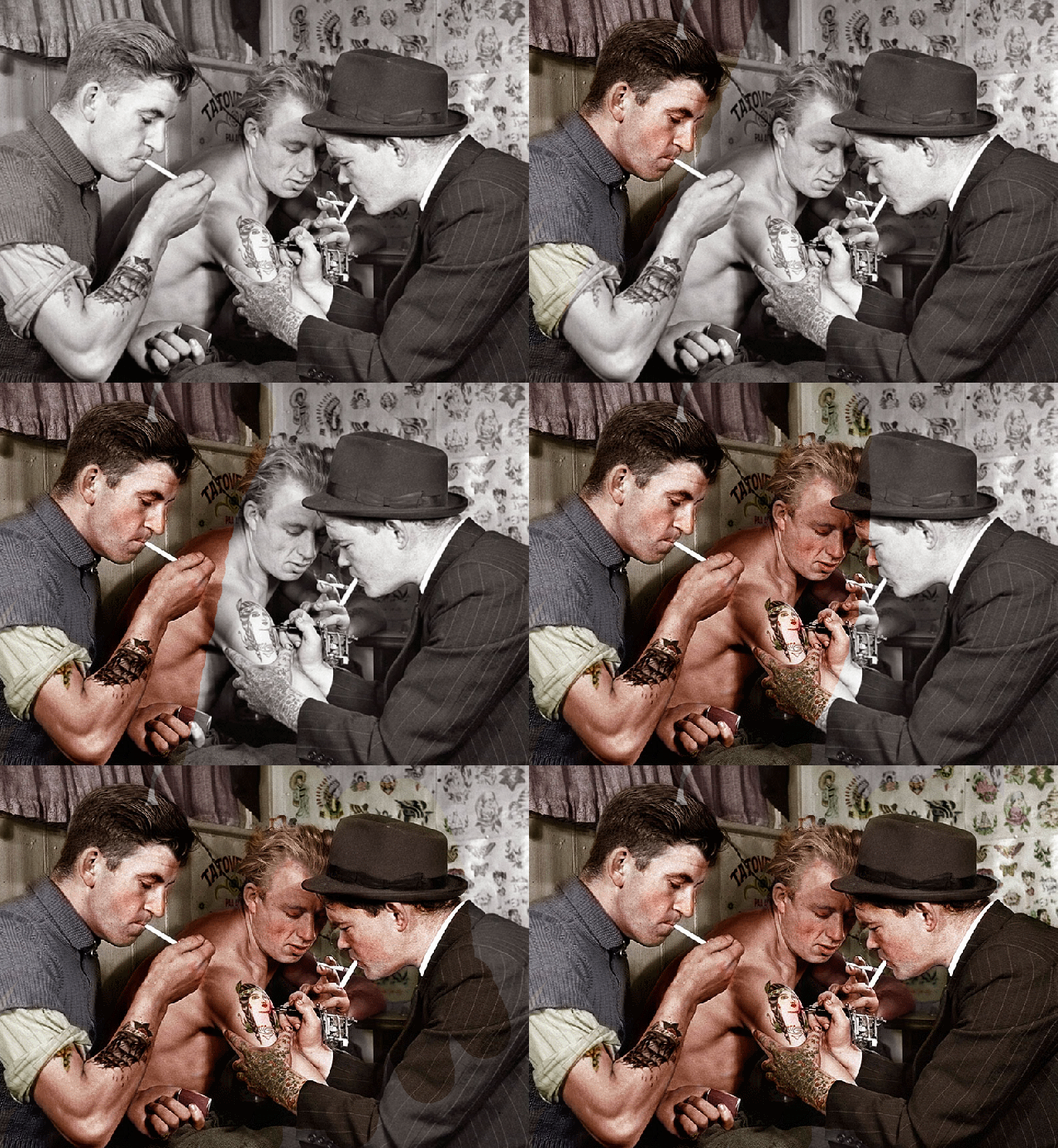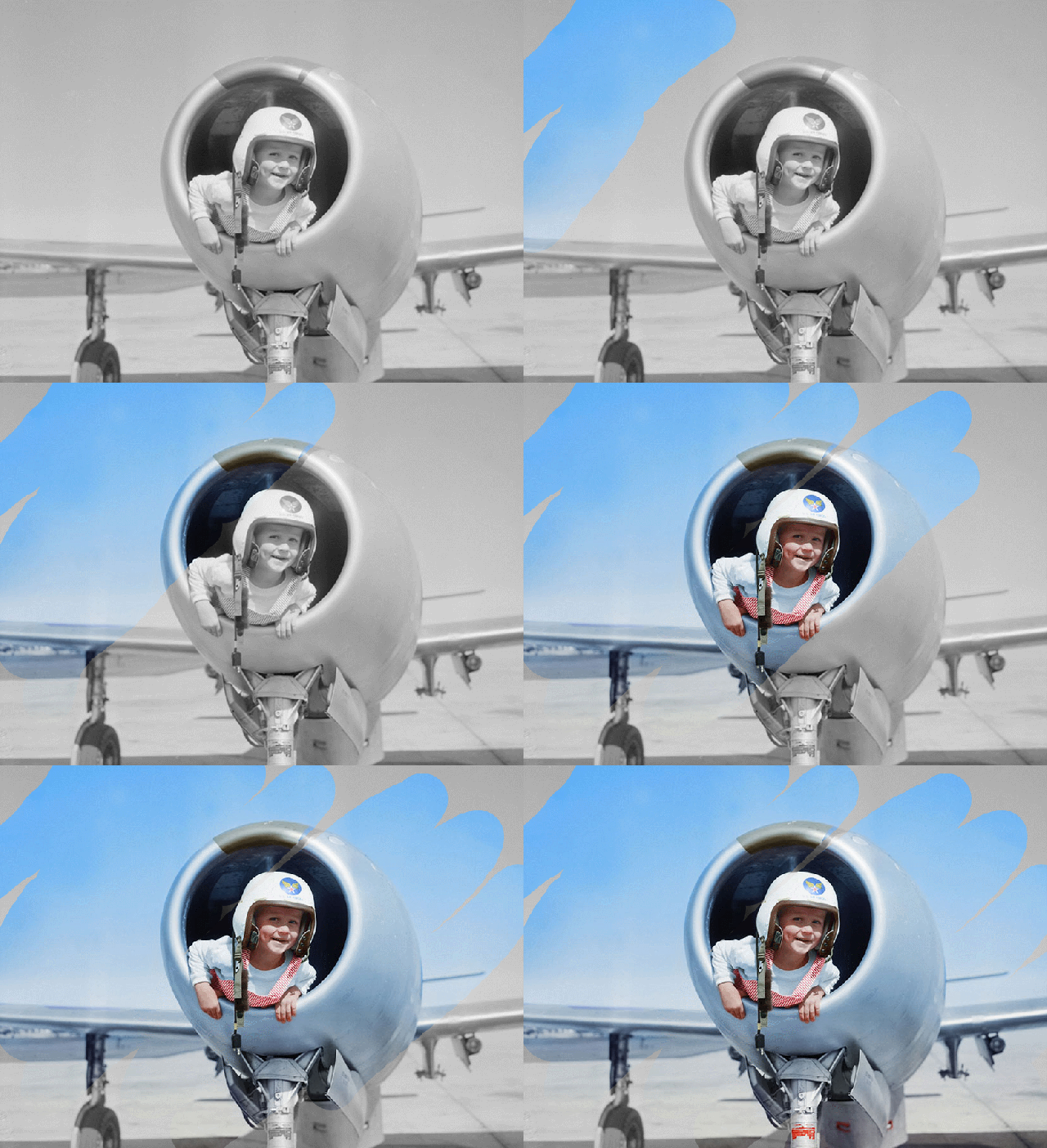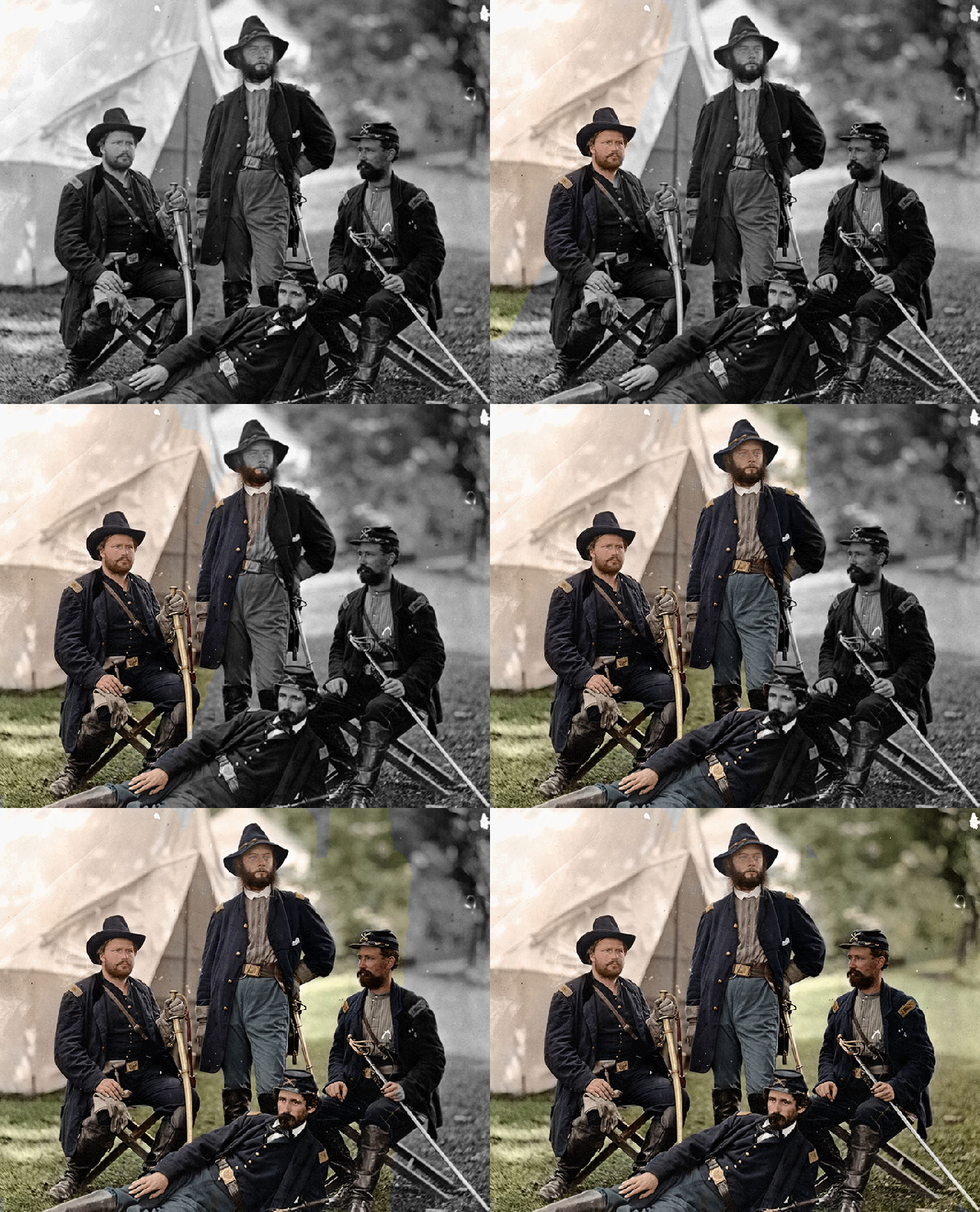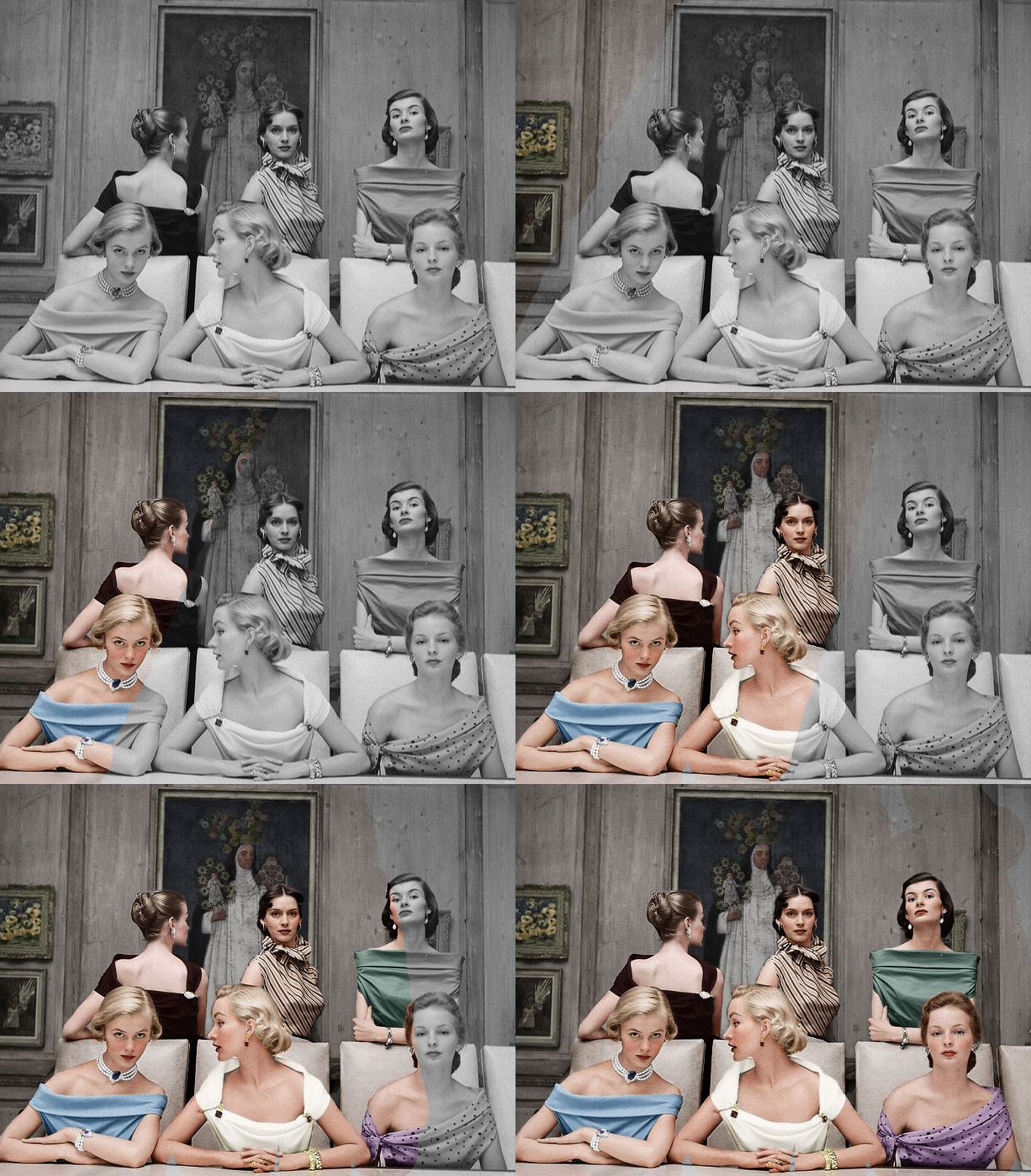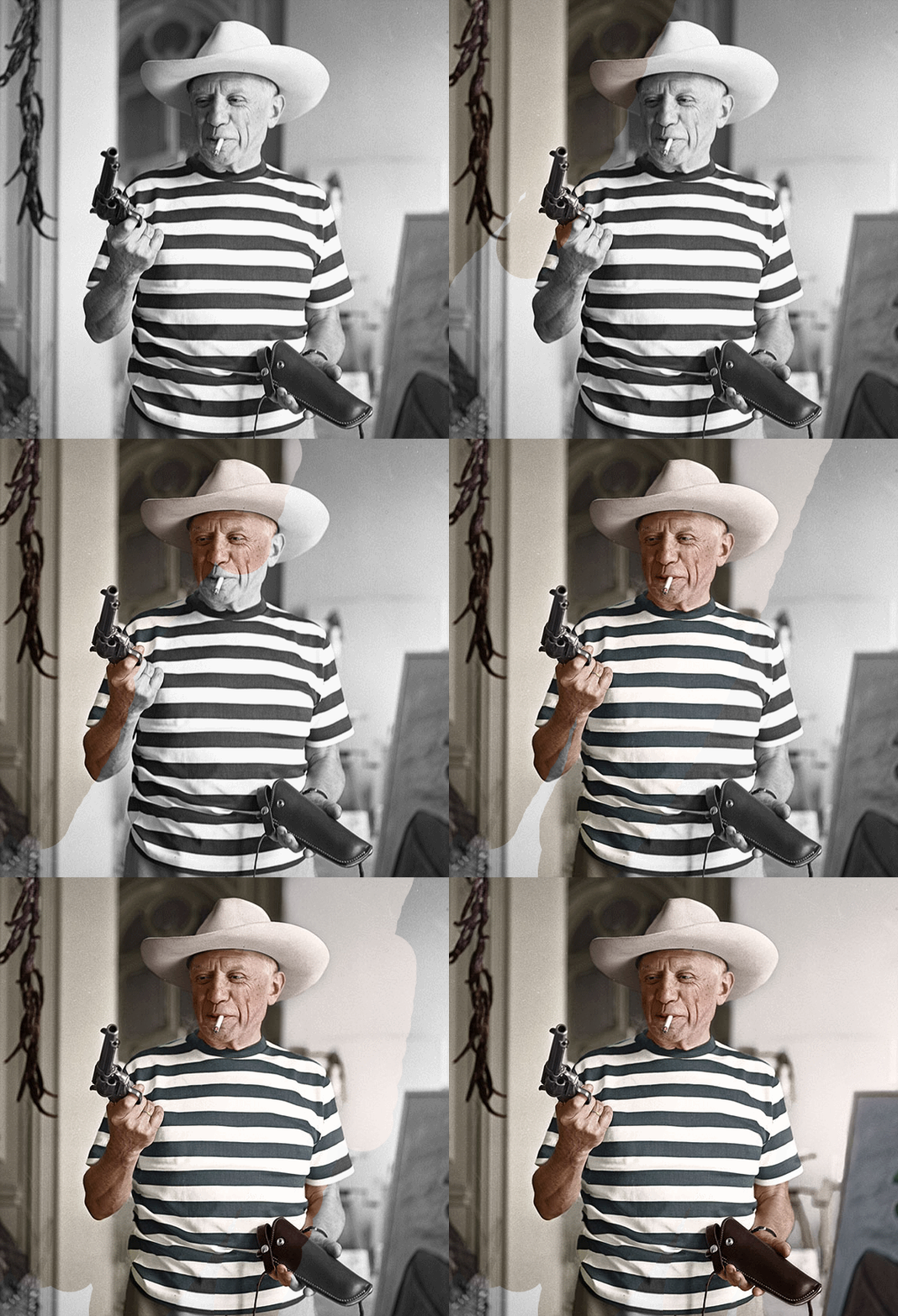
Awesome .gif’s of Old B&W Photos Transitioned to Color


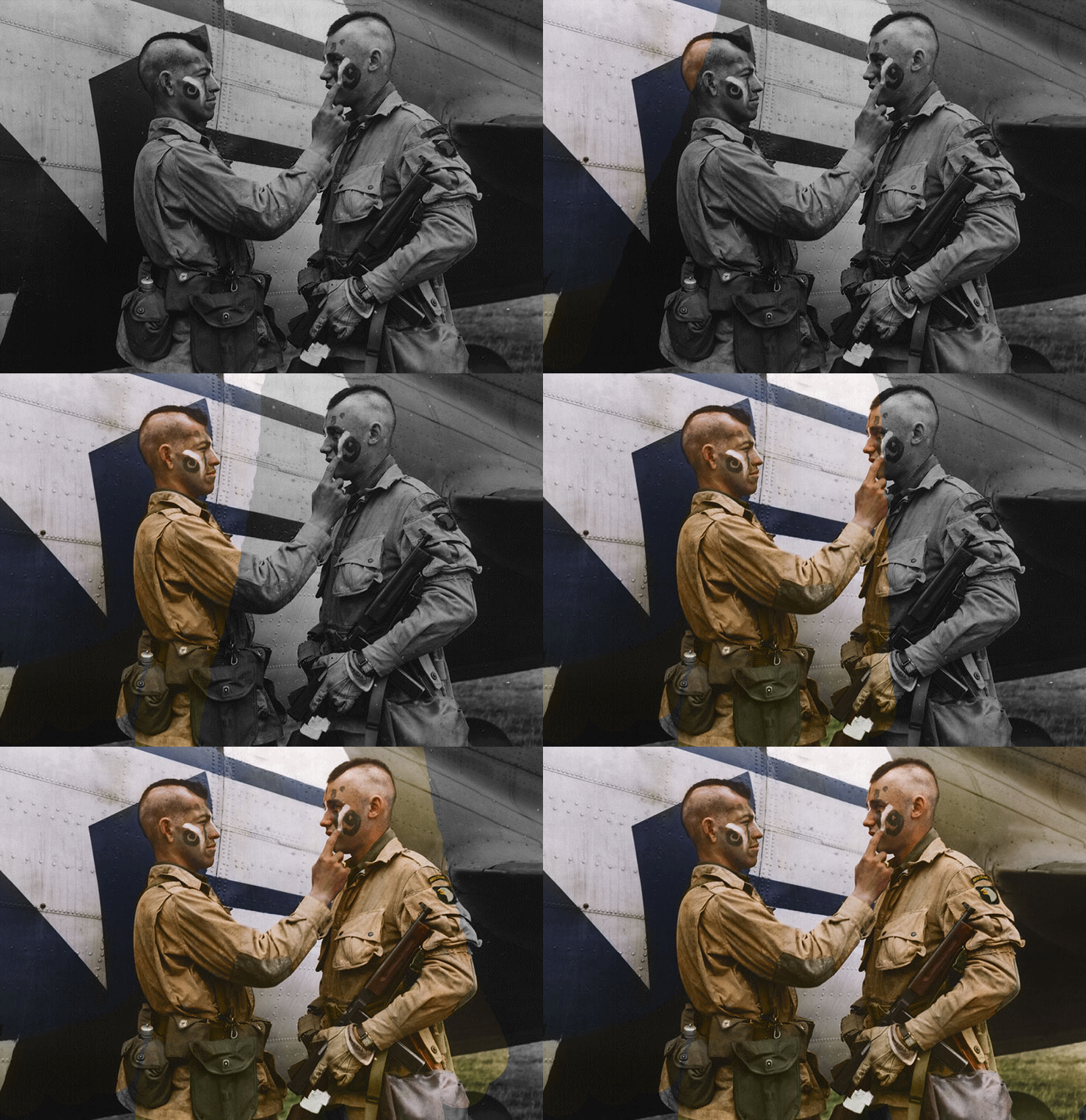
Watching the transition of these vintage images from B&W to color brings them alive.

audrey-hepburn

us-army-1944winston-churchillflippin-burgers-louisiana-1938jfk-mlkmarch-on-washington-1963

Source: Dynamichrome by Jordan Lloyd
“The craft of adding color to black and white photographs has been around as long as the medium of photography. Digital Color Reconstruction is its latest incarnation, combining historical investigation and technology to create an authentic representation of an existing record.”

Posted in .gifs, Art, History | Tagged , , , | Leave a comment

Rare Tribal and Asian Art at the 2017 San Francisco Tribal & Textile Art Show

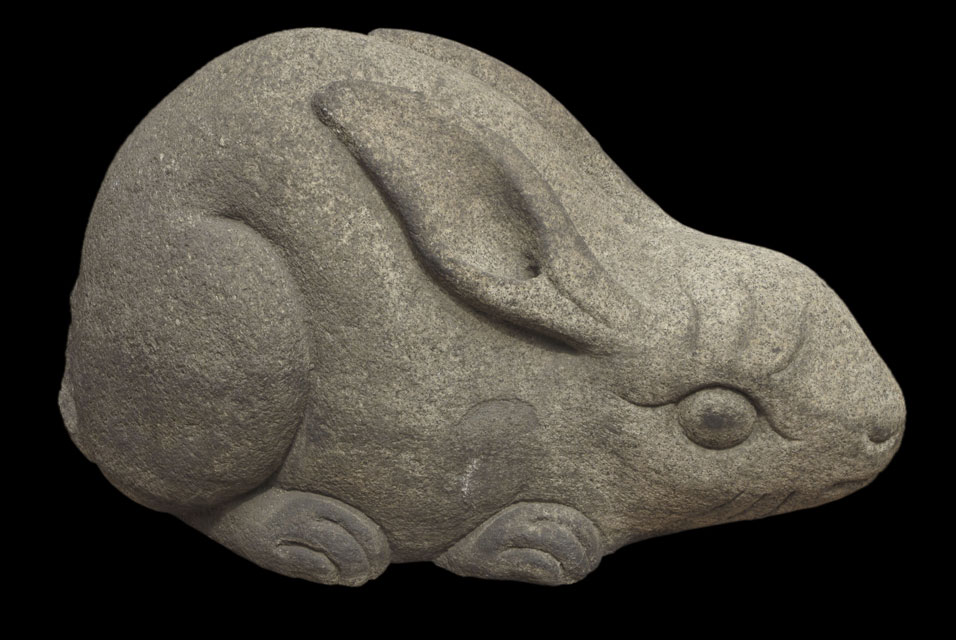
Crouched Rabbit of Granite. Found in a Kyoto Garden, Japan, Circa 1850.

The 2017 San Francisco Tribal & Textile Art Show opens at Fort Mason Center on February 9 with a wondrous assortment of art from a variety of indigenous sources.

Says John Strusinski, who founded Los Angeles-based Primary Source 28 year ago, “The Tribal & Textile Art Show is a must-attend destination for top collectors, museum curators, scholars and design aficionados who seek top-notch material. They know from experience what my gallery has to offer, and this year we’re especially delighted to showcase one-of-kind treasures that the fair-goers are not likely to forget.”
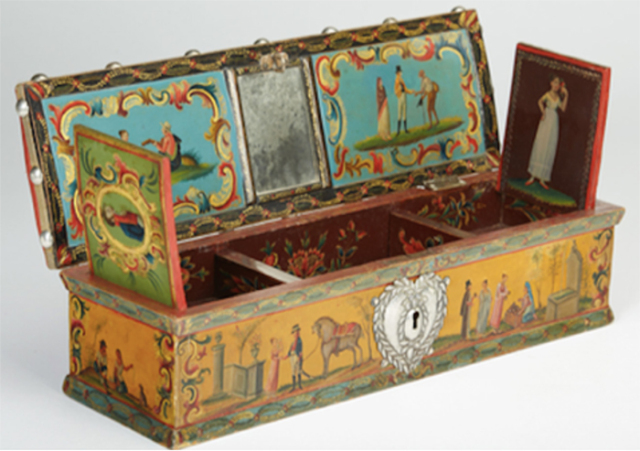
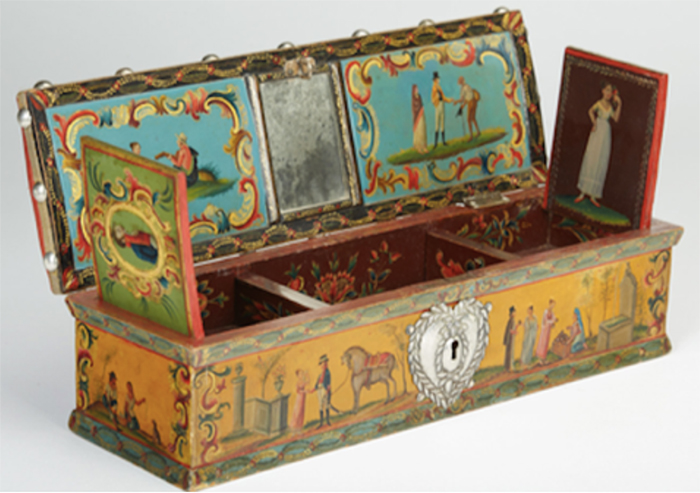
Almohadilla, Mexican Sewing box – Michoacán, Mexico 18th Century, Lacquered veneer 12 x 42 x 13 cm
Probably produced by the Cerda family in Michoacan, Mexico. Inquisition officials found many
 Almohadilla, Mexican Sewing box - Michoacán, Mexico 18th Century, Lacquered veneer 12 x 42 x 13 cm Almohadilla, Mexican Sewing box - Michoacán, Mexico 18th Century, Lacquered veneer 12 x 42 x 13 cm Probably produced by the Cerda family in Michoacan, Mexico. Inquisition officials found many tools associated with sewing, knitting and embroidery, some of the hobbies of high-born colonial women - This Sewing box or “Almohadilla” as known in Spanish countries, is a fine example of the quality expected by high ranking Mexican families. The present Almohadilla depicts various scenes from daily and intimate life, for example buying fruit cultivated on the islands of the lake, being presented with flowers, set in the lush grounds of a castle or villa. Biombo, Peruvian School - 18th Century, Seven Panel folding Viceregal screen, oil on canvas 208 x 504 cm Biombo, Peruvian School - 18th Century, Seven Panel folding Vicer


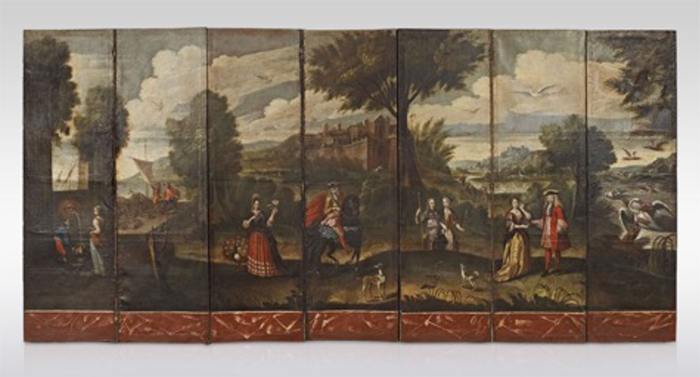
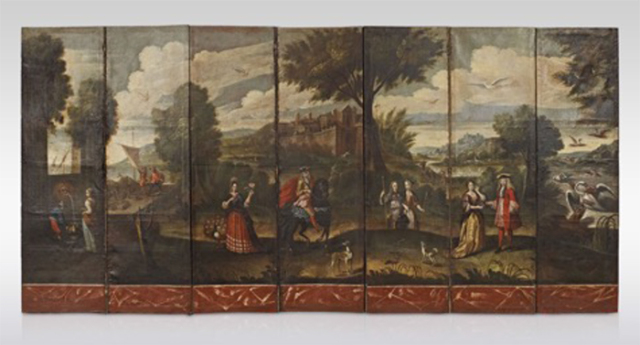
Biombo, Peruvian School – 18th Century, Seven Panel folding Viceregal screen, oil on canvas 208 x 504 cm 

First appearing in the Americas in the early 17th century after their introduction from Japan and China, the folding screens of New Spain, or biombos, would come to embellish the homes and palaces of the elite. In their various permutations, they reflect the changing tastes and fashions of a world increasingly connected through global economic exchange and the politics of the colonial period. The present screen depicts various couples set in the lush grounds of a castle with a hunting scene in the background. In the centre, a woman stands close to a peacock, perhaps symbolizing marriage, who holds a rose in her hands and turns towards a gentleman on a horse. To their right, another couple are dressed as pilgrims of the Camino de Santiago de Compostela as evident by the scallop shells stitched on their clothes, possibly as a memoir of their pilgrimage to the Galician city. A similar biombo, depicting a scene of early 18th century daily life in Colonial Mexico is at the Denver Art Museum. Provenance: From the Collection of Duque de Sessa’s family Gavito y Jauregui, Barcelona in 18th century.
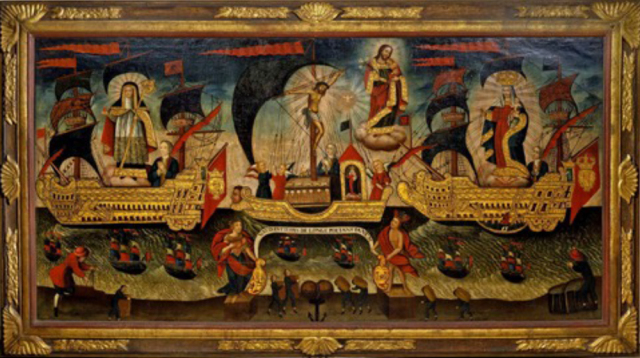
 Almohadilla, Mexican Sewing box - Michoacán, Mexico 18th Century, Lacquered veneer 12 x 42 x 13 cm Almohadilla, Mexican Sewing box - Michoacán, Mexico 18th Century, Lacquered veneer 12 x 42 x 13 cm Probably produced by the Cerda family in Michoacan, Mexico. Inquisition officials found many tools associated with sewing, knitting and embroidery, some of the hobbies of high-born colonial women - This Sewing box or “Almohadilla” as known in Spanish countries, is a fine example of the quality expected by high ranking Mexican families. The present Almohadilla depicts various scenes from daily and intimate life, for example buying fruit cultivated on the islands of the lake, being presented with flowers, set in the lush grounds of a castle or villa. Biombo, Peruvian School - 18th Century, Seven Panel folding Viceregal screen, oil on canvas 208 x 504 cm Biombo, Peruvian School - 18th Century, Seven Panel folding Viceregal screen, oil on canvas 208 x 504 cm First appearing in the Americas in the early 17th century after their introduction from Japan and China, the folding screens of New Spain, or biombos, would come to embellish the homes and palaces of the elite. In their various permutations, they reflect the changing tastes and fashions of a world increasingly connected through global economic exchange and the politics of the colonial period. The present screen depicts various couples set in the lush grounds of a castle with a hunting scene in the background. In the centre, a woman stands close to a peacock, perhaps symbolizing marriage, who holds a rose in her hands and turns towards a gentleman on a horse. To their right, another couple are dressed as pilgrims of the Camino de Santiago de Compostela as evident by the scallop shells stitched on their clothes, possibly as a memoir of their pilgrimage to the Galician city. A similar biombo, depicting a scene of early 18th century daily life in Colonial Mexico is at the Denver Art Museum. Provenance: From the Collection of Duque de Sessa's family Gavito y Jauregui, Barcelona in 18th century. Allegorical Flotilla of Salvation Perú. Cuzco School 17th Century Oil on canvas 49 7/8 x 99 1/2 inches (127 x 253 cm) Allegorical Flotilla of Salvation Perú. Cuzco School 17th Century Oil on canvas 49 7/8 x 99 1/2 inches (127 x 253 cm)
Allegorical Flotilla of Salvation Perú. Cuzco School 17th Century Oil on canvas 49 7/8 x 99 1/2 inches (127 x 253 cm)


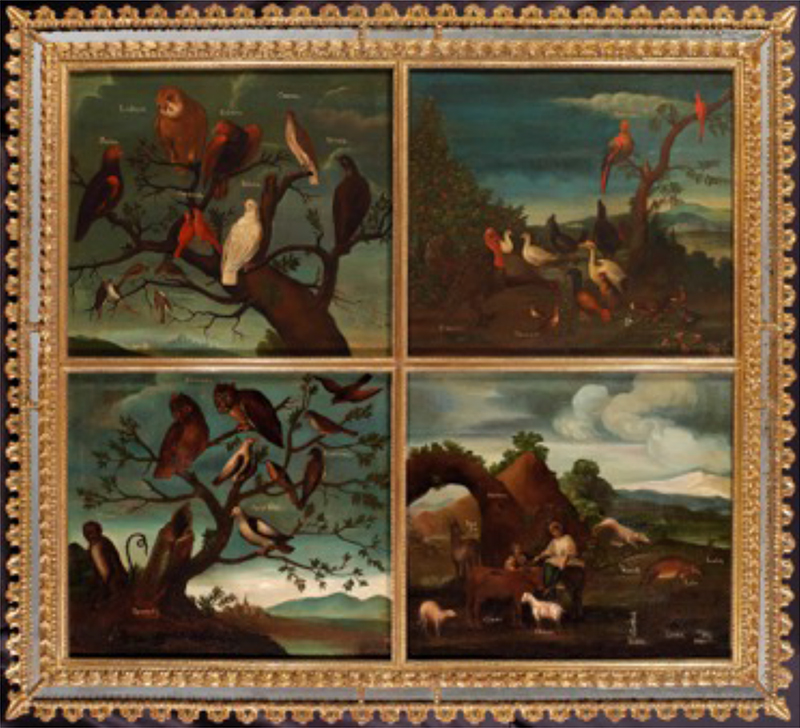
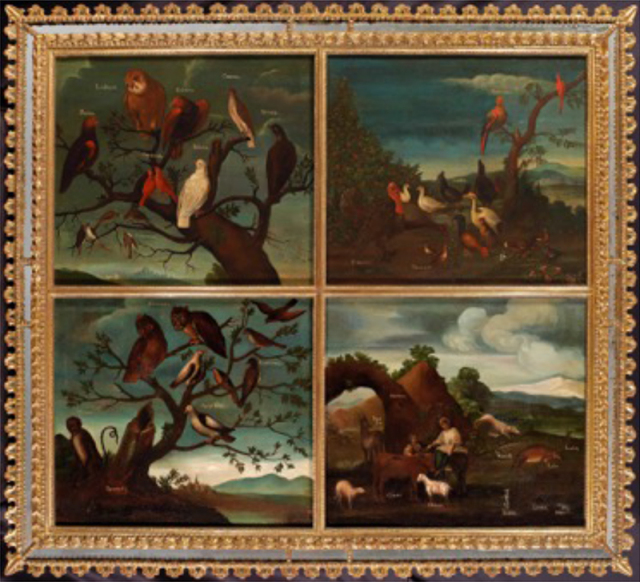
Buenaventura José Guiol, Birds of Mexico, ca. 1770-80, oil on canvas, 62.3 x 55.5 cm. Denver Art Museum, Collection of Jan and Frederick Mayer Buenaventura José Guiol, Birds of Mexico, ca. 1770-80, oil on canvas, 62.3 x 55.5 cm. Denver Art Museum, Collection of Jan and Frederick Mayer Formerly in the collection of Jacqueline Goldman, Paris "This set of four paintings

Buenaventura José Guiol, Birds of Mexico, ca. 1770-80, oil on canvas, 62.3 x 55.5 cm. Denver Art Museum, Collection of Jan and Frederick Mayer
Formerly in the collection of Jacqueline Goldman, Paris

“This set of four paintings depicting the fauna of Mexico were painted in the second half of the eighteenth century, by Buenaventura José Guiol who is also known to have painted another set of birds which are now displayed in the Denver art museum and two sets of casta paintings. (…) Buenaventura José Guiol depicted these landscapes elaborately and heavy with colour. The skies are ripe with rain and movement, promising nourishment for the already fertile and abundant vegetation. The categorization of birds and other animals dominate these landscapes. Many of these species, which were native to the landscape of the New World would have been previously unseen by European audiences…”
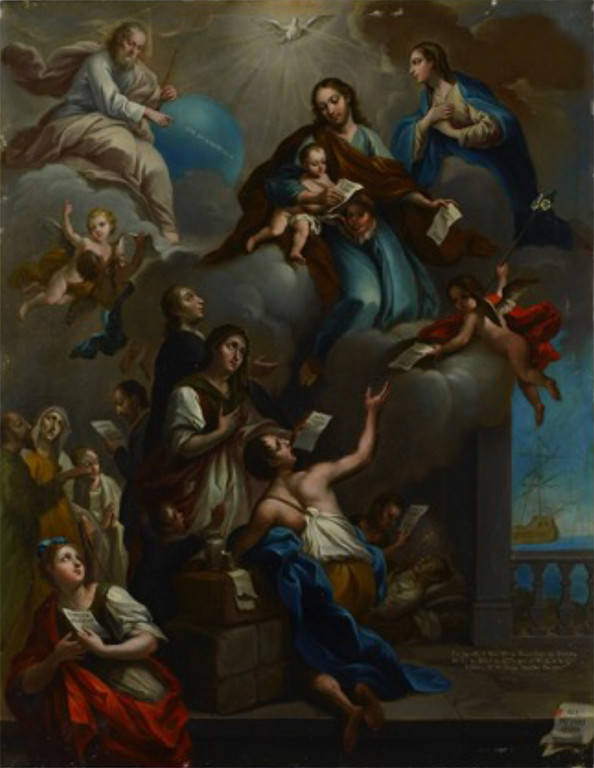
The Dream of Pharaoh and Joseph's rise to Viceroy of Egypt, 1774, Oil on copper 80 x 65 cm The Dream of Pharaoh and Joseph's rise to Viceroy of Egypt, 1774, Oil on copper 80 x 65 cm Inscribed lower right hand

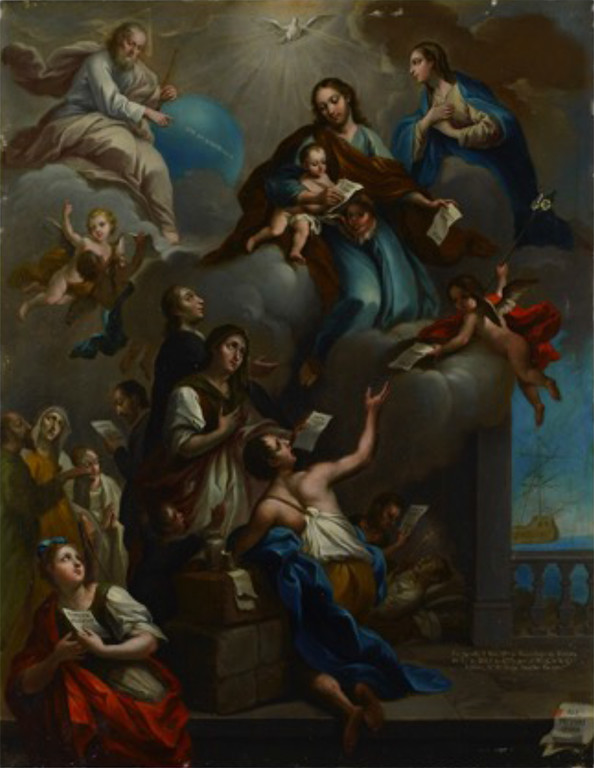
The Dream of Pharaoh and Joseph’s rise to Viceroy of Egypt, 1774, Oil on copper 80 x 65 cm
Inscribed lower right hand side: ‘Fue tocada a Nra. S.ra de Guadalupe de Mexico en 20 de Abril de 1774 por el Abad de la Colegiata Dr. Dn. Diego Sanchez Pareja.’ Signed lower right on the step: Joans Patris Morlete Ruiz Pingt. This elaborate and impressive copper by Morlete Y Ruiz depicts the rise of Joseph to the role of Viceroy of Egypt following his revelation of Pharoah’s dream represented by the bales of wheat. Its didactic nature was very much a theme of religious painting in 18th century Mexico. As the inscription relates, this particular example was commissioned by the abbot of Santa Maria de Guadalupe, the most important shrine in the Americas, Dr Diego Sanchez Pareja. The various elements of Joseph’s life incorporated into the painting could well be a reference to Dr Pereja’s own career, rising to a position of power within the church at a time when its influence in the secular world was also notable. Indeed the central figure in clerical garb is most probably his portrait. Along with the Trinity and the Virgin, the inclusion of a ship may have had a very personal meaning. In 1766 Dr Pareja was aboard a trading ship called the El Nuevo Constante which was sailing from Veracruz in Mexico to Cadiz. Unfortunately the ship foundered in shallow water off the coast of Louisiana and had to be abandoned, the crew and passengers were all rescued and indeed the majority of the cargo was also saved. The wreck itself was rediscovered in 1979 and an archaeological survey undertaken, its importance being in the fact the original cargo manifests survive. It would seem perfectly reasonably for Dr Pareja, on his return from Spain, to commemorate his own good fortune in a devotional work commissioned for his collegiate church. 
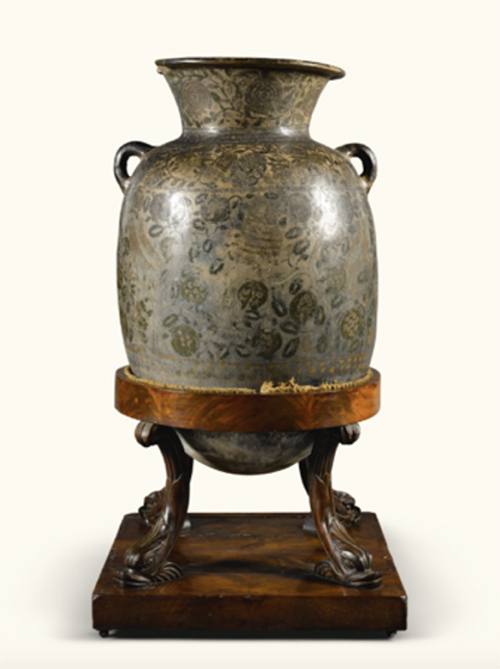
 Buenaventura José Guiol, Birds of Mexico, ca. 1770-80, oil on canvas, 62.3 x 55.5 cm. Denver Art Museum, Collection of Jan and Frederick Mayer Buenaventura José Guiol, Birds of Mexico, ca. 1770-80, oil on canvas, 62.3 x 55.5 cm. Denver Art Museum, Collection of Jan and Frederick Mayer Formerly in the collection of Jacqueline Goldman, Paris "This set of four paintings depicting the fauna of Mexico were painted in the second half of the eighteenth century, by Buenaventura José Guiol who is also known to have painted another set of birds which are now displayed in the Denver art museum and two sets of casta paintings. (...) Buenaventura José Guiol depicted these landscapes elaborately and heavy with colour. The skies are ripe with rain and movement, promising nourishment for the already fertile and abundant vegetation. The categorization of birds and other animals dominate these landscapes. Many of these species, which were native to the landscape of the New World would have been previously unseen by European audiences…" The Dream of Pharaoh and Joseph's rise to Viceroy of Egypt, 1774, Oil on copper 80 x 65 cm The Dream of Pharaoh and Joseph's rise to Viceroy of Egypt, 1774, Oil on copper 80 x 65 cm Inscribed lower right hand side: ‘Fue tocada a Nra. S.ra de Guadalupe de Mexico en 20 de Abril de 1774 por el Abad de la Colegiata Dr. Dn. Diego Sanchez Pareja.’ Signed lower right on the step: Joans Patris Morlete Ruiz Pingt. This elaborate and impressive copper by Morlete Y Ruiz depicts the rise of Joseph to the role of Viceroy of Egypt following his revelation of Pharoah’s dream represented by the bales of wheat. Its didactic nature was very much a theme of religious painting in 18th century Mexico. As the inscription relates, this particular example was commissioned by the abbot of Santa Maria de Guadalupe, the most important shrine in the Americas, Dr Diego Sanchez Pareja. The various elements of Joseph’s life incorporated into the painting could well be a reference to Dr Pereja’s own career, rising to a position of power within the church at a time when its influence in the secular world was also notable. Indeed the central figure in clerical garb is most probably his portrait. Along with the Trinity and the Virgin, the inclusion of a ship may have had a very personal meaning. In 1766 Dr Pareja was aboard a trading ship called the El Nuevo Constante which was sailing from Veracruz in Mexico to Cadiz. Unfortunately the ship foundered in shallow water off the coast of Louisiana and had to be abandoned, the crew and passengers were all rescued and indeed the majority of the cargo was also saved. The wreck itself was rediscovered in 1979 and an archaeological survey undertaken, its importance being in the fact the original cargo manifests survive. It would seem perfectly reasonably for Dr Pareja, on his return from Spain, to commemorate his own good fortune in a devotional work commissioned for his collegiate church.  Tinaja, large Guadalajara earthenware two handled amphora vase, Overall height 112cm., 44 1/8 in., the vessel approximately 86cm., 33 7/8 in. long Tinaja, large Guadalajara earthenware two handled amphora vase, Overall height 112cm., 44 1/8 in., the vessel approximately 86cm., 33 7/8 in. long Of amphora form with a rounded base and flaring


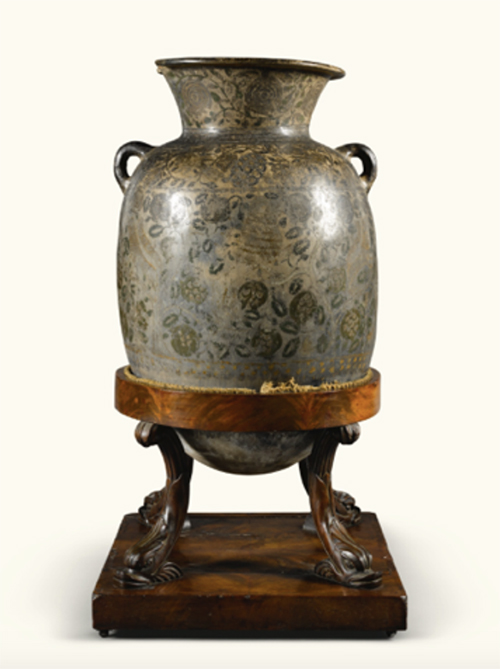
Tinaja, large Guadalajara earthenware two handled amphora vase, Overall height 112cm., 44 1/8 in., the vessel approximately 86cm., 33 7/8 in. long
Of amphora form with a rounded base and flaring neck.
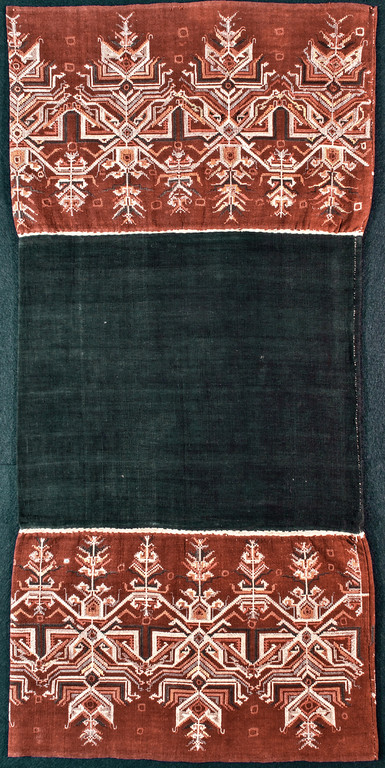
Dancing Threads Dancing Threads HINGGI SUM

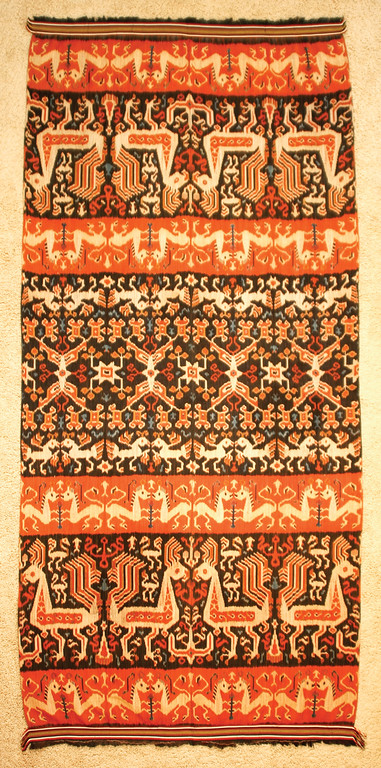
Dancing Threads- Indonesian Skirts
Dancing Threads Dancing Threads Woman

Dancing Threads D

Dancing Threads Dancing Threads TAMPAN Original

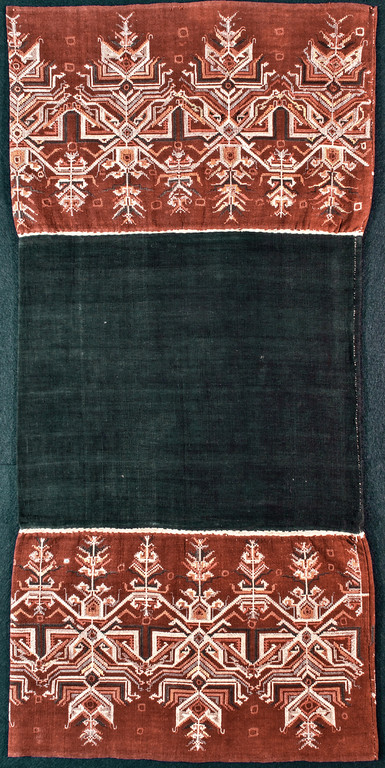
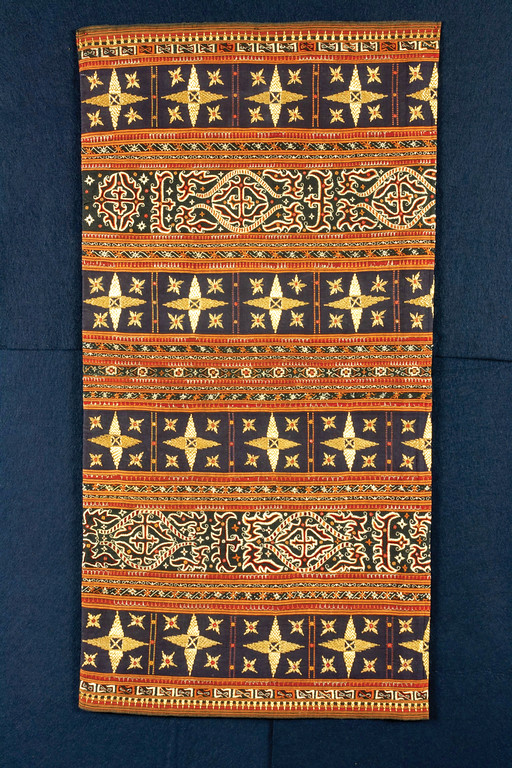
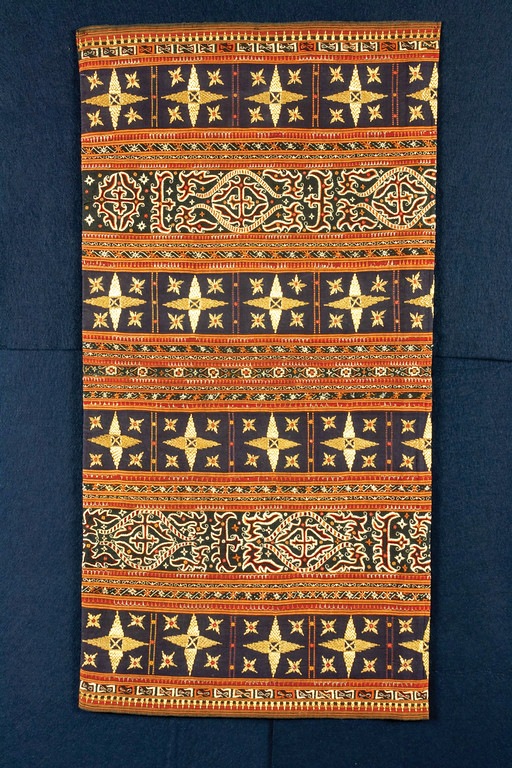
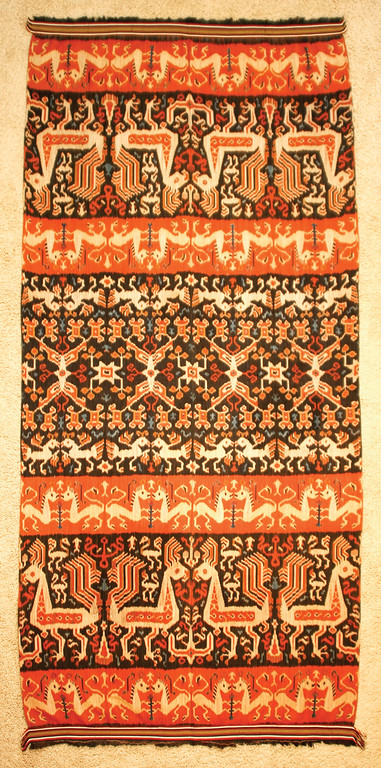
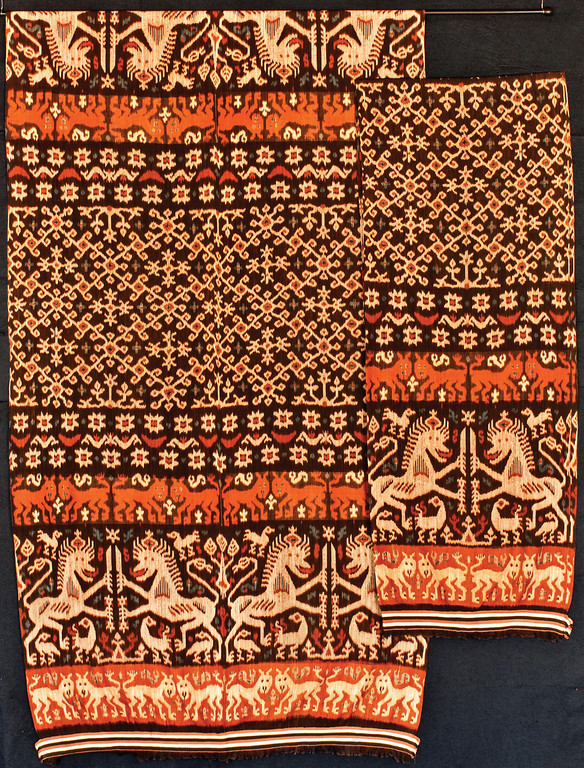
Dancing Threads Dancing Threads TAPIS Origin: Lampung, South Sumatra, Indonesia These intricate, elaborate skirts are hand dyed and hand woven by women to wear during important ceremonies. First woven and sewn into a large rectangle, the sides were then joined to create a tube for the woman to step into and wear as a sarong. Due to Lampung's position along major maritime routes and their own production of desirable trade goods, such as pepper and gold, the women of Lampung had ready access to a variety of iconography from other cultures and a wide range of trade materials. This wealth is on display here with the imaginative use of silk, cotton, mica and gold. The skills necessary to create these tapis gradually diminished during the early part of the twentieth century and were extinguished completely during World War II. Dancing Threads Dancing Threads HINGGI SUMBA ISLAND, INDONESIA Large, bold designs characterize the hinggi (men’s blankets) from the island of Sumba. The ikat patterns are dyed and woven by hand. Hinggi are usually made in pairs but then separated for reasons of utility, ritual or ceremony. Such pieces would be worn by a Sumbanese man - one around his hips, the other one around his shoulders. The finest hinggi were made as gifts to the nobility in order to be buried with them, with the unfortunate consequence that many of the most beautiful are gone.


TAPIS Origin: Lampung, South Sumatra, Indonesia These intricate, elaborate skirts are hand dyed and hand woven by women to wear during important ceremonies. First woven and sewn into a large rectangle, the sides were then joined to create a tube for the woman to step into and wear as a sarong. Due to Lampung’s position along major maritime routes and their own production of desirable trade goods, such as pepper and gold, the women of Lampung had ready access to a variety of iconography from other cultures and a wide range of trade materials. This wealth is on display here with the imaginative use of silk, cotton, mica and gold. The skills necessary to create these tapis gradually diminished during the early part of the twentieth century and were extinguished completely during World War
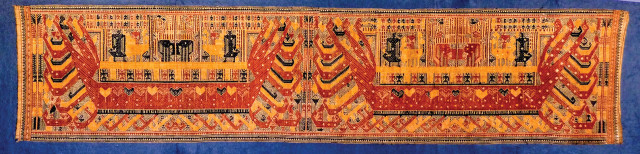
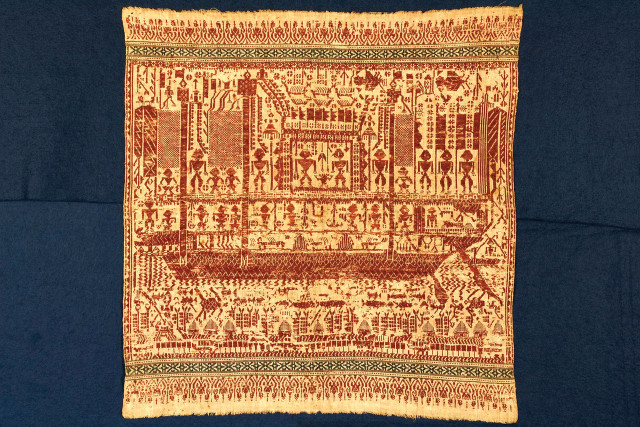
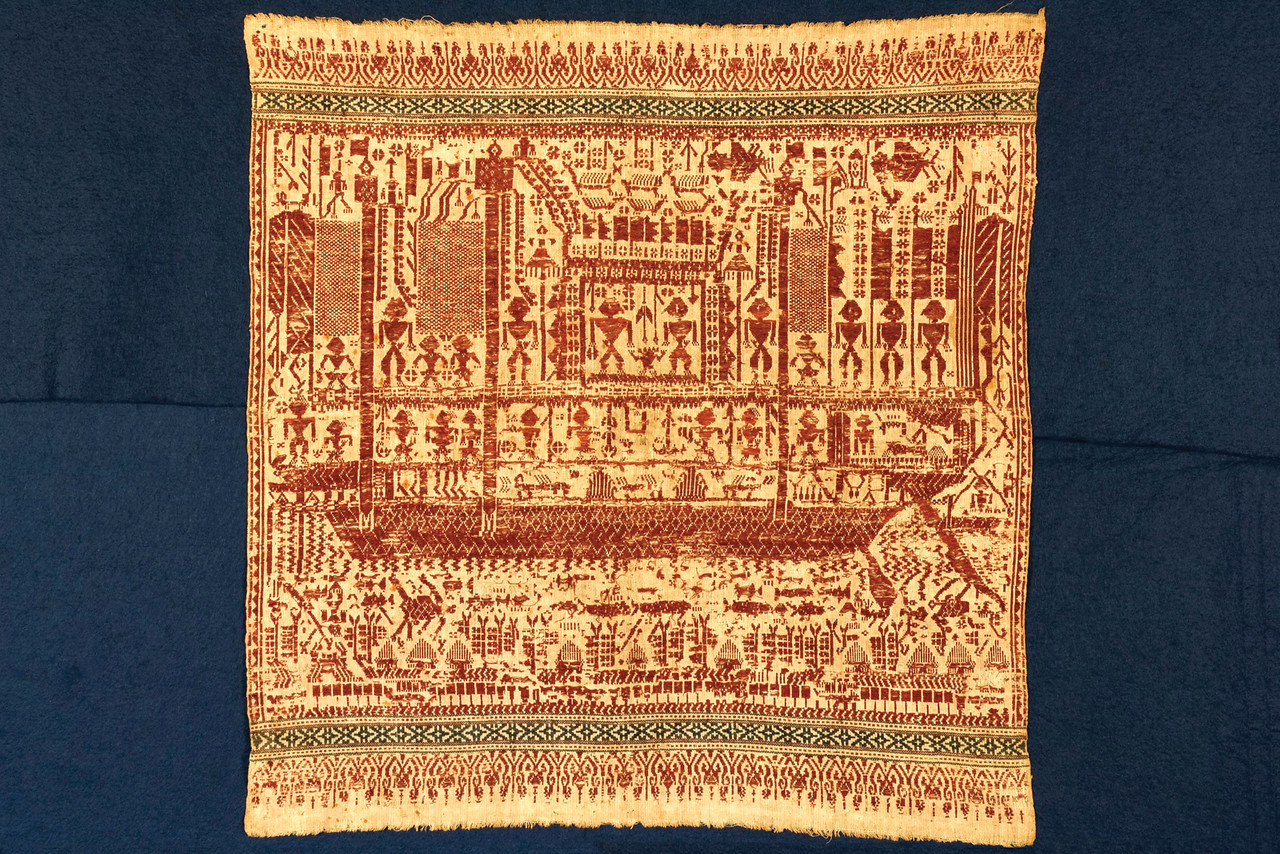
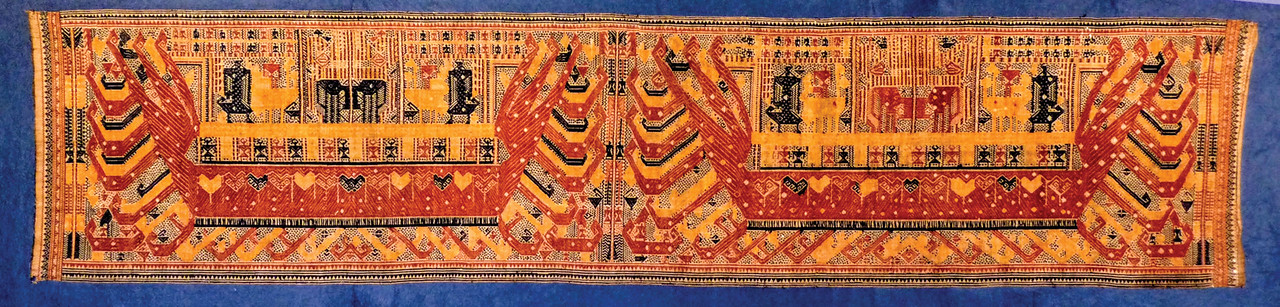
Dancing Threads Dancing Threads This extremely rare 19th century double-red ship textile is from Lampung, in south Sumatra and will be part of the exhibit. This area produced the spectacular so-called “ship cloths”, arguably the most famous textiles to come out of Indonesia. Ship cloths were thought to ease the transition from one stage of life to another. The long ship cloths, called palepai, were made and used only by the aristocracy. These were used as ceremonial banners to mark the position of the most important people in the ceremony. Strict sanctions prevented any but the aristocracy from making, possessing, or using palepai.
Dancing Threads
Dancing Threads
This extremely rare 19th century double-red ship textile is from Lampung, in south Sumatra and will be part of the exhibit. This area produced the spectacular so-called “ship cloths”, arguably the most famous textiles to come out of Indonesia. Ship cloths were thought to ease the transition from one stage of life to another. The long ship cloths, called palepai, were made and used only by the aristocracy. These were used as ceremonial banners to mark the position of the most important people in the ceremony. Strict sanctions prevented any but the aristocracy from making, possessing, or using palepai.

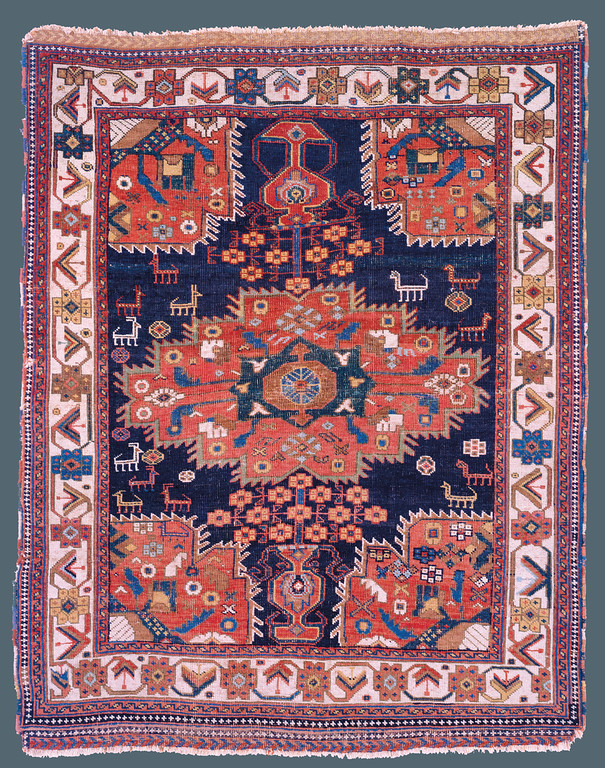
Afshar, Southwest Persia, Late 19th C., 4'0" X 5’6" Afshar, Southwest Persia, Late 19th C., 4'0" X 5’6" Afshar, Persia. Mid 19th c. 3' 5" x 4' 4" Afshar, Persia. Mid 19th c. 3' 5" x 4' 4" Published: “Oriental Rugs from Pacific Collections”, Murray L. Eiland, 1990. Page 79, plate #46. During the 19th century, the central medallion format, complete with complimentary corner pieces, was generally a design of large, formal workshop carpets. The nomadic weaver of this Afshar rug was inspired by the classic layout, but transformed it with her native, vibrantly colorful aesthetic. She dispensed with the classical formality, and instead focused on the purity of naturally derived color and added charmingly drawn animals to roam the indigo field. This rug exemplifies the true spirit of Afshar weaving.
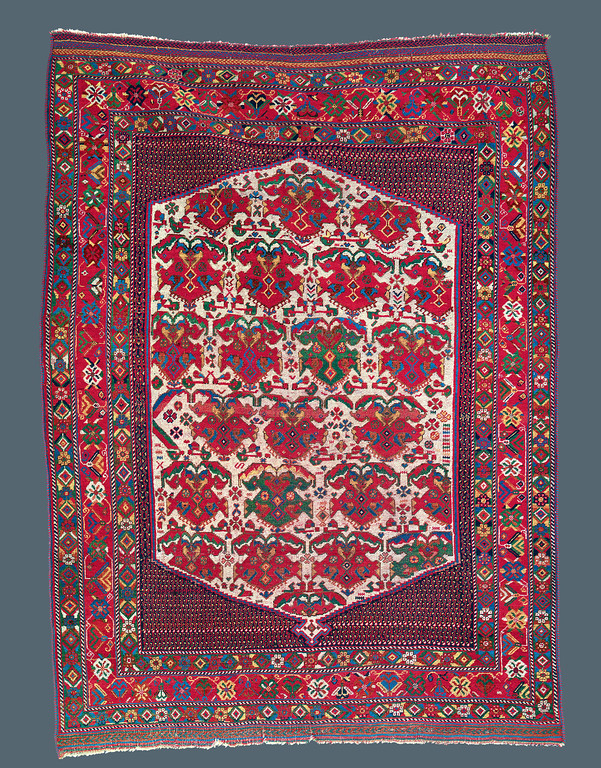

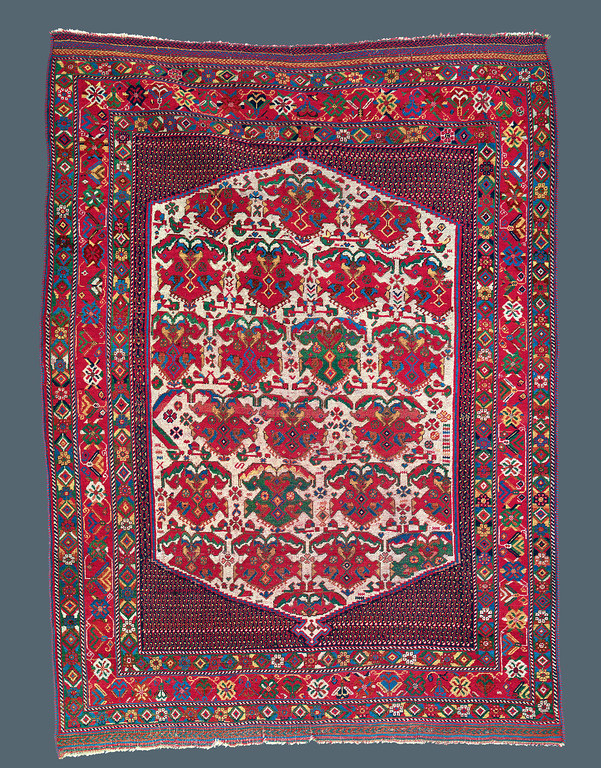
Afshar, Southwest Persia, Late 19th C., 4’0″ X 5’6″
 During the 19th century, the central medallion format, complete with complimentary corner pieces, was generally a design of large, formal workshop carpets. The nomadic weaver of this Afshar rug was inspired by the classic layout, but transformed it with her native, vibrantly colorful aesthetic. She dispensed with the classical formality, and instead focused on the purity of naturally derived color and added charmingly drawn animals to roam the indigo field. This rug exemplifies the true spirit of Afshar weaving.

Afshar, Southwest Persia, Late 19th C., 4'0" X 5’6" Afshar, Southwest Persia, Late 19th C., 4'0" X 5’6" Afshar, Persia. Mid 19th c. 3' 5" x 4' 4" Afshar, Persia. Mid 19th c. 3' 5" x 4' 4" Published: “Oriental Rugs from Pacific Collections”, Murray L. Eiland, 1990. Page 79, plate #46. During the 19th century, the central medallion format, complete with complimentary corner pieces, was generally a design of large, formal workshop carpets. The nomadic weaver of this Afshar rug was inspired by the classic layout, but transformed it with her native, vibrantly colorful aesthetic. She dispensed with the classical formality, and instead focused on the purity of naturally derived color and added charmingly drawn animals to roam the indigo field. This rug exemplifies the true spirit of Afshar weaving.
Posted in Art, Beauty, San Francisco | Tagged , , , , | Leave a comment

Old Movie Mash-Up to ‘Uptown Funk’

A mash-up video created by YouTube user Nerd Fest UK incorporates 83 clips from 66 films from the Golden Age of cinema and sets them to Bruno Mars‘  “Uptown Funk.”

This insanely clever creation blends 66 vintage movies and a modern pop hit to mold something nearly perfect. The tendency of the brain to automatically synchronize visuals to a sound track is called ‘Mickey Mousing’ (after the Sorcerer’s Apprentice sequence in Fantasia) but this is far more than that.
Put it on full screen and dig it:

Here is a full list of the films and the major performers (distinct film numbers in square brackets):

1. [1] Red-Headed Woman (1932) – Jean Harlow.                                                           2. [2] The Littlest Rebel (1935) – Shirley Temple and Bill Robinson.                   3. [3] The Barkleys of Broadway (1949) – Ginger Rogers and Fred Astaire.        4. [4] Sensations of 1945 – David Lichine and Eleanor Powell.                             5. [5] Broadway Melody of 1940 – Fred Astaire.                                                         6. [6] Honolulu (1939) – Eleanor Powell and Gracie Allen.                                    7. Broadway Melody of 1940 – Fred Astaire.                                                               8. [7] Lady Be Good (1941) – Eleanor Powell.                                                              9. [8] Girl Crazy (1943) – Judy Garland and Mickey Rooney.                               10. [9] You Were Never Lovelier (1942) – Rita Hayworth and Fred Astaire.       11. Broadway Melody of 1940 – Eleanor Powell and Fred Astaire.                      12. [10] Take Me Out to the Ball Game (1949) Frank Sinatra and Gene Kelly.

13. [11] Colleen (1936) – Ruby Keeler and Paul Draper.                                         14. [12] Gilda (1946) – Rita Hayworth.                                                                        15. [13] It Happened in Brooklyn (1947) – Frank Sinatra and Jimmy Durante. 16. [14] Animal Crackers (1930) – Groucho Marx.                                                     17. [15] For Me and My Gal (1942) – Judy Garland and Gene Kelly.                    18. [16] Summer Stock (1950) – Judy Garland.                                                           19. [17] The Little Princess (1939) – Shirley Temple.                                              20. The Barkleys of Broadway (1949) – Ginger Rogers and Fred Astaire.          21. [18] Easter Parade (1948) – Ann Miller.                                                               22. [19] Second Chorus (1940) – Fred Astaire.                                                          23. [20] Footlight Parade (1933) – James Cagney and Ruby Keeler.                    24. [21] Kiss Me Kate (1953) – Bob Fosse and Carol Haney.                                    25. [22] The Pirate (1948) – Gene Kelly and the Nicholas Brothers.                26. [23] Carefree (1938) – Ginger Rogers and Fred Astaire.                                27. [24] On the Town (1949) – Frank Sinatra, Jules Munshin, Gene Kelly, Betty Garrett, Ann Miller and Vera Ellen.

28. [25] Gold Diggers of Broadway (1929) – Chorus               .                                 29. [26] The Gay Divorcee (1934) – Fred Astaire.                                                      30. [27] A Day at the Races (1937) – Whitey’s Lindy Hoppers.                              31. [28] Go Into Your Dance (1935) – Al Jolson.                                                          32. [29] Stormy Weather (1943) – the Nicholas Brothers.                                     33. [30] Babes on Broadway (1941) – Judy Garland and Mickey Rooney.           34. [31] Ship Ahoy (1942) – Eleanor Powell.                                                              35. [32] The Sky’s the Limit (1943) – Fred Astaire.                                                   36. [33] Small Town Girl (1953) – Bobby Van.                                                             37. [34] Anchors Aweigh (1945) – Gene Kelly and Frank Sinatra.                       38. [35] Show Boat (1936) – Sammy White and Queenie Smith.                         39. [36] Top Hat (1935) – Fred Astaire.                                                                           40. [37] Broadway Melody of 1936 – Eleanor Powell.                                                       41. [38] Roberta (1935) – Fred Astaire and Ginger Rogers.                                    42. [39] Love ’em and Leave ’em (1926) – Louise Brooks.                                      43. [40] Singin’ in the Rain (1952) – Donald O’Connor, Debbie Reynolds, and Gene Kelly.                                                                                                                                       44. [41] Babes in Arms (1939) – Judy Garland and Mickey Rooney.                   45. [42] 42nd Street (1933) – chorus.                                                                           46. [43] Till the Clouds Roll By (1946) – Judy Garland.                                             47. [44] The Band Wagon (1953) – Cyd Charisse and Fred Astaire.                    48. [45] Born to Dance (1936) – Eleanor Powell.                                                      49. Broadway Melody of 1936 – Eleanor Powell.                                                        50. Honolulu (1939) – Eleanor Powell.                                                                              51. [46] Rosalie (1937) – Eleanor Powell.                                                                     52. [47] Swing Time (1936) – Ginger Rogers and Fred Astaire.                            53. [48] Ziegfeld Follies (1945) – Lucille Ball (with whip).                                    54. Top Hat (1935) – Fred Astaire and Ginger Rogers.                                             55. [49] Follow the Fleet (1936) – Ginger Rogers and Fred Astaire.                             56. [50] Cover Girl (1944) – Gene Kelly, Rita Hayworth and Phil Silvers.         57. [51] Thousands Cheer (1943) – Eleanor Powell.                                                 58. Anchors Aweigh (1945) – Jerry Mouse and Gene Kelly.                                     59. [52] Royal Wedding (1951) – Fred Astaire.                                                          60. [53] Way out West (1937) – Oliver Hardy and Stan Laurel.                             61. [54] The Red Shoes (1948) – Moira Shearer.                                                        62. [55] Blue Skies (1946) – Fred Astaire.                                                                   63. [56] Boarding House Blues (1948) – the Berry Brothers.                                 64. [57] Panama Hattie (1942) – the Berry Brothers.                                               65. [58] The Story of Vernon and Irene Castle (1939) – Ginger Rogers and Fred Astaire.                                                                                                                               66. [59] Yankee Doodle Dandy (1942) – James Cagney.                                              67. [60] Broadway Melody of 1938 – Buddy Ebsen, Eleanor Powell and George Murphy.                                                                                                                              68. [61] An American in Paris (1951) – Georges Guétary.                                       69. [62] The Little Colonel (1935) – Bill Robinson and Shirley Temple.            70. Stormy Weather (1943) – the Nicholas Brothers.                                             71. [63] Shall We Dance? (1937) – Fred Astaire                                                           72. Easter Parade (1948) – Fred Astaire.                                                                       73. [64] On the Avenue (1937) – the Ritz Brothers.                                                  74. [65] Hellzapoppin’ (1941) – Whitey’s Lindy Hoppers.                                    75. Lady Be Good (1941) – Eleanor Powell.                                                                  76. Stormy Weather (1943) – the Nicholas Brothers.                                               77. Panama Hattie (1942) – the Berry Brothers.                                                         78. Singin’ in the Rain (1952) – Donald O’Connor, Debbie Reynolds and Gene Kelly.                                                                                                                                    79. Stormy Weather (1943) – the Nicholas Brothers.                                              80. Panama Hattie (1942) – the Berry Brothers.                                                        81. [66] That’s Entertainment, Part 2 (1976) – Fred Astaire and Gene Kelly.   82. Ziegfeld Follies (1945) – Gene Kelly and Fred Astaire.                                    83. That’s Entertainment, Part 2 (1976) – Fred Astaire and Gene Kelly.

Posted in Uncategorized | Leave a comment

Hermosas Mujeres y Sus Trajes de Baño (Capítulo 10)

For the 10th collection here of beautiful women of the past, I present the bathing beauty edition. Ample proof that it is not the amount of bare skin presented that defines sexiness.

The first section is from the Golden Age of Hollywood:

The second group is a collection those random post cards of anonymous bathing beauties that they seem to sell at every seaside resort. (I remember seeing them where I grew up at the Jersey Shore and good never figure out who their intended audience was.)

The rest are collected from a variety of sources over the last year or so. They date from the Victorian Era to the Atomic Age.

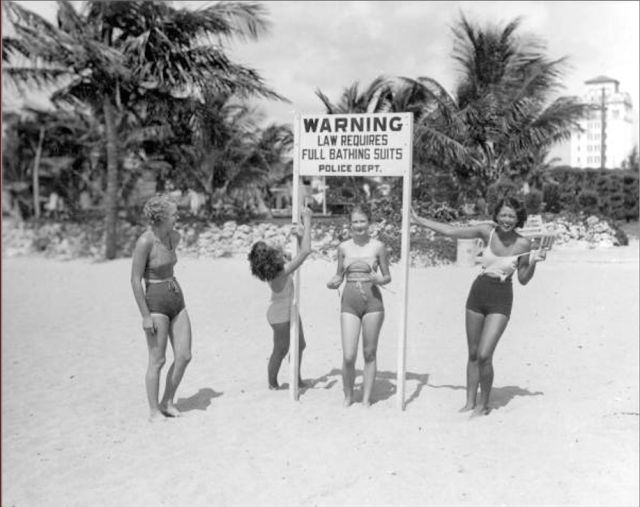
And, the last picture is of girls defying the ban on two-piece bathing suits on the beaches of southern Florida. One of them might well be my mother who always said that at age 15 she was the first person arrested for wearing one on Miami Beach. That was in 1933 which matches the date of the photo and the girl under the sign does look like her.

mommiami


Posted in Beauty, History, Women | Tagged , , | Leave a comment

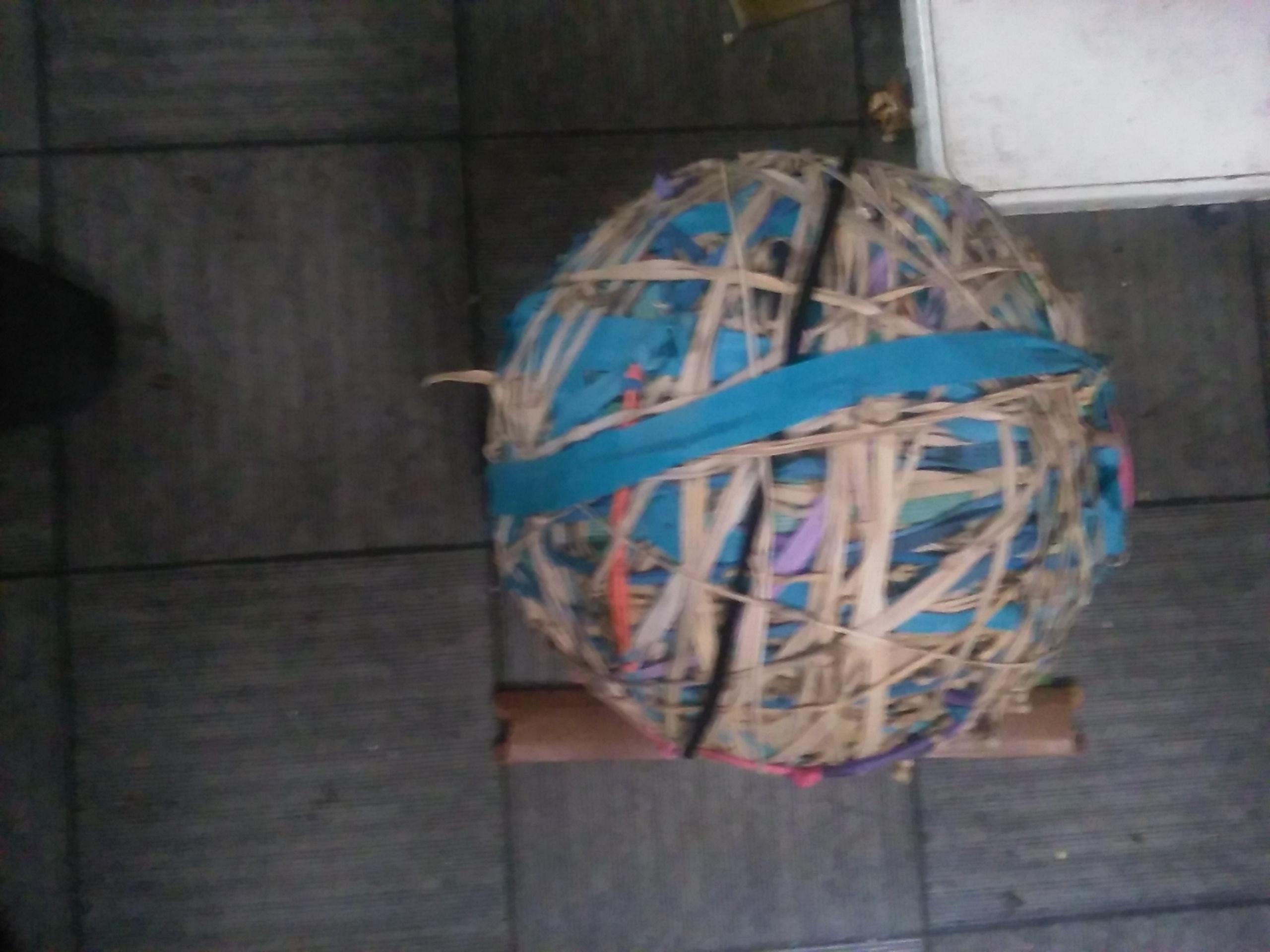
21+ lbs 11.5″ diameter (9.9kg,28.5cm)

I just added about a pound of rubber bands to my ball. Every one is a rubber band l found or that came on produce l bought.

It’s around 20-23 years worth of collecting.

Posted in Uncategorized | Leave a comment

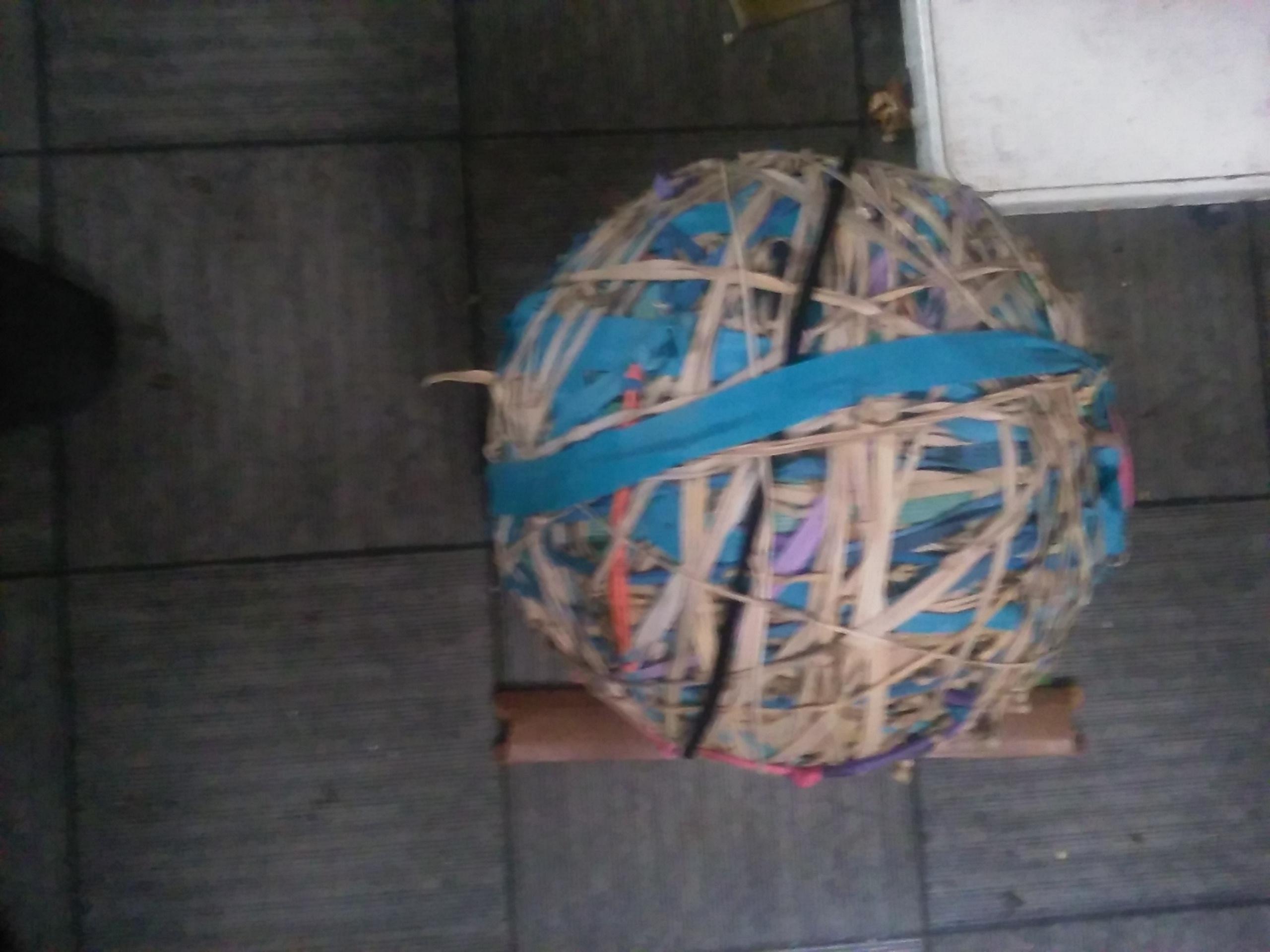
21+ lbs 11.5″ diameter (9.9kg,28.5cm)

I just added about a pound of rubber bands to my ball. Every one is a rubber band l found or that came on produce l bought.

It’s around 20-23 years worth of collecting.

Posted in Uncategorized | Leave a comment

In an otherwise bleak month…

I had reason to update my Free Chelsea Manning shirts.

Posted in Uncategorized | Leave a comment

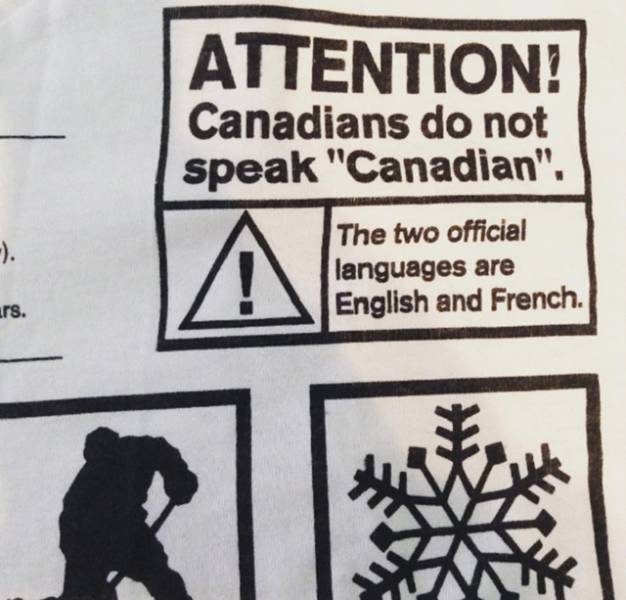
There’s Nowhere Like the Great White North

I’ve been collecting these images of the great nation to our north for some time, intending to post them with a story of how I celebrated their Centennial 50 years ago by hitchhiking from Montreal to Alaska but in honor of their Prime Minister demonstrating what real leadership looks like after the racist attack on a Quebec mosque I have decided to post them today.screen-shot-2017-01-31-at-10-57-39-pm

yukonriver

This is me at age 14 standing on the bank of the Yukon River just outside of Dawson City, Y.T. in 1967. My companion and I had paddled that small (14 ft/4.10m) canoe 460 mi./740 km. from Whitehorse.

Oh, Canada!

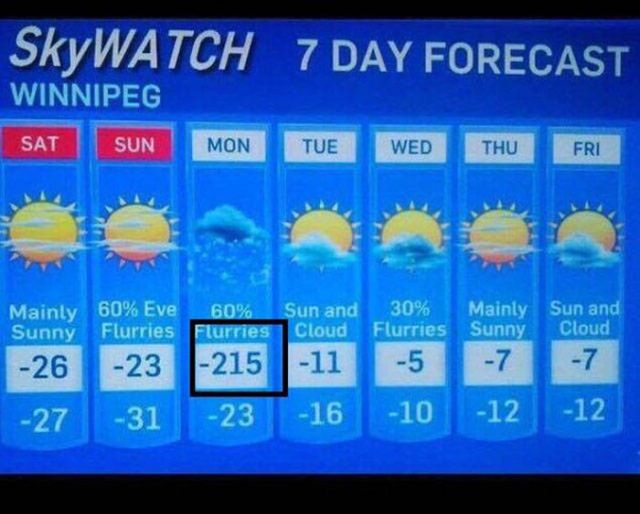
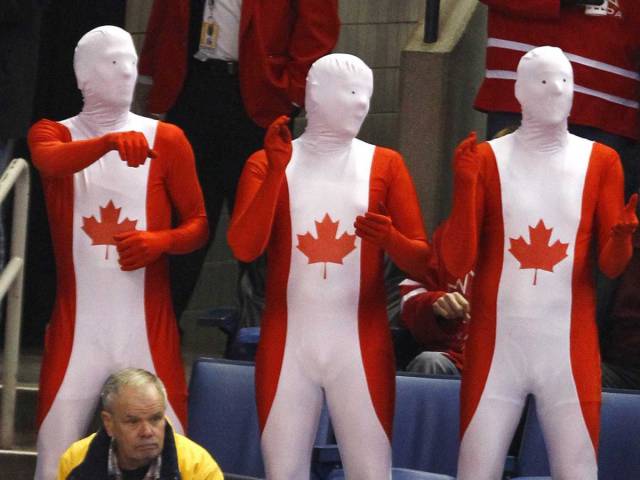
acid_picdump_67 work_fails_job_lols_42 acid_picdump_24-1 random_facts_08 acid_picdump_35 acid_picdump_18 only_in_canada_41 only_in_canada_38 only_in_canada_35 only_in_canada_30 only_in_canada_26 only_in_canada_17 only_in_canada_14 funny-advertising-weapon-notice-sky-house acid_picdump_21 there_i_fixed_it_45 funny-canadian-police-plan-domination acid_picdump_61-2 acid_picdump_49-1 acid_picdump_66 acid_picdump_73 facts_34 acid_picdump_91 acid_picdump_74 daily_picdump_1330_640_57 funny_picdump_1316_640_54 daily_picdump_1305_640_05-copy morning_picdump_2009_640_31 daily_gifdump_1144_10 sometimes_sht_happens_and_you_cant_fight_it_640_high_19 these_pictures_will_tell_you_all_about_trust_issues_and_why_they_are_legit_640_06 daily_picdump_1294_640_38 funny_picdump_1284_640_27 funny_picdump_1284_640_high_13 daily_picdump_1286_640_07 funny_picdump_1281_640_41 morning_picdump_1999_640_50 if_it_looks_stupid_but_it_works_its_not_stupid_640_42 things_you_wont_see_happening_anywhere_else_but_in_canada_640_51 things_you_wont_see_happening_anywhere_else_but_in_canada_640_52 things_you_wont_see_happening_anywhere_else_but_in_canada_640_47 things_you_wont_see_happening_anywhere_else_but_in_canada_640_44 things_you_wont_see_happening_anywhere_else_but_in_canada_640_41 things_you_wont_see_happening_anywhere_else_but_in_canada_640_38 things_you_wont_see_happening_anywhere_else_but_in_canada_640_37 things_you_wont_see_happening_anywhere_else_but_in_canada_640_31 things_you_wont_see_happening_anywhere_else_but_in_canada_640_29 things_you_wont_see_happening_anywhere_else_but_in_canada_640_27 things_you_wont_see_happening_anywhere_else_but_in_canada_640_21 things_you_wont_see_happening_anywhere_else_but_in_canada_640_20 things_you_wont_see_happening_anywhere_else_but_in_canada_640_11 things_you_wont_see_happening_anywhere_else_but_in_canada_640_09 things_you_wont_see_happening_anywhere_else_but_in_canada_640_05 if_you_only_have_one_job_to_do_do_it_right_640_41 daily_picdump_1269_640_54 daily_picdump_1272_640_09 daily_picdump_1274_640_06 daily_picdump_2172_640_23 daily_picdump_2168_640_74 funny_picdump_1255_640_47 meanwhile_in_australia_640_25 daily_picdump_2170_640_high_83 grownup_corner_227_640_37 hilarious_memes_that_will_make_your_day_640_31 short_simple_jokes_and_puns_that_will_get_you_a_laugh_every_time_640_15 canadian_slang_that_americans_dont_understand_640_06 daily_picdump_2157_640_57 dxyyyuw daily_picdump_2142_640_13 daily_picdump_2135_640_64 daily_picdump_2138_640_51 daily_picdump_2141_640_42 daily_picdump_2118_640_26 morning_picdump_943_640_51 daily_picdump_2098_640_01 daily_picdump_2094_640_10

Posted in Uncategorized | Leave a comment

Found in the Haight

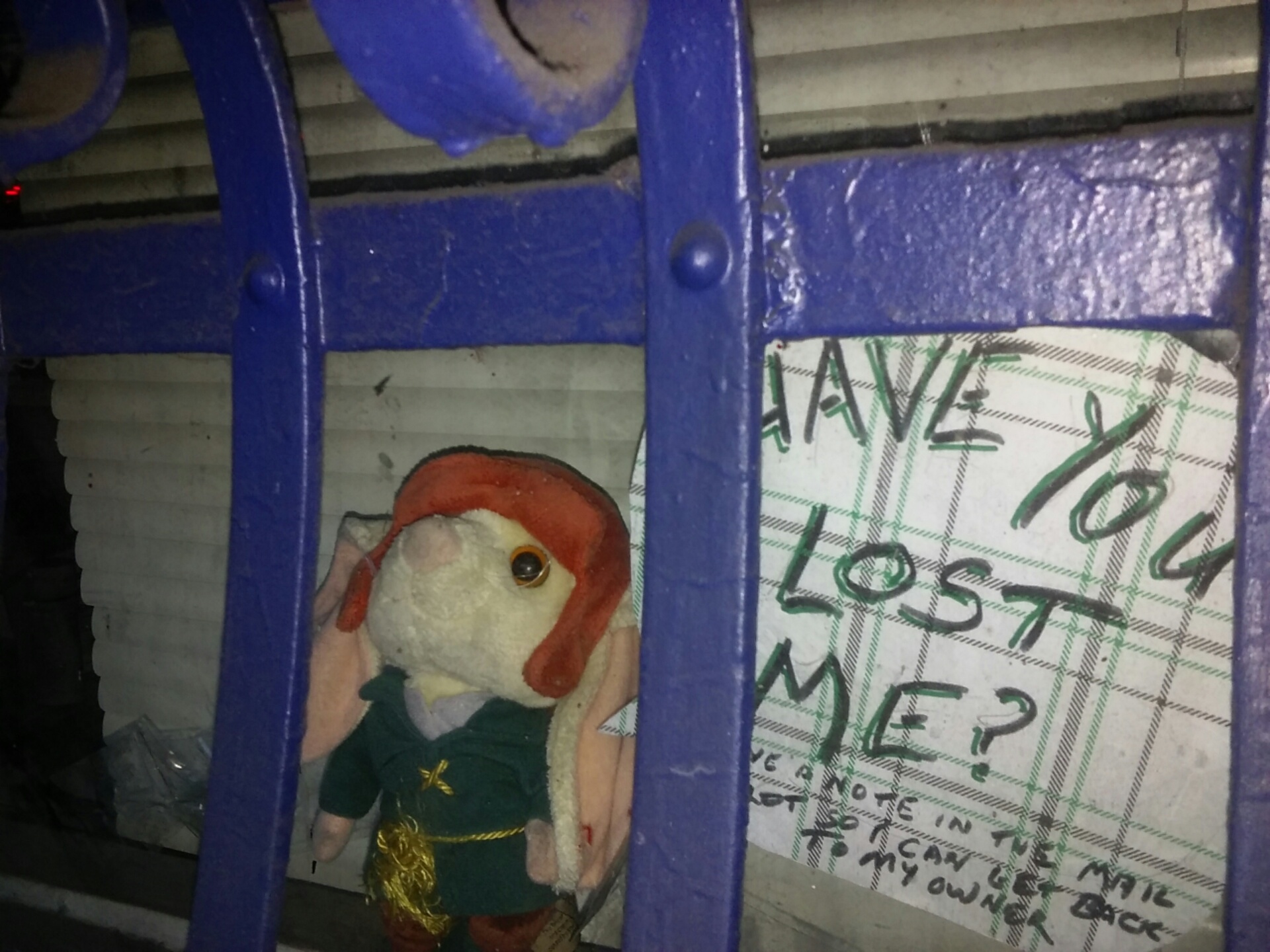
I found this lost mouse near where l live at Haight & Masonic. I washed it and put it in the window in hopes of getting it back to the youngster to whom it once belonged.

If you live around here please spread it on social media and help me make some kid’s day/week/year/life a bit brighter.

Posted in Uncategorized | Leave a comment

Let’s Google-Bomb Drumpf with “President Bannon”

Counter-chaos strategy for media and activists: substitute “President Bannon” for ‘President Trump’ in searches and Tweet #PresidentBannon and post it in every bit of social media we have

Flood the airwaves and internet with that substitution.

Google bomb it. (I’ve already done several searches for it)

Sow division between them. Trump will not tolerate the insinuation.

It won’t matter that Bannon defers to him in private. And a less shallow person would just blow it off  but perception is all that matters to him.


36_Stratagems_Book_Cover.JPG

The 36 Stratagems

“Let the enemy’s own spy sow discord in the enemy camp”

  • Undermine your enemy’s ability to fight by secretly causing discord between him and his friends, allies, advisors, family, commanders, soldiers, and population. While he is preoccupied settling internal disputes, his ability to attack or defend is compromised.

Historical note on ‘The Thirty-Six Stratagems’:

The Thirty-Six Stratagems have variably been attributed to Sun Tzu from the Spring and Autumn period of China, or Zhuge Liang of the Three Kingdoms period, but neither are regarded as the true author by historians. Instead, the prevailing view is that the Thirty-Six Stratagems may have originated in both written and oral history, with many different versions compiled by different authors throughout Chinese history. Some stratagems reference occurrences in the time of Sun Bin, approx. 150 years after Sun Wu’s death.

The original hand-copied paperback that is the basis of the current version was believed to have been discovered in China’s Shaanxi province, of an unknown date and author, and put into print by a local publisher in 1941. The Thirty-Six Stratagems only came to the public’s attention after a review of it was published in the Chinese Communist Party’s Guangming Daily newspaper on September 16, 1961. It was subsequently reprinted and distributed with growing popularity.

Original idea by By Novalis53 at DailyKos


Posted in Uncategorized | Leave a comment