
Stonehenge was most likely to have been originally built in Pembrokeshire, Wales, before it was taken apart and transported some 180 miles (290km) to Wiltshire, England.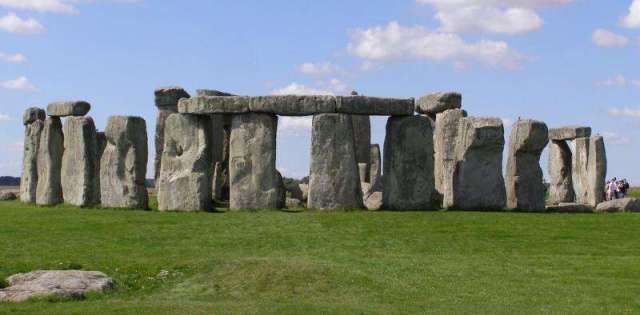
It may sound like an impossible task without modern technology, but it wouldn’t have been the first time prehistoric Europeans managed to move a monument. Archaeologists are increasingly discovering megaliths across the continent – albeit a small number so far – that were previously put up in earlier monuments.
Archeologists have identified the actual quarries in Pembrokeshire, Wales (around 3400BC and 3200BC) that the bluestones came from.
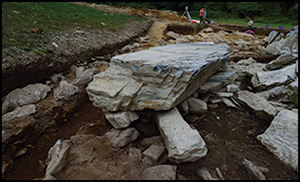
This is a period before prehistoric people were building stone circles (normally dating from 3000BC onwards) so we also think it is very likely that the bluestones originally formed a rather different type of monument from a stone circle.
The best example of such a structure outside the UK is La Table des Marchand, a Neolithic tomb in Brittany, France, built around 4000BC.
The enormous, 65-ton capstone on top of its chamber is a broken fragment of a menhir, a standing stone, brought from 10km away. The original menhir may be 300 years (or more) older than the tomb. Another fragment of this same menhir was incorporated into a tomb at Gavrinis, 5km away. This menhir, originally weighing over 100 tons, is actually one of the largest blocks of stone that we know of to have been moved and set up by Neolithic people.
Another example of a standing stone reused in a megalithic monument is an anthropomorphic menhir – a standing stone carved in the form of a human figure – incorporated as the capstone of another tomb at Déhus on Guernsey. Another megalithic tomb, La Motte de la Jacquille in western France, is built of dressed stones that have been rearranged into a new tomb but it is not known if they came from a different location or were an earlier version of the tomb rebuilt on the same spot.
Archaeologists have known for many years that some of Stonehenge’s bluestones (the shorter stones in the monument) were reused. Two are lintels reused as standing stones, and two others have vertical grooves that show they were part of a wall of interlocking standing stones. Until now it was thought that these were evidence of reuse just within Stonehenge which was first built around 2900BC and rebuilt circa 2500BC (at this point, large local sandstones known as “sarsen” were erected). It was then rebuilt again in around 2400BC and 2200BC.
An interesting outcome from a recent conference in Redondo, Portugal, on prehistoric megaliths and “second-hand monuments” is that – while some megalithic stones for monuments in Portugal and elsewhere were brought as far as 8km from their sources – the vast majority of Neolithic stone monuments throughout Western Europe were built less than 2km to 3km away from their stone quarries. So Stonehenge is a major exception to this rule, as its bluestones were dragged around 290km. This makes it unique for prehistoric Europe. It’s also possible that the bluestones were put up somewhere on Salisbury Plain before they arrived at Stonehenge. For example, one of the bluestones never quite made it to Stonehenge and was dug out in 1801 from the top layer of a Neolithic burial mound called Boles Barrow, near Warminster, also in Wiltshire.
Read more and find links to the various abstracts here.




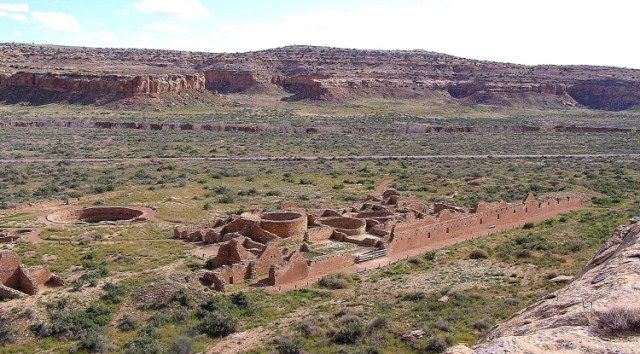
 The species of tree used in the buildings did not grow nearby, so the trees must have been transported from distant mountain ranges.



 Stannous Flouride's Book of Truthiness