
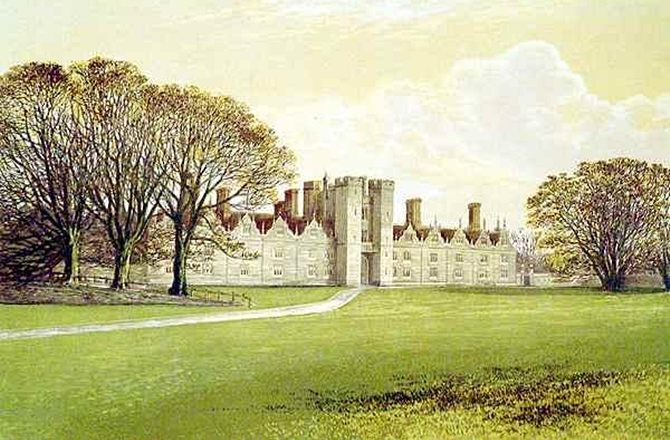
English archaeologists have discovered “demon traps” under the floorboards of Knole, one of Britain’s most important historic houses. The estate is shown here in the year 1800.
Acquired by the Archbishops of Canterbury in the 15th century, gifted to Henry VIII and remodeled in the 17th century by the Sackville family, the house was the birthplace of poet and gardener Vita Sackville-West and the setting for Virginia Woolf’s novel Orlando.
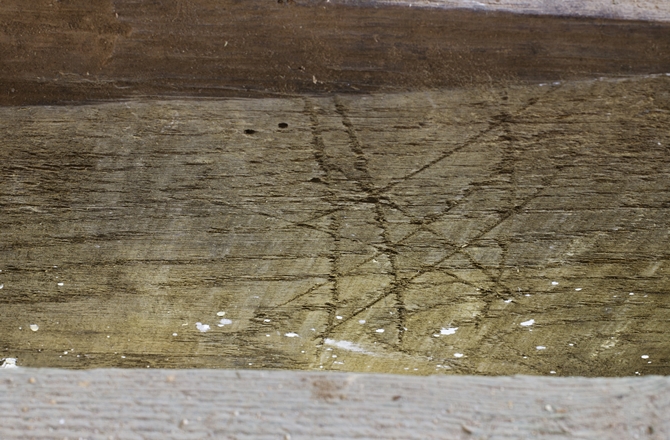
The carvings included criss-crossed lines, interlocking V-shapes to invoke the protection of the Virgin Mary, and scorch marks made by directly burning the timber with a candle.
They were intended to trap demons and witches at work.
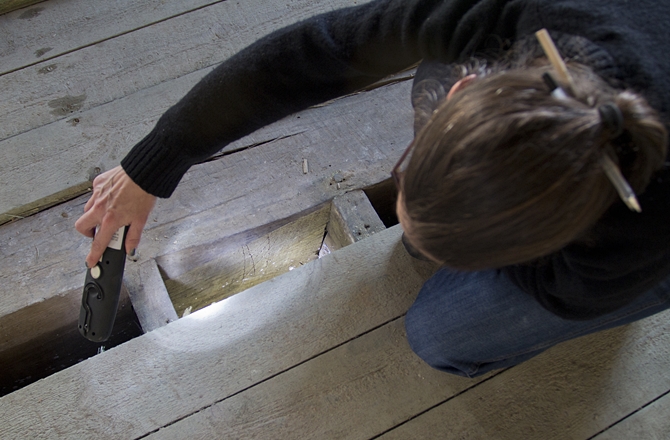
The marks date to early 1606 and the reign of King James I, a period when superstition and paranoia gripped England just after the failed Gunpowder Plot of 1605.
At that time, a handful of English Roman Catholic dissenters planned to blow up King James I of England and both Houses of Parliament.
Government propaganda, orchestrated by James I, blamed the Catholic conspirators as being in service to Satan, paving the way to widespread accusations of demonic forces and witches at work.

















































































 Stannous Flouride's Book of Truthiness