
This simple design, found among Homo Erectus fossils from 500,000 years ago, is the oldest art ever discovered.
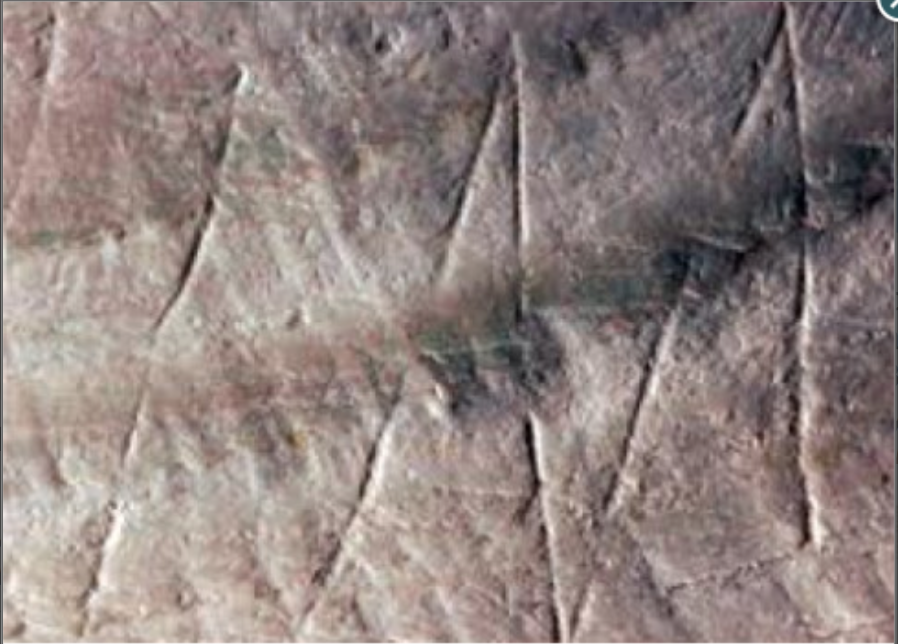
New analysis of an engraving excavated from a riverbank in Indonesia suggests that it’s at least 430,000 years old—and that it wasn’t made by humans. At least it wasn’t made by Homo sapiens.
Rather, the earliest artist yet found appears to have been one of our ancestral cousins, Homo erectus.
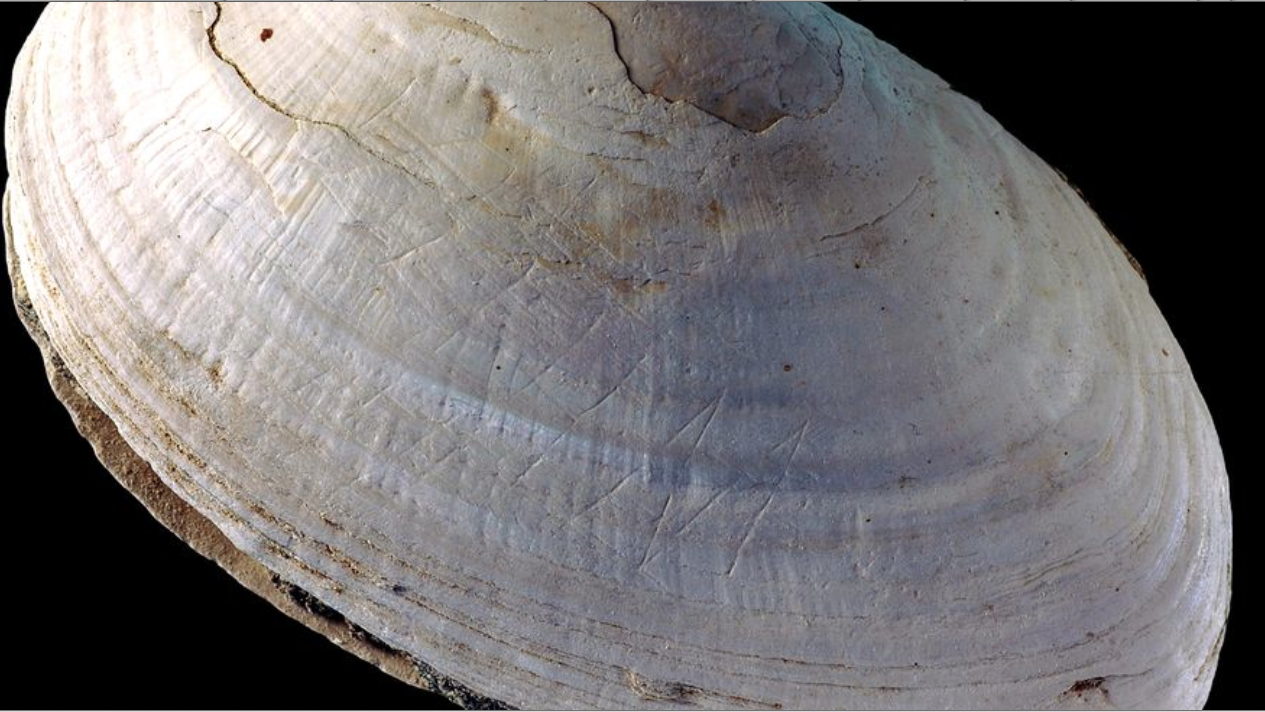
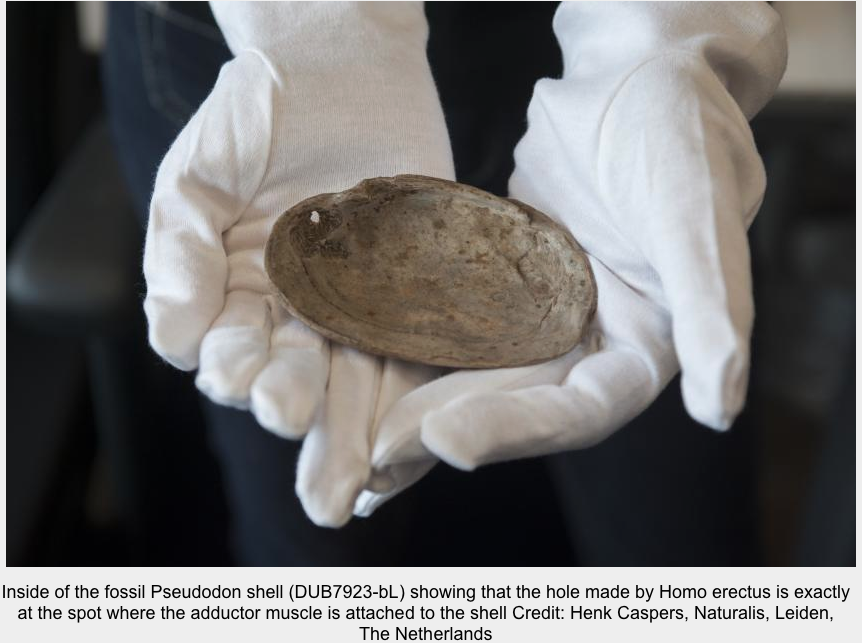
Homo erectus on Java was already using shells of freshwater mussels as tools half a million years ago and, as shown here, as a ‘canvas’ for an engraving. An international team of researchers, led by Leiden archaeologist José Joordens, published this discovery on 3 December in Nature. The discovery provides new insights into the evolution of human behavior.
By applying two dating methods, researchers at the VU University Amsterdam and Wageningen University have determined that the shell with the engraving is minimally 430,000 and maximally 540,000 years old.This means that the engraving is at least four times older than the previously oldest known engravings, found in Africa.
“Until this discovery, it was assumed that comparable engravings were only made by modern humans (Homo sapiens) in Africa, starting about 100,000 years ago,” said the researchers.


 Stannous Flouride's Book of Truthiness