
Ancient Greek vases have revealed the hidden names of Amazons, mythology’s warrior women, in a report deciphering ancient languages unspoken for millennia.
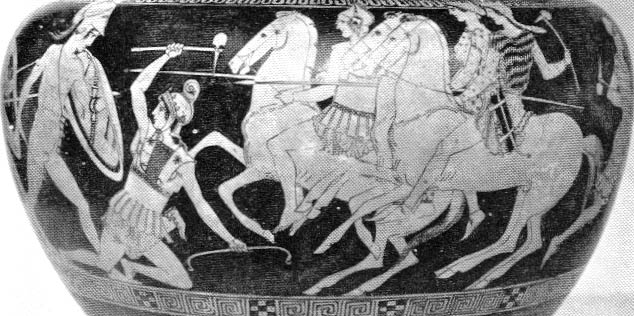
In the forthcoming study of pottery dating from 550 B.C. to 450 B.C., study lead author Adrienne Mayor and J. Paul Getty Museum assistant curator David Saunders translated Greek inscriptions into their phonetic sounds for 12 ancient vases from Athens. The inscriptions appear next to scenes of Amazons fighting, hunting, or shooting arrows.
They next submitted just the phonetic transcriptions without explanation to linguist John Colarusso of Canada’s McMaster University in Hamilton, who is an expert on rare languages of the Caucasus. On the Amazon vases, Colarusso found an archer named Battle-Cry, a horsewoman named Worthy of Armor, and others with names such as Princess, Don’t Fail, and Hot Flanks (that probably had erotic connotations).—without knowing the details of the pictures of Amazons.
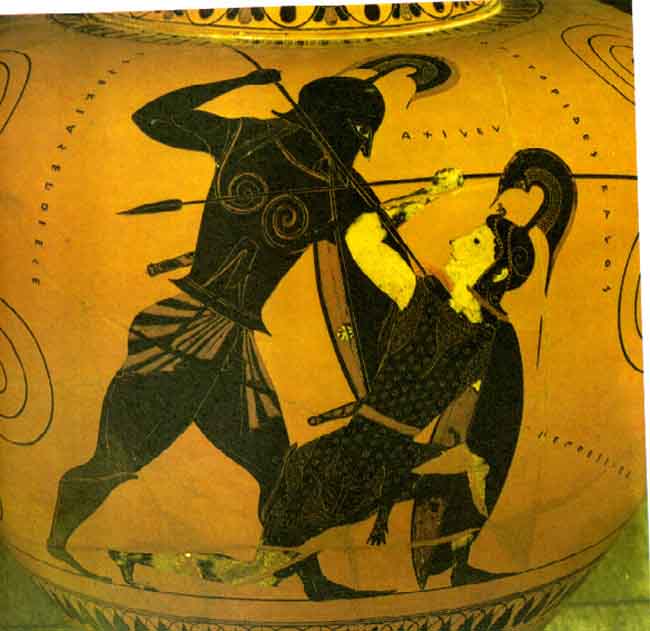
The report in the journal Hesperia gives linguists unparalleled insight into languages last spoken more than 2,500 years ago around the Black Sea. This area was the realm of Scythian nomads, who fought and traded with the Greeks.
Essentially, the ancient Greeks seem to have been trying to re-create the sounds of Scythian names and words on the Amazon vases by writing them out phonetically, the study authors suggest. In doing so, the Greeks may have preserved the roots of ancient languages, showing scholars how these people sounded on the steppes long ago. The names were probably nicknames or heroic appellations given to Amazons, rather than real family names. Even today, Colarusso says, speakers of modern-day languages in the Caucasus region often use public, descriptive nicknames rather than reveal their real names.
“I am impressed, and I find the conclusions quite plausible,” says archaeologist Ann Steiner, an expert on ancient Greek vases at Franklin and Marshall College in Lancaster, Pennsylvania


 Stannous Flouride's Book of Truthiness