
Mucana Holtinii
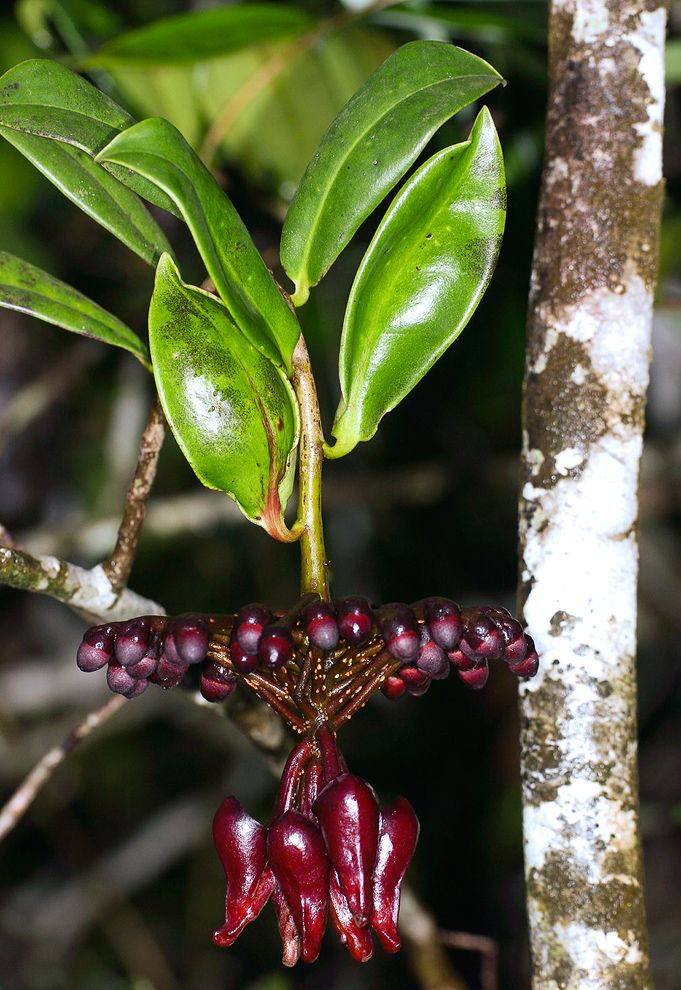
Marcgravia evenia
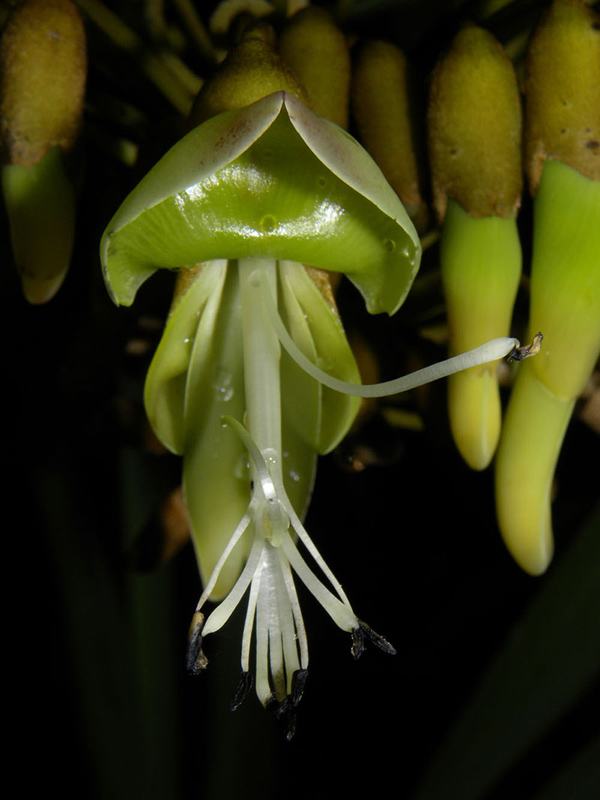
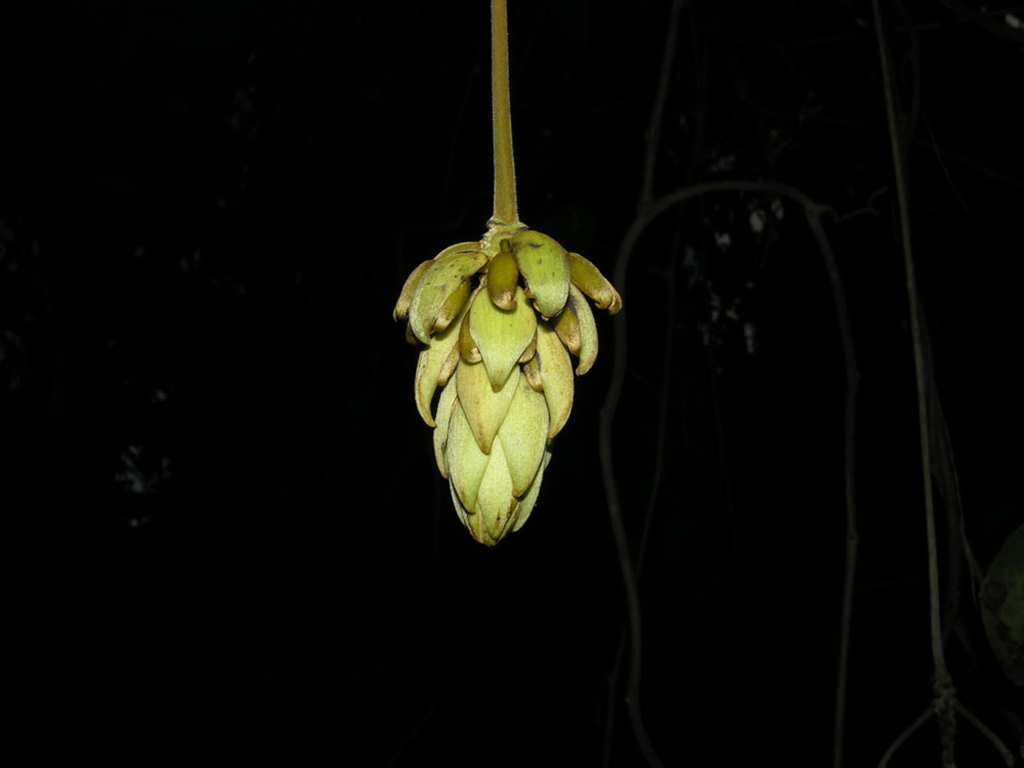
Tamara Bonnemaison (who wrote this text) was inspired to learn more about Mucuna holtonii after reading a National Geographic article about plants that “speak” to bats. This beautifully-written article, “Call of the Bloom“, follows the work of Dr. Ralph Simon through his discovery that many bat-pollinated tropical plants have special features that reflect sonar in particular ways, allowing bats to quickly find them in the dark and over large distances. Mucuna holtonii was one of the first species examined for its capacity to guide echo-locating bats to its nectar-rich flowers. This neotropical vine grows high in jungle canopies of central America, and dangles its flower clusters on long stems, isolating the night-blooming flowers from surrounding vegetation. This on its own provides ideal conditions for bats to locate the flower and access its nectar, but the species makes this process even easier through an adaptation that bounces back the bat’s sonar at a high amplitude.
Like many other members of the pea family, the flowers of Mucuna holtonii have a banner, keel, and wings formed by 5 irregular petals. In Mucuna holtonii, the banner (also called the vexillum or standard) is waxy, concave and is raised like a flag (or should I say a satellite dish) as the flower bud opens. Today’s photo shows this quite clearly, and it is easy to imagine sound bouncing off of the banner’s surface in a clear and concentrated manner. The researchers Dagmar and Otto von Helversen found that the presence of these banners made a remarkable difference in bat visitation rates. In their study, 88% of virgin flowers were visited by bats, but when the researchers removed the banners, that number dropped to only 21%. Mucuna holtonii is but one of many plant species that makes itself more visible to echolocating pollinators. In an effort to find other plants with acoustic capabilities, Dr. Ralph Simon has started the Flower Echo Project, and has so far tested the echoes of over 65 flower species.
Flower-bat communication is only one of the many interesting features of Mucuna holtonii. Although I did not come across any common names for this species, the seeds of many Macuna species are referred to as “sea beans” because they often float down rivers and into the ocean (they are also called hamburger beans for their appearance). Washed up on far-away shores, the beautiful black seeds are often polished and strung to form necklaces and bracelets. Kew Garden’s Economic Botany Collection is home to one such bracelet, made of a combination of Mucuna holtonii seeds and the smaller seeds of three other species.


 Stannous Flouride's Book of Truthiness